
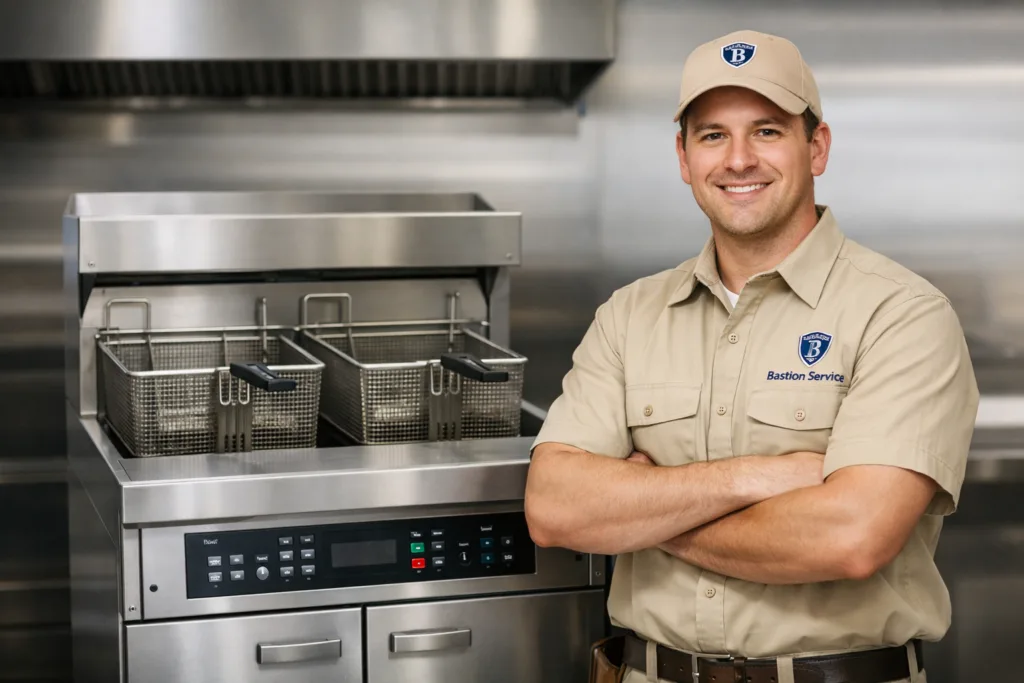




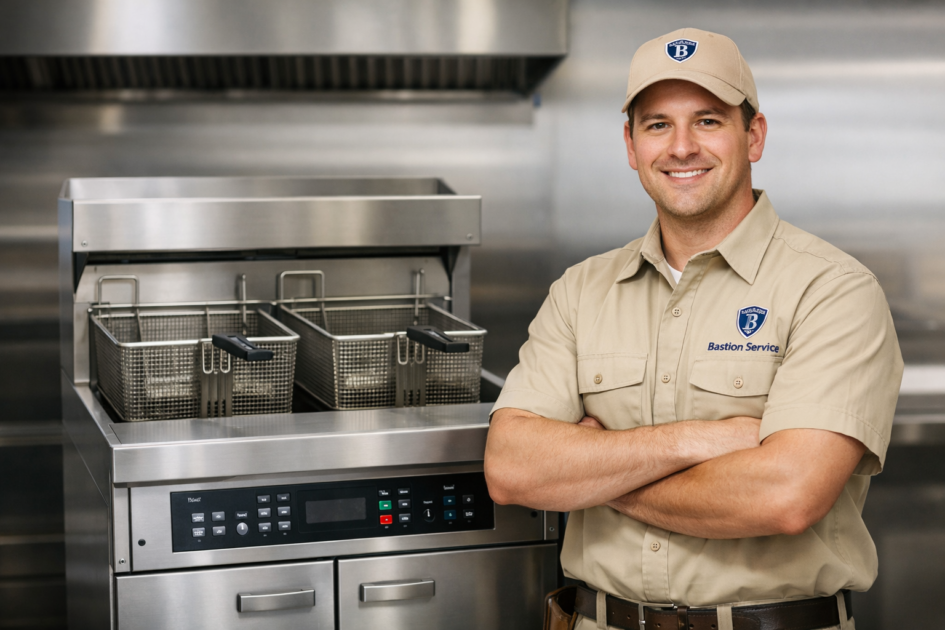
When Frymaster cooking equipment starts missing temperature, recovering too slowly, or shutting down during service in Fairfax, the immediate concern is lost output. A fryer problem affects ticket times, food consistency, oil life, and staff workflow, so the right next step is usually a service call that identifies the actual fault and whether the unit should stay in operation. Bastion Service works with Fairfax businesses to diagnose these issues, explain repair options, and help management schedule service around daily production demands.
For specific equipment paths in Fairfax, review Frymaster Fryer Repair in Fairfax and Commercial Appliance Repair in Fairfax.
Frymaster cooking equipment issues that often need repair
Even when the symptom seems simple, the underlying cause may not be. A unit that “just heats slowly” may have a burner, ignition, sensor, or control problem. A fryer that still runs can still be on the edge of a mid-shift failure. That is why symptom-based service is useful for businesses trying to avoid a larger interruption later.
Slow heat-up and poor recovery between batches
If the equipment takes too long to reach set temperature or struggles to recover after baskets are dropped, production usually slows first. Staff may notice longer cook times, uneven browning, or pressure on surrounding stations as they try to compensate. This can point to weak burner performance, sensor issues, control problems, airflow-related faults, or wear affecting normal heat output.
Recovery complaints should be checked early because they often get worse under heavy volume. What begins as a mild delay can turn into missed cook targets and unreliable service during peak periods.
Ignition problems and burner interruptions
Ignition trouble can show up as delayed startup, repeated attempts to light, burners that do not stay lit, or equipment that stops heating without warning. These symptoms may involve ignitors, flame sensing, gas delivery components, safety devices, or control failures. For a busy kitchen, intermittent ignition is especially disruptive because it creates uncertainty around every batch.
If staff members are repeatedly resetting the unit just to keep it running, that is usually a sign to stop relying on temporary workarounds and schedule repair.
Temperature control faults
When the equipment runs too hot, too cool, or drifts away from the selected setting, food quality and oil performance usually suffer quickly. Product may come out too dark, undercooked, greasy, or inconsistent from batch to batch. Temperature irregularities can be related to probes, thermostatic controls, electronic boards, calibration issues, or safety-limit interruptions.
Because temperature problems can look similar on the surface, testing matters. The repair path for a sensing issue is different from the repair path for a failing control or overheating condition.
Unexpected shutdowns during operation
A shutdown in the middle of service is more than an inconvenience. It can back up orders, force menu changes, and put pressure on labor across the kitchen. Sudden stoppages may be caused by overheating, safety cutoffs, electrical supply problems, ignition interruption, or internal control faults that only appear after the unit has been operating for a while.
If the equipment runs briefly and then shuts down, the timing of the failure is important. A unit that fails on startup suggests a different issue than one that stops only after sustained use.
Why symptom patterns matter before repair is approved
Two pieces of equipment can show the same outward symptom while needing very different repairs. For example, slow recovery might be tied to heat generation, but it can also come from a temperature-reading problem that causes the control system to react incorrectly. A repeated lockout may seem random until testing shows that it happens only at a certain stage of the heating cycle.
When scheduling service, it helps to note:
- whether the problem happens at startup or after the unit is hot,
- whether the issue appears only during heavy production,
- whether temperature is consistently off or swings unpredictably,
- whether the equipment restarts normally or needs repeated resets,
- and whether food quality has changed along with the mechanical symptom.
That information can make diagnosis more efficient and help determine whether the unit can stay in limited use while repair is arranged.
Operational signs that the problem may be getting worse
Many equipment failures build gradually before they become obvious shutdown events. Managers often first notice a pattern rather than a complete stop. The warning signs may include longer cook times, employees avoiding one fryer because results are inconsistent, unusual cycling, burner hesitation, or rising oil waste caused by unstable temperatures.
These changes matter because continued use can lead to additional wear or a more disruptive breakdown at the worst possible time. In a high-volume setting, protecting the rest of the line is often the main reason to move quickly on repair scheduling.
Oil quality and product consistency changes
When temperature control becomes unreliable, oil may degrade faster and food may not finish the same way from one batch to the next. That affects waste, customer experience, and kitchen timing. Operators sometimes treat this as a food-prep issue at first, but it is often one of the earliest signs that the equipment needs service.
Repeated resets or restart attempts
If staff have developed a routine for getting the unit going again, the problem has already moved beyond normal operation. Repeated restarting may keep production going for a short time, but it does not correct the fault. In many cases, it delays a repair decision until the shutdown becomes complete.
Repair planning for Fairfax businesses
Business owners and managers usually need more than a list of possible causes. They need to know whether the issue is isolated, whether the equipment is safe to keep using, and whether repair is likely to return the unit to stable operation. A service visit is most helpful when it connects the symptom to an action plan: immediate repair, follow-up service, temporary removal from use, or replacement review.
That decision often depends on several factors working together:
- how severe the current fault is,
- how often the equipment has needed service,
- whether key operating components show broader wear,
- how critical the unit is to daily output,
- and how much downtime the business can realistically absorb.
A newer unit with a specific failed component may be a straightforward repair. An older unit with repeated heating and control issues may still be repairable, but the better business decision may depend on reliability history and the cost of future interruptions.
What a service-oriented diagnosis should accomplish
Good repair service does not stop at naming a bad part. It should clarify how the complaint affects operation, what testing shows, whether the issue is likely to spread, and what the next practical step is for the kitchen. For Frymaster cooking equipment, that usually means checking heating performance, ignition behavior, temperature response, safety-limit function, and any shutdown pattern reported by staff.
For Fairfax operators, the goal is simple: restore stable performance if repair makes sense, or make a timely decision before a failing unit creates a larger production problem. If your equipment is showing heat loss, ignition trouble, unstable temperature control, or repeated shutdowns, scheduling repair promptly is often the best way to limit downtime and protect service flow.


