
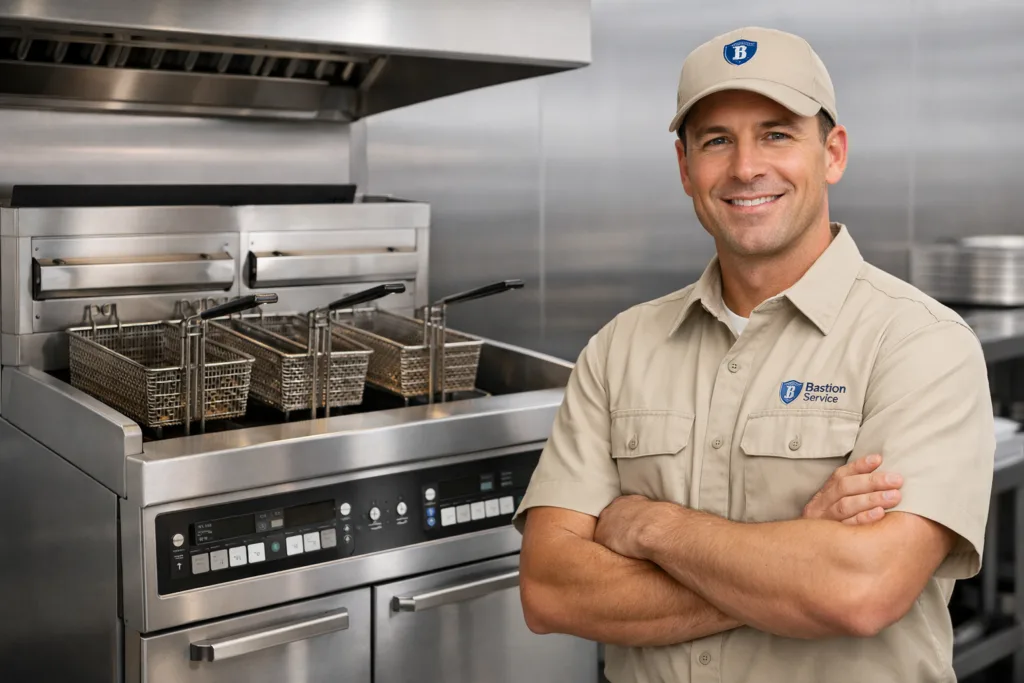




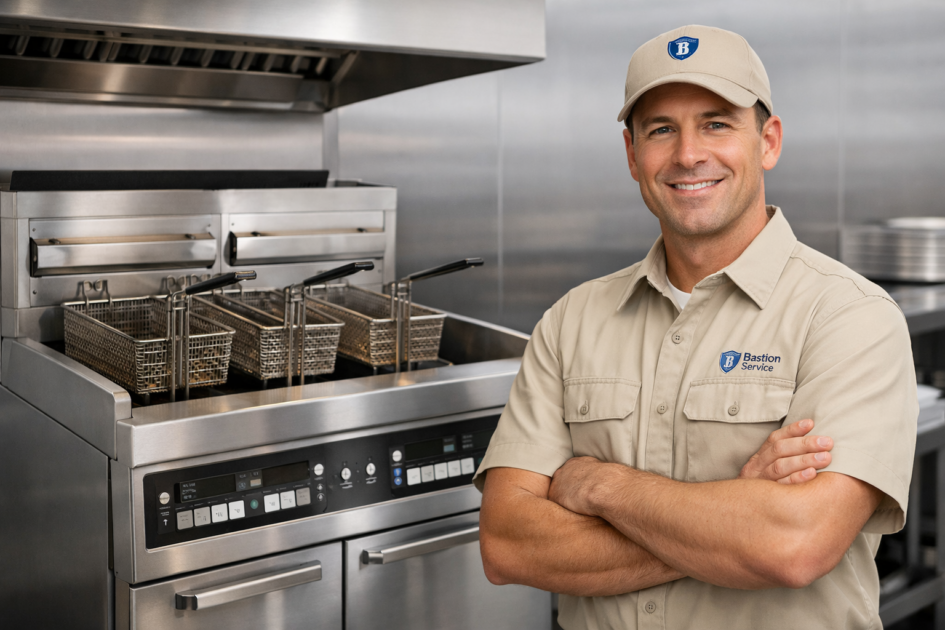
When Frymaster cooking equipment starts missing temperature, recovering slowly, or shutting down during service, the immediate problem is not just the machine itself. It is lost output, inconsistent food quality, workflow disruption, and added pressure on the kitchen team. For restaurants and other food-service businesses in El Segundo, repair decisions are usually time-sensitive, especially when a fryer problem starts affecting lunch, dinner, or high-volume prep windows.
For specific equipment paths in El Segundo, review Frymaster Fryer Repair in El Segundo and Commercial Appliance Repair in El Segundo.
Bastion Service works with local businesses that need service based on actual symptoms, operating impact, and repair urgency. In many cases, the right next step is determining whether the equipment can stay in use until service, whether it should be taken offline, and which fault is driving the performance issue.
Common Frymaster cooking equipment problems that affect daily operations
Frymaster equipment problems often begin with symptoms staff notice during production rather than with an obvious failed part. A unit may still power on, but heat inconsistently. It may ignite, but not hold performance under demand. It may appear usable during slower periods, then struggle as ticket volume increases. Those patterns matter because they help narrow down whether the issue involves ignition, burners, controls, sensing, high-limit conditions, or another underlying fault.
For kitchens in El Segundo, the most disruptive issues usually fall into a few categories: heating problems, temperature-control faults, ignition trouble, slow recovery, leaks, and repeated shutdowns.
Heating and temperature-control issues
If the equipment does not reach the selected temperature, overshoots, runs colder than expected, or cycles unevenly, the problem may involve control components, temperature sensing, high-limit parts, or burner performance. These issues can show up as undercooked results, overbrowning, oil stress, or inconsistent batch quality from one order to the next.
Temperature instability should be addressed early because it rarely stays contained to food quality alone. Once staff start compensating for unreliable heat with longer cook times or extra monitoring, production speed and consistency usually begin to drop as well.
Ignition and burner problems
Ignition faults often appear as delayed startup, failure to light, repeated reset attempts, or a burner that lights but does not stay stable. In a busy kitchen, that can create unpredictable downtime and make it harder for staff to trust the equipment during rush periods.
Burner-related issues can also affect recovery time and overall heat output. A unit may still seem partially functional while underperforming enough to slow service. That is why intermittent ignition should not be treated as a minor annoyance. It often points to a repair need that can become more disruptive if ignored.
Slow recovery between batches
Slow recovery is one of the most common complaints with fryer performance because it directly affects throughput. If oil temperature drops too far and takes too long to rebound, kitchens may see slower ticket times, less consistent product, and line bottlenecks during peak demand.
This type of symptom can be tied to burner performance, controls, sensing issues, or heat-transfer limitations. Because the fryer may still operate, slow recovery is often tolerated longer than it should be. In practice, it is a strong sign that service should be scheduled before the next high-volume period.
Unexpected shutdowns and lockouts
If the unit starts normally and then cuts out, locks out, or requires repeated restarting, the cause may involve safety controls, overheating conditions, control-board faults, unstable ignition, or electrical issues. Shutdown problems are especially disruptive because they make output unpredictable and can force staff to shift workload to other equipment.
Repeated resets are not a long-term solution. If a unit has to be watched closely just to stay in operation, the repair need has already moved beyond routine inconvenience.
Leaks, oil-loss concerns, and visible performance changes
Some service calls begin with visible changes rather than pure heating faults. Oil leaks, unusual smells, inconsistent flame behavior, or noticeable changes in how the equipment sounds during operation can all indicate a developing problem. These symptoms may point to component wear, connection issues, or internal conditions that should be inspected before the equipment is pushed through another busy service window.
Any leak or sudden change in operation is worth evaluating promptly because the cost of waiting is often measured in both downtime and disruption to kitchen safety procedures.
Why symptom-based diagnosis matters
Two pieces of Frymaster cooking equipment can show similar symptoms for completely different reasons. A fryer running cold may have a different failure than one that heats properly at startup but falls behind under load. A shutdown after a long cooking cycle may not come from the same cause as a startup failure. That is why repair planning works best when it starts with the symptom pattern instead of guessing at parts.
Diagnosis helps clarify:
- whether the equipment should remain in operation or be taken offline
- which component or system is actually causing the failure
- whether the issue is isolated or part of broader wear
- how urgent the repair is based on production impact
- whether repair or replacement makes more sense for long-term uptime
How fryer problems affect kitchens beyond the equipment itself
When fryer performance slips, the effects usually spread quickly through the operation. Cook times become less predictable. Staff may need to rotate around a weak unit, split production differently, or hold back certain menu output. Oil quality may decline faster when temperatures are inconsistent, and managers may start seeing waste, remakes, or timing issues at the pass.
For business operators in El Segundo, the repair decision is often about protecting service flow as much as restoring the unit. A fryer that technically still turns on may still be costing the operation time, product consistency, and labor efficiency.
Signs service should be scheduled sooner rather than later
Some issues can wait for a planned service window, but others usually get worse with continued use. Scheduling repair becomes more urgent when you notice:
- the equipment is not holding consistent temperature
- recovery time is slowing during normal production
- burners fail to light reliably or cycle oddly
- the unit trips off during operation
- staff have to reset or monitor the equipment repeatedly
- there is visible leaking or another obvious change in operation
- service delays are starting to affect orders and kitchen timing
These symptoms usually indicate more than normal wear. They suggest a fault that is already affecting daily use and may lead to a longer outage if left unresolved.
Repair versus replacement considerations
Not every problem points to replacement. In many cases, repair is the more practical option when the fault is isolated and the equipment is otherwise in solid condition. If the issue involves a specific control failure, ignition component, or burner-related problem, targeted repair may restore dependable operation without major interruption.
Replacement becomes a more serious consideration when the equipment has repeated failures, multiple unresolved issues, heavy wear, or a history of unstable performance that continues even after prior repairs. The right decision depends on the age of the unit, the pattern of breakdowns, and how much downtime risk the kitchen can absorb.
What businesses in El Segundo should expect from a service-focused visit
A useful repair visit should do more than confirm that the equipment is malfunctioning. It should help the operator understand what failed, what symptoms point to that failure, whether the unit can remain in use, and what the repair path looks like from an operational standpoint. That is especially important when scheduling around prep, service periods, or staffing constraints.
If your Frymaster equipment is causing temperature issues, ignition trouble, shutdowns, leaks, or production delays in El Segundo, the practical next step is to schedule service based on the symptoms you are seeing so the fault can be identified and the repair can be planned with the least possible disruption to the kitchen.


