




How to approach a Fisher & Paykel appliance problem at home
When a kitchen appliance starts working differently, the symptom itself usually tells you where to look first. A refrigerator that is cool but not cold enough points to a different kind of fault than one that is completely warm. A dishwasher that finishes with cloudy dishes is a different situation from one that stops mid-cycle or leaks onto the floor. Looking at the pattern before assuming a part has failed helps avoid wasted time, unnecessary replacement attempts, and added wear from continued use.
Fisher & Paykel appliances are often chosen for quiet operation, compact design choices, and feature-heavy controls, so performance changes can be subtle at first. Homeowners in Playa Vista often notice the problem as a shift in routine: food spoils sooner, dishes need rewashing, burners stop responding normally, or oven results become inconsistent from one meal to the next.
Refrigerator and freezer symptoms worth taking seriously
Cooling problems usually develop in stages. You may first notice longer run times, condensation near the doors, soft frozen food, or temperature swings in the fresh food section. Those signs can relate to airflow issues, fan problems, defrost faults, sensor trouble, blocked drainage, or worn door seals rather than a single obvious failure.
If the refrigerator is running almost constantly, forming frost where it should not, or leaking water inside or underneath the cabinet, it is best not to let the issue continue unchecked. A unit can appear to be working while slowly losing its ability to regulate temperature correctly. That is when food loss becomes more likely and surrounding components can be stressed by overwork.
With freezers, heavy frost buildup is especially important. Frost often suggests that moisture is entering, air is not circulating properly, or the defrost system is no longer clearing ice the way it should. Even if items still seem frozen, restricted airflow can lead to uneven storage conditions and harder recovery later.
Dishwasher problems and what they usually suggest
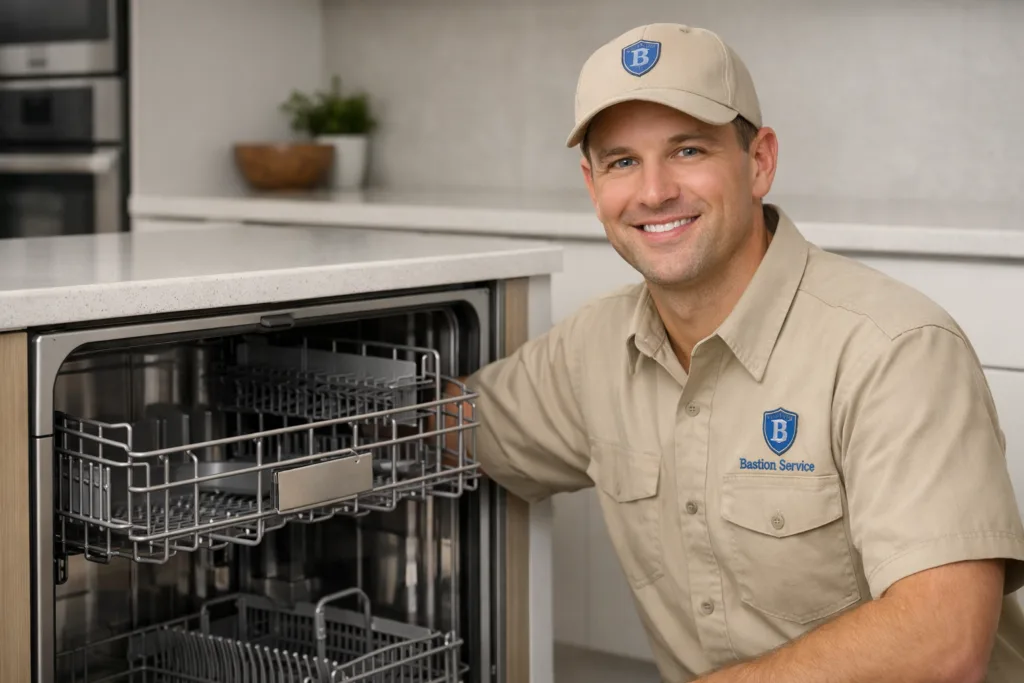
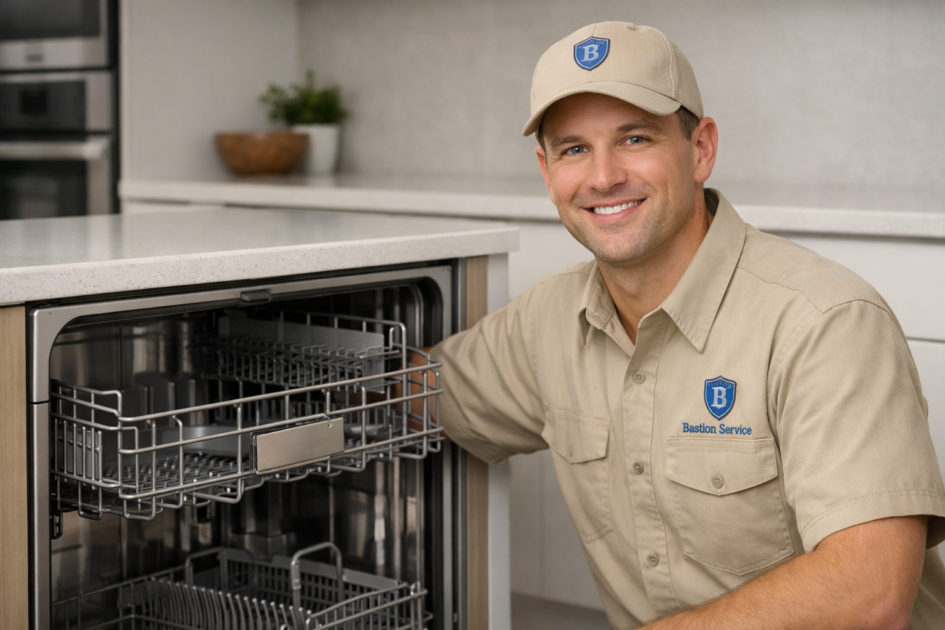
Dishwasher complaints tend to fall into a few recognizable groups: not starting, not draining, poor cleaning, weak drying, leaks, or cycle interruptions. Each group points in a different direction. Poor cleaning can be tied to spray arm blockage, low water movement, filter buildup, heating issues, or loading patterns. Standing water at the end of the cycle usually suggests a drain restriction, drain pump problem, or a water flow issue that needs inspection.
Leaks deserve prompt attention, even if they seem minor. Water around the base of the dishwasher can come from seals, hoses, misalignment, overfilling, or drainage trouble. Left alone, a small leak can affect nearby flooring, cabinet materials, and the appliance itself.
If the dishwasher powers on but pauses, beeps, or repeatedly stops before finishing, that often points to latch, sensor, control, or water management issues. Resetting it over and over may get one cycle through, but it rarely solves the underlying fault.
Cooktop and range issues that should not be ignored
Cooktop and range problems often show up as weak heat, burners that only work on certain settings, delayed ignition, constant clicking, uneven flame, or controls that respond inconsistently. On electric units, the issue may involve an element, switch, connection, or electronic control. On gas units, ignition parts, burner assembly condition, or fuel delivery behavior may be part of the problem.
A burner that overheats, cycles unpredictably, or fails to regulate properly is more than an inconvenience. It can make everyday cooking unreliable and can place added strain on related components. If one burner behaves differently from the others, that comparison is often useful in narrowing the diagnosis.
Ranges can also show combined symptoms, such as a cooktop working normally while the oven does not, or the oven heating while surface controls misbehave. In those cases, the problem may be isolated rather than a full-unit failure, which is one reason symptom-based troubleshooting is more useful than assuming the entire appliance is failing.
Oven performance changes that affect everyday cooking
Oven issues are often first noticed through cooking results rather than obvious breakdown. Food browns unevenly, baking takes longer than expected, the cavity feels hotter than the set temperature suggests, or preheat becomes unusually slow. These symptoms can involve heating elements, temperature sensors, relays, convection components, control problems, or door seal wear.
If the oven is overshooting temperature, failing to maintain heat, or showing repeated error behavior, it helps to stop relying on trial-and-error adjustments. What looks like a heating problem may actually be a sensing or control issue. Likewise, a door that no longer seals well can create temperature instability that feels like a larger internal failure.
Any oven that trips power, produces unusual electrical odor, or behaves unpredictably during heating should be evaluated before continued use. Those symptoms go beyond normal performance drift.
Wine cooler issues where small changes matter
Wine coolers often show problems in more subtle ways than full-size refrigerators. A slight but persistent temperature drift, unexpected interior moisture, louder operation, or frequent cycling can all signal trouble. Because these appliances are meant to maintain steady storage conditions, even modest inconsistency matters.
Common causes include sensor issues, fan trouble, seal wear, drainage problems, or control faults. If bottles are repeatedly warming and cooling instead of staying stable, it makes sense to address the issue early rather than waiting for complete loss of cooling.
What certain symptom patterns can mean across appliances
Some warning signs appear in several appliance types and can help narrow the problem:
- Power is on, but performance is poor: often points to sensors, controls, relays, airflow restrictions, or partially failing components rather than total electrical loss.
- Intermittent operation: may suggest loose connections, switch problems, latches, wiring faults, or a control issue that becomes more obvious during certain cycles or temperature changes.
- Moisture where it should not be: commonly relates to drainage, seals, hoses, condensation handling, or alignment issues.
- New noises: buzzing, clicking, grinding, rattling, or repeated cycling can help distinguish between fan, pump, motor, ignition, or mounting-related faults.
- Error codes or frequent resets: usually mean the appliance is detecting a fault condition that should be diagnosed rather than repeatedly cleared.
Two appliances can show the same visible symptom for entirely different reasons. That is why replacing parts based on guesswork often leads to frustration and repeat problems.
When it is better to stop using the appliance
Some issues are inconvenient but manageable for a short time. Others can get worse quickly. It is usually wise to stop using the appliance when:
- the dishwasher is leaking onto the floor or into cabinetry
- the refrigerator is warm, cycling constantly, or allowing food temperatures to rise
- the freezer is frosting heavily or no longer holding a stable freeze
- the oven or range is overheating, tripping power, or failing to regulate heat
- a cooktop burner ignites unpredictably or will not respond to normal control settings
- the wine cooler is no longer maintaining a steady cabinet temperature
Continued use under these conditions can expand the repair from one faulty component into a larger problem affecting controls, motors, insulation areas, stored food, or nearby surfaces.
Repair or replacement: how homeowners usually decide
Repair is often the sensible option when the appliance is otherwise in good condition, the failure is isolated, and restoring normal operation does not involve chasing several unrelated problems at once. Replacement becomes more likely when there is severe repeat failure, major system expense, structural deterioration, or a pattern that suggests reliability will remain poor even after one repair.
The useful question is not simply whether the appliance still turns on. It is whether the fault is limited and practical to correct, or whether the unit is showing broader wear. For many households in Playa Vista, the best decision comes after comparing the symptom pattern, the age and condition of the appliance, and the risk of continued use.
Why brand-aware troubleshooting matters
Fisher & Paykel appliances often include design details and control behavior that make accurate troubleshooting more important than quick part swapping. That matters with refrigerators, freezers, dishwashers, cooktops, ovens, ranges, and wine coolers alike. A clear diagnosis and practical repair plan is most helpful when it matches the actual symptoms, the condition of the unit, and the way the appliance is used in the home.
For homeowners in Playa Vista, that means focusing less on generic advice and more on what the appliance is actually doing: when the problem started, whether it is constant or intermittent, and whether normal use is likely to make the issue worse.


