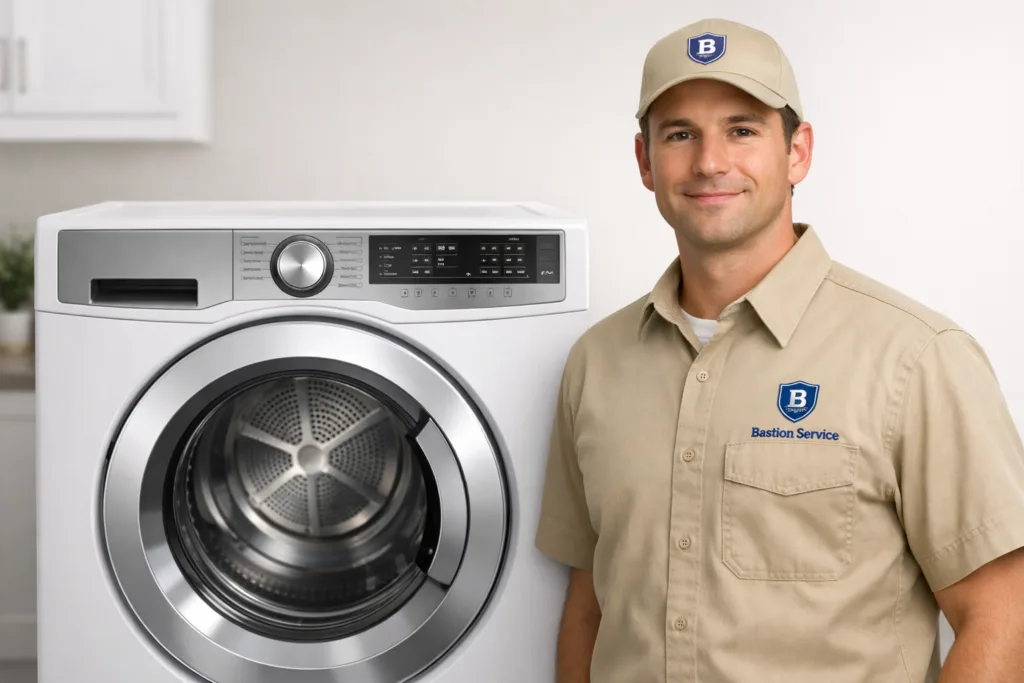
Electrolux dryers usually give warning signs before they fail completely. Clothes may come out warmer than usual but still damp, the cycle may end too soon, or the machine may begin making a new squeal or scrape. Catching those changes early can help prevent added wear on the heater, drum supports, motor, and control system.
Common Electrolux dryer problems and what they can mean
Dryer runs but does not heat
If the drum turns but there is no heat, the cause may be a failed heating element, thermostat issue, thermal fuse, wiring problem, or loss of full power to the dryer. Some electric units can still tumble even when they are not receiving the voltage needed to heat. Vent restriction can also contribute by causing overheating and triggering protective parts to fail.
Dryer takes too long to dry
Long dry times often point to airflow problems first. Lint buildup, a crushed exhaust hose, a blocked vent path, weak heat output, or a moisture-sensing issue can all extend drying cycles. If towels and heavier items stay damp after a normal cycle, the problem may not be the timer at all. In many Inglewood homes, this symptom turns out to be a combination of venting and internal component wear rather than one single failed part.
Dryer will not start
When the dryer does nothing after pressing start, possible causes include a door switch problem, blown thermal fuse, faulty start switch, control issue, or power problem at the outlet. If the display lights up but the drum never begins turning, that points in a different direction than a machine that is completely unresponsive. Those differences matter because the repair path depends on what is still working.
Dryer stops mid-cycle
A dryer that begins normally and then shuts off may be overheating, losing motor function as it gets hot, or reacting to a control fault. Repeated mid-cycle shutdowns should not be ignored. Continued operation can put extra strain on the motor, heater, and safety components.
Noisy operation or burning smell
Squealing often suggests a worn idler pulley or drum support part. Thumping can point to rollers or an unevenly worn drum support system. Scraping may mean internal contact that can damage the drum if left alone. A burning smell is more urgent and may be caused by lint accumulation, slipping belts, overheated wiring, or motor strain.
Symptoms that deserve faster attention
Some dryer issues can wait a short time for a scheduled appointment, but others should prompt you to stop using the appliance until it is inspected. The most important warning signs include:
- A burning odor during or after a cycle
- The cabinet becoming unusually hot to the touch
- Grinding, scraping, or metal-on-metal sounds
- Repeated breaker trips
- Clothes coming out extremely hot
- The dryer shutting off before the load is dry again and again
These symptoms can indicate overheating, restricted airflow, failing moving parts, or an electrical problem that may worsen with continued use.
Why accurate testing matters on Electrolux dryers
Electrolux dryers often rely on sensors, electronic controls, and multiple safety devices that work together. That means two dryers with the same complaint can need entirely different repairs. A machine with no heat may have a heater failure, but it could also have a power supply issue. A dryer that overdrys clothing may not need a heating part at all if the real problem is with sensing or airflow.
For a household in Inglewood, the value of proper testing is simple: it helps separate a focused repair from a larger problem. It also helps answer practical questions such as whether the dryer is safe to keep using, whether the issue is likely to repeat, and whether repair still makes sense for the appliance’s condition.
What to check before scheduling repair
A few basic observations can help make the service visit more productive. Homeowners can safely check:
- Whether the dryer has power and the display responds normally
- Whether the drum turns
- Whether the load feels warm, cool, or unusually hot at the end of a cycle
- Whether the lint filter is clean
- Whether the exhaust hose appears crushed or disconnected
- Whether the problem happens on every cycle or only on certain settings
If the dryer is producing a burning smell, scraping loudly, or tripping the breaker, it is better not to keep testing it at home. Those are service-call symptoms, not trial-and-error symptoms.
Repair or replace?
Many Electrolux dryer problems are worth repairing when the issue is limited to a heating component, thermal fuse, belt, roller set, idler pulley, door switch, or another isolated failure. If the dryer is otherwise in good shape and the drum, motor, and controls have not shown broader signs of decline, repair is often the better value.
Replacement becomes more reasonable when the dryer has several problems at once, shows heavy wear across multiple systems, or requires a repair that approaches the value of the appliance. Age alone does not decide the answer. The better question is whether the current fault is isolated and whether the rest of the machine is still in serviceable condition.
What a practical service visit should cover
A useful appointment should start with the exact symptom pattern in your home, not a guess based only on the model name. Depending on the complaint, testing may include power verification, airflow evaluation, heater and thermostat checks, fuse testing, inspection of the belt and support system, and control-related diagnostics.
That process helps narrow down whether the problem is caused by restricted venting, a failed internal part, electrical loss, overheating protection, or general mechanical wear. Once the cause is confirmed, the next step is much easier to evaluate because the repair recommendation is based on the actual failure rather than parts swapping.
When to schedule Electrolux dryer service in Inglewood
It makes sense to book service when your dryer is no longer heating, needs repeated cycles to finish a load, stops unexpectedly, makes new noises, or shows inconsistent performance from one cycle to the next. Even if the machine still runs, poor drying and overheating are both signs that it should be checked before the problem spreads to additional components.
For homeowners in Inglewood, the most cost-effective repair decisions usually come from addressing the first real warning signs instead of waiting for a full breakdown. A dryer that is already struggling with airflow, heat regulation, or drum support often becomes more expensive to fix once extra parts are damaged by continued use.