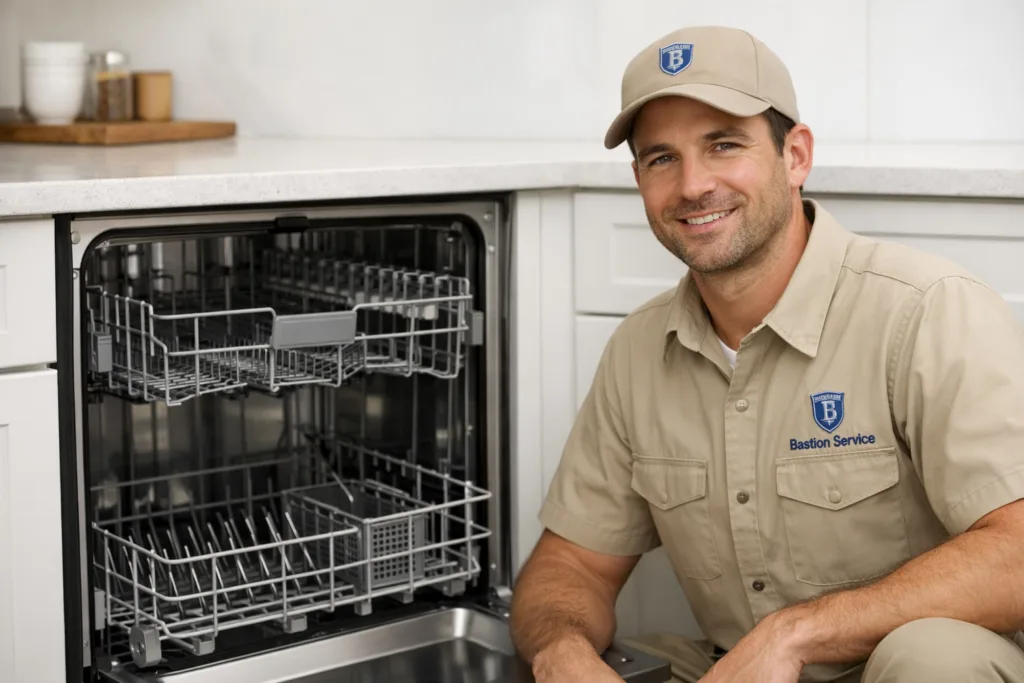
Electrolux dishwashers usually give warning signs before they fail completely. A cycle may run longer than normal, dishes may come out wet or spotted, or a small amount of water may remain in the bottom after every load. Those details matter because they help narrow the issue to draining, heating, circulation, door sealing, or control-related trouble rather than treating every symptom like the same repair.
Common Electrolux dishwasher problems in Hermosa Beach homes
Most dishwasher complaints fall into a few recognizable patterns. Looking at what the machine does before, during, and after the cycle can make it easier to understand what is likely happening inside the unit.
Standing water after the cycle
If water stays in the tub, the problem may involve the filter area, drain hose path, drain pump, or a cycle that is not advancing correctly into the drain portion. In some cases the dishwasher hums but does not move water out, which can point to an obstruction or a worn pump. Even if the unit still washes somewhat normally, poor draining often leads to odor, residue, and repeat performance issues.
Cloudy glasses or food left on dishes
Poor wash results are not always caused by detergent or loading habits. An Electrolux dishwasher may leave dishes dirty when spray arms are restricted, water fill is too low, circulation pressure is weak, or the heater is not bringing rinse water to the proper temperature. If the problem is consistent on multiple loads, it is usually more than routine maintenance.
Leaks around the door or underneath the unit
A leak can start from a worn door gasket, a damaged lower door seal, loose internal connections, overfilling, sump issues, or drain backup. Small leaks are easy to dismiss at first, but repeated moisture can affect flooring, cabinets, and the space beneath the dishwasher. If water appears more than once, it is smart to stop testing the unit repeatedly until the source is identified.
Dishwasher will not start
When the control panel seems unresponsive or the machine will not begin a cycle, the cause may be related to the latch, user interface, power supply path, wiring, or main control. A dishwasher that starts only occasionally can be especially important to evaluate because intermittent electrical problems rarely improve on their own.
Cycle stops before finishing
If the dishwasher fills and then shuts down, pauses for long periods, or appears stuck partway through, there may be an issue with sensing, draining, circulation, heating, or the electronic control system. Mid-cycle failures are often mistaken for a simple reset problem, but repeat interruptions usually mean a component is no longer performing within normal range.
Buzzing, grinding, or unusually loud wash noise
New noise during wash or drain cycles can suggest debris in the pump area, worn motor components, spray arm contact, or internal parts beginning to fail. A single unusual sound may not confirm a major repair, but repeated mechanical noise is a good reason to stop assuming the problem is harmless.
How symptoms point to different repair paths
One of the most important parts of Electrolux dishwasher repair is understanding that similar complaints can come from very different failures. A dishwasher that “is not cleaning” might actually have low water fill. A machine that “is not drying” may have a heating issue, but it could also be ending the cycle early. A unit that “is leaking” may have a door seal problem, or it may be overfilling because of another fault upstream.
That is why symptom patterns matter. Helpful clues include:
- Whether the issue happens on every cycle or only occasionally
- Whether the dishwasher fills, washes, drains, and dries in a normal sequence
- Whether the problem is worse on heavy loads or light loads
- Whether noises occur during fill, wash, or drain
- Whether error behavior appears suddenly or has gradually developed over time
When those details are matched to the actual failure, homeowners get a much clearer idea of what repair involves and whether the machine is worth fixing.
Signs the problem is getting worse
Dishwasher issues often begin as small inconveniences. The trouble becomes more urgent when the appliance starts affecting daily use or creates risk around the kitchen.
It is usually time to schedule service promptly if your Electrolux dishwasher:
- Leaves standing water after most cycles
- Leaks onto the floor or into the cabinet area
- Trips power or shuts off unexpectedly
- Produces a burning smell
- Makes harsh grinding or loud buzzing noises
- Fails to dispense detergent correctly
- Consistently leaves dishes dirty or much wetter than before
Continuing to run the machine in these conditions can turn a contained repair into a more expensive one, especially when water damage or motor strain is involved.
What homeowners can check before booking repair
Not every dishwasher problem means a failed part. A few basic checks can help rule out simple causes before a repair visit.
- Clean the filter if it is clogged with food debris
- Check that spray arms can spin freely
- Confirm dishes or utensils are not blocking the detergent dispenser
- Look for visible buildup around the door seal
- Make sure the sink drain and connected drain path are not backing up
- Note whether the issue appears on normal, heavy, and quick cycles alike
If these steps do not change the symptom, the next step is usually a proper diagnosis rather than more trial-and-error part replacement.
Repair or replacement: what usually makes sense
For many Hermosa Beach homeowners, the decision is not just about whether the dishwasher can be repaired, but whether the repair is reasonable for the unit’s age and overall condition. A targeted fix for a pump, latch, seal, or control-related component may be worthwhile when the rest of the dishwasher is in solid shape. Replacement becomes more likely when the appliance has multiple developing issues, visible wear inside the tub and racks, or a repair history that suggests larger problems are building.
The symptom alone does not always tell the full story. A dishwasher that seems to have a major failure can sometimes need one focused repair. On the other hand, a minor complaint such as weak cleaning can occasionally reveal broader circulation or heating problems. That is where a clear diagnosis and a practical repair plan are most useful.
What to expect from a useful service visit
A productive dishwasher service call should identify the failing system, explain why the symptom is happening, and clarify whether the repair is straightforward, urgent, or better weighed against replacement. Homeowners should come away understanding not just what part is involved, but how that fault affects draining, washing, heating, or cycle completion.
When an Electrolux dishwasher in Hermosa Beach starts leaving residue, leaking, failing to drain, or stopping mid-cycle, the best next step is to match the symptom to the actual cause instead of guessing. That approach leads to better repair decisions and fewer repeat problems in the kitchen.