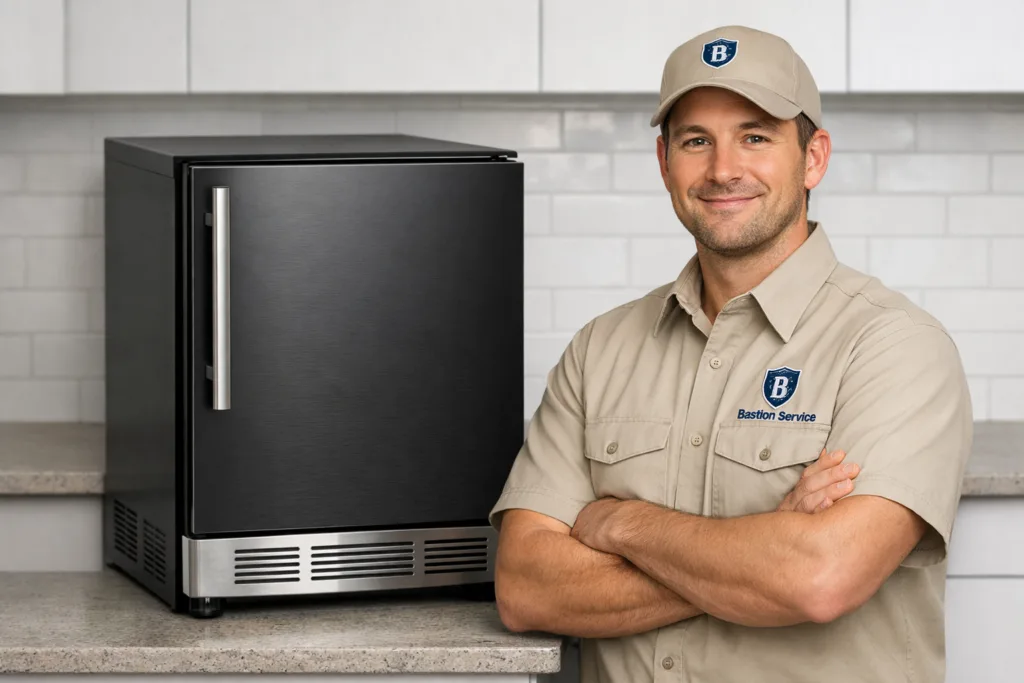
EdgeStar ice makers can fail in ways that look similar at first, even when the actual cause is very different. A unit that is not producing ice may have a water supply issue, a temperature problem, a drain restriction, a sensor fault, or a circulation problem. Looking at the full symptom pattern usually saves time and helps avoid replacing parts that are not causing the failure.
Related EdgeStar and ice maker service paths in Century City include EdgeStar Appliance Repair in Century City, Ice Maker Repair in Century City, and EdgeStar Refrigerator Repair in Century City.
Common EdgeStar ice maker symptoms in Century City homes
Most households notice trouble in everyday ways: the bin stays empty, production slows down, cubes come out thin or clumped together, water appears around the unit, or the machine starts making new noises. Each symptom can point to a different part of the ice-making process, so details matter.
No ice or very little ice
If the unit powers on but produces no ice, the problem may involve low water flow, a restricted filter, an inlet valve issue, low incoming pressure, or a control problem that prevents a normal freeze-and-harvest cycle. In some cases, the machine starts the process but never completes it, which can indicate a sensor or cooling-related fault.
Low output is also worth taking seriously. Ice makers often decline gradually before they stop completely, so a machine that still makes some ice may already be struggling with temperature consistency, scale buildup, or poor water delivery.
Leaking water around the appliance
Leaks can come from supply line connections, internal overflow, drain problems, cracked components, or ice buildup that redirects meltwater where it does not belong. Even a small recurring leak can damage flooring, cabinet panels, or surrounding finishes if it is ignored.
If the appliance is built into a kitchen island, wet bar, or cabinetry, it is smart to stop using it once leaking becomes consistent. Water damage often becomes more expensive than the actual appliance repair.
Soft, cloudy, thin, or misshapen ice
Ice quality is one of the best clues an owner can provide. Cloudy or thin cubes may suggest scale, poor water circulation, freezing problems, or water that is entering the system incorrectly. Ice that fuses into sheets or clumps can mean the machine is not harvesting properly or is allowing excess meltwater back into the bin.
Odd noises or long run times
Buzzing, clicking, grinding, or a unit that seems to run far longer than usual can indicate stress on the pump, fan, water system, or refrigeration components. A new sound is often more important than the exact sound itself. If an EdgeStar ice maker in Century City suddenly becomes louder or slower, that usually points to a developing mechanical issue rather than normal operation.
How the symptom pattern helps narrow the cause
Ice makers depend on several systems working together: fill, circulation, freezing, sensing, harvest, and drain. When one part of that sequence breaks down, the symptom can appear in another part of the machine. That is why “not making ice” is not a complete diagnosis on its own.
- No fill: often tied to water supply, inlet valve, pressure, or blockage issues.
- Freezes poorly: may point to temperature control, airflow, or refrigeration trouble.
- Will not release ice: can involve sensors, harvest components, or ice thickness problems.
- Leaks during or after cycles: often connected to drain faults, overflow, or redirected meltwater.
- Runs but underperforms: may indicate scale, circulation problems, or a weakening cooling system.
For homeowners, this means small observations are useful. Whether the unit fills with water, whether any frost forms, whether cubes start but never drop, and whether the bin has slush instead of finished ice can all help identify the repair path.
When an EdgeStar ice maker should be serviced
Service is usually a good idea when the machine has stopped producing ice, output has dropped noticeably, leaking is recurring, or the unit is cycling in an unusual way. It also makes sense to schedule repair when the appliance still works intermittently but no longer performs like it used to.
Watch for these warning signs:
- the bin stays empty for extended periods
- ice production is much slower than normal
- cubes are smaller, softer, or uneven
- water collects under or inside the unit
- the machine runs constantly without normal output
- ice clumps together quickly in the bin
- new buzzing, rattling, or grinding sounds appear
If the appliance trips power, leaks heavily, or builds up ice in the wrong places, continued use can worsen the problem. That is especially true in finished indoor spaces where moisture can spread into cabinetry and flooring.
Repair concerns that are easy to overlook
Some issues look minor from the outside but can lead to broader performance problems. Mineral scale, for example, can restrict water movement and interfere with normal freezing. A partially blocked drain can create leak symptoms that come and go, making the issue easy to dismiss until the next overflow. A unit that seems to be making “just enough” ice may be compensating for a cooling or circulation problem that is getting worse.
Installation conditions also matter. Built-in units need proper ventilation and enough clearance to operate correctly. If airflow is restricted, the machine may run longer, freeze inconsistently, or lose efficiency over time. In residential kitchens and entertaining areas, that often shows up first as slower production rather than a full shutdown.
Repair or replace?
The answer depends on the condition of the appliance and the type of failure. Repair often makes sense when the issue is isolated and the rest of the machine is in good shape. Replacement becomes more likely when there are multiple problems at once, repeated leaks, major cooling system concerns, or a long pattern of recurring breakdowns.
Homeowners usually weigh a few practical questions:
- Is this the first repair, or one of several?
- Has performance been declining for a long time?
- Is the problem limited to one system or affecting several?
- Has leaking already caused surrounding damage?
- Does the repair restore normal use with reasonable confidence?
A useful service visit should help answer those questions plainly so you can decide whether the appliance is worth restoring or nearing the point where replacement is the better long-term choice.
What Century City homeowners should do when symptoms start
When an ice maker begins showing early warning signs, acting quickly usually leads to a simpler repair. Slower batches before guests arrive, puddling near the toe-kick, or cubes that melt together overnight are all signs that the machine should be checked before it stops completely.
For households in Century City, the most helpful next step is service based on the exact symptom pattern, appliance condition, and repair path. That approach gives a clearer picture of what failed, whether repair is practical, and what needs attention before the unit returns to regular use.