
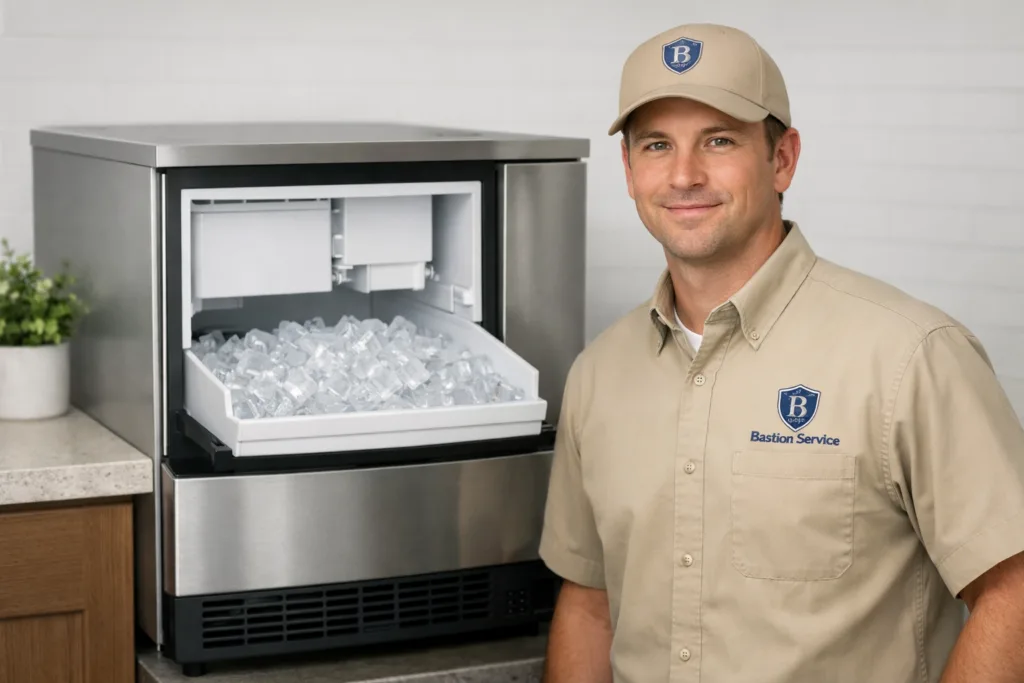




EdgeStar appliances are often used for compact kitchen setups, beverage storage, overflow food capacity, and specialty cooling, so even a small change in performance tends to show up quickly in daily life. A refrigerator that feels slightly warm, a freezer that no longer keeps food solid, or a wine cooler that drifts off its setting may all look similar at first, but the underlying cause can be very different.
For specific EdgeStar appliance paths in Marina del Rey, review EdgeStar Refrigerator Repair in Marina del Rey, EdgeStar Freezer Repair in Marina del Rey, and EdgeStar Ice Maker Repair in Marina del Rey.
Start with the symptom pattern
The most useful way to evaluate an appliance problem is to look at what changed, how often it happens, and whether the issue is getting worse. Intermittent cooling, unusual noise, repeated frost buildup, water leaks, and unstable temperatures each point to different systems inside the unit. In Marina del Rey homes, that matters because replacing parts based on guesswork can turn a manageable repair into a more expensive process.
It also helps to separate performance complaints from environmental factors. Frequent door openings, overloaded shelves, blocked vents, or poor clearance around the appliance can affect operation. When those basic conditions are normal and the appliance still cannot maintain temperature, the problem is more likely tied to airflow, controls, fans, defrost components, sealing surfaces, or the cooling system itself.
EdgeStar refrigerator issues homeowners often notice first
Food is cool, but not cold enough
A refrigerator that runs warmer than expected may still seem functional for a while, which is why this problem is easy to underestimate. Common causes include restricted airflow, dirty condenser areas, evaporator fan trouble, sensor or thermostat faults, and frost buildup behind interior panels. If milk, leftovers, or produce are spoiling sooner than usual, the refrigerator is no longer holding a safe and stable temperature.
Water inside the cabinet or on the floor
Leaks can come from a clogged drain path, excess condensation, poor door sealing, or ice-maker-related components on models equipped with them. Water under a refrigerator should not be ignored, especially if it returns after cleanup. Persistent moisture can damage nearby flooring and may signal a drainage or sealing problem that will continue until corrected.
New noise or long run times
Buzzing, clicking, rattling, or loud fan noise can point to a failing fan motor, vibration issues, compressor start trouble, or frost interfering with moving parts. A refrigerator may run longer during hot weather or after heavy use, but a noticeable change in sound or cycle length usually means something in the system is struggling to keep up.
How freezer problems usually develop
Frozen food is soft or unevenly frozen
When a freezer begins thawing and refreezing items, the issue often involves airflow restrictions, temperature control faults, gasket leakage, or frost accumulation that blocks normal circulation. This is one of the more urgent symptoms because food quality can decline before the failure becomes obvious.
Frost keeps returning
A light coating can occur from normal use, but heavy frost on shelves, walls, or around the door usually means moisture is entering the compartment or the defrost system is not doing its job. Once frost builds up enough to interfere with airflow, the freezer may start showing secondary symptoms such as weak cooling or longer run times.
The unit has power but recovery is slow
If the freezer light is on and the appliance sounds active but temperatures never fully recover, the problem may be deeper than a setting issue. This is where a proper diagnosis matters most, because the difference between a sensor problem and a sealed-system problem has a big impact on the repair decision.
Ice maker symptoms that should not be dismissed
No ice production
An ice maker that stops completely may have a water supply problem, a faulty inlet valve, a frozen fill area, a control issue, or a failure somewhere in the harvest cycle. If the machine hums, attempts a cycle, or works only occasionally, that pattern can help narrow the cause.
Slow batches or poor ice quality
Small cubes, hollow cubes, thin production, or long delays between batches often suggest low water flow, mineral buildup, internal temperature trouble, or a component that is no longer completing its cycle correctly. These issues may seem minor at first, but they usually continue to worsen rather than resolve on their own.
Overflow or leaking
Water around an ice maker is more than a nuisance. It can point to fill problems, valve failure, drainage issues, or level-control faults. If leaking appears around cabinetry or flooring, prompt inspection is usually the best move before moisture causes additional household damage.
What often goes wrong with a wine cooler
Temperature drift or unstable cooling
Wine coolers are expected to hold a narrow range, so even modest swings matter. If bottles feel warmer than expected or the display setting does not match actual cabinet conditions, the cause may involve sensors, controls, fans, door seal wear, or cooling-system trouble. Because the change can be subtle, this category is often diagnosed later than it should be.
Condensation on the door or inside the cabinet
Persistent moisture can indicate warm air entering through a weak seal, humidity interacting with inconsistent internal temperature, or a control problem that prevents stable operation. If condensation keeps returning, it is worth addressing before it leads to odor, pooled water, or uneven cooling across the cabinet.
Vibration or new operating sounds
Wine coolers typically run quietly, so a rattle or fan noise tends to stand out. Some sound changes come from leveling or minor vibration, while others suggest fan wear or mechanical stress. When noise is paired with temperature inconsistency, it is more likely to be a service issue than a harmless change.
Signs the problem is becoming more serious
- Cooling loss is getting worse over days instead of staying consistent.
- Frost returns soon after manual removal.
- The appliance runs almost nonstop.
- Leaks reappear after being cleaned up.
- Noise changes are followed by weak performance.
- Temperatures vary widely from one shelf or compartment to another.
These patterns usually mean the issue is no longer isolated to convenience. Continued use can lead to food spoilage, water damage, excess frost, or added strain on other components.
When repair is usually worth considering
Repair often makes sense when the fault is tied to a defined part or system such as a fan motor, sensor, thermostat, door gasket, drain issue, valve, or control component, and the appliance cabinet is otherwise in good shape. That is especially true when the unit serves a specific role in the home and the overall condition still supports continued use.
Replacement becomes a stronger consideration when there are repeated major cooling failures, signs of extensive corrosion, multiple overlapping faults, or sealed-system concerns that make the cost harder to justify. The right choice depends less on the symptom alone and more on what testing shows after the failure has been narrowed down.
A useful next-step mindset for Marina del Rey homeowners
It helps to treat performance changes early rather than waiting for a complete shutdown. A refrigerator that is only slightly warm today can become a food-loss problem soon after. A freezer with recurring frost may move from inconvenience to unreliable storage. An ice maker that leaks or a wine cooler that drifts off temperature can also point to problems that are easier to address before other parts are affected.
For households in Marina del Rey, the most practical approach is simple: pay attention to the exact symptom, note whether it is constant or intermittent, and act when cooling, noise, leaks, or frost no longer look normal. That makes it easier to decide whether the appliance is a good repair candidate and what kind of service is actually needed.


