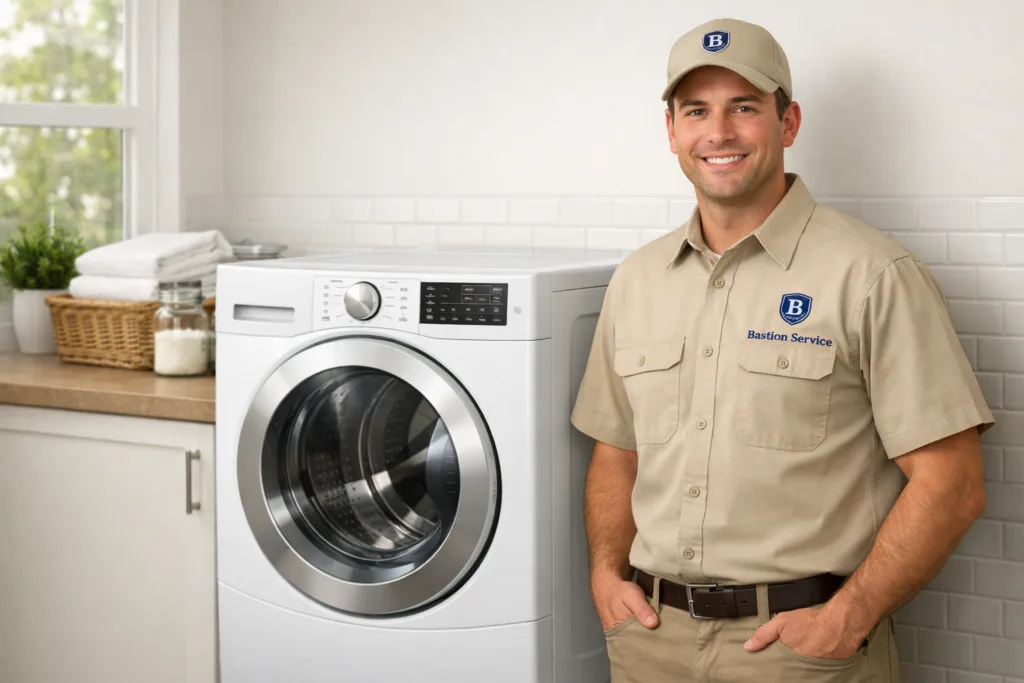
Dryer problems tend to show up in a few familiar ways: clothes stay damp, cycles run longer than they used to, the drum makes new noises, or the machine stops responding altogether. While those symptoms can seem straightforward, the underlying cause is not always obvious. A no-heat complaint, for example, might come from a failed heating component, restricted airflow, a tripped safety device, or a power issue that leaves the dryer running without full heating performance.
Common dryer problems homeowners notice
One of the most frequent service calls involves a dryer that runs but does not dry well. Electric models may have a problem with the heating element, thermal fuse, thermostat, or incoming power. Gas models can have ignition or flame-related failures that allow the drum to turn without producing steady heat. In either case, the symptom homeowners notice is the same: damp laundry at the end of the cycle.
Long dry times are another common warning sign. If loads that once finished in one cycle now need two, the issue may involve lint buildup, poor vent airflow, weak heat, or a sensor problem that causes the machine to end too early. A dryer can still seem “mostly functional” while operating inefficiently, which is why gradual performance changes should not be ignored.
Noises matter too. Squealing, scraping, thumping, or grinding often point to worn rollers, glides, belts, idler pulleys, or other drum-support parts. These components usually wear down over time rather than failing all at once. When the machine keeps running under strain, one worn part can start affecting others.
What specific symptoms can indicate
Dryer will not start
If the dryer does nothing when you press the start button, the problem may involve the door switch, start switch, thermal fuse, terminal connection, control board, or power supply. Because several failures create the same no-start symptom, testing is usually the only reliable way to tell whether the issue is simple or more involved.
Dryer starts but shuts off mid-cycle
A dryer that runs for a short time and then stops may be overheating, losing electrical continuity, or tripping a safety component. Airflow restrictions are a common reason for overheating, especially when lint has limited how heat leaves the appliance. Repeatedly restarting the machine without addressing the cause can lead to more stress on heating and motor-related parts.
Dryer gets warm but clothes are still wet
When the dryer has some heat but loads come out damp, airflow is often the first thing to check. A partially blocked vent, weak blower performance, or moisture-sensor issue can all reduce drying effectiveness. If the problem begins earlier in the laundry process and clothing is coming out unusually wet from the washer, Washer Repair in West Hollywood may be the better place to start.
Drum turns slowly, unevenly, or not at all
If the motor hums but the drum does not rotate properly, a broken belt, worn pulley, seized roller, or motor problem may be involved. In some cases, the dryer still powers on and makes sound, which can make it look like a heating problem when the real issue is mechanical movement. A proper inspection helps separate drive-system faults from electrical ones.
Burning smell or unusually high heat
A burning odor, scorched smell, or cabinet that feels hotter than normal should be treated as a stop-use symptom until the cause is identified. Lint accumulation, dragging support parts, motor strain, and electrical failures can all create excessive heat. Even if the smell comes and goes, it should not be written off as normal operation.
When service makes sense
It is usually time to schedule repair when the dryer is no longer drying reliably, starts making new mechanical noise, overheats, trips breakers, or stops unexpectedly. Even if the appliance still finishes some loads, inconsistent performance is often a sign that a small problem is becoming a larger one. Belts can fray, rollers can wear flat, and repeated overheating can shorten the life of nearby components.
Gradual decline is worth attention as well. Many households adjust to longer dry times or rerun loads for weeks before recognizing that the appliance is no longer operating normally. Addressing those symptoms earlier often makes the repair path simpler and helps prevent unnecessary wear on the machine.
Repair or replacement?
Many dryer repairs are reasonable when the problem is limited to a replaceable component and the rest of the machine is in solid condition. Heating elements, igniters, thermostats, thermal fuses, belts, rollers, and idler assemblies are common examples of repairs that can restore normal operation without replacing the appliance. The better choice depends on the dryer’s age, overall condition, repair history, and whether there are signs of multiple failing systems at once.
Replacement becomes more likely when there is severe cabinet wear, repeated breakdowns, significant electrical damage, or repair costs that do not make sense compared with the condition of the unit. A diagnosis is useful because it turns a guess into a decision based on actual failed parts and the likelihood of additional issues.
What a proper dryer diagnosis should cover
A thorough dryer service visit should go beyond confirming that the machine is “not heating” or “making noise.” It should account for airflow, heating performance, drum movement, electrical supply, safety components, and the specific conditions that appear during operation. That process helps show whether the problem is coming from one failed part, a vent-related restriction, or a combination of issues.
For homeowners in West Hollywood, the most helpful outcome is understanding what failed, whether continued use could make things worse, and what repair path fits normal household laundry needs. That kind of assessment keeps the next step practical instead of leaving the household to guess whether the dryer is safe to run, worth fixing, or likely to keep causing the same problem.