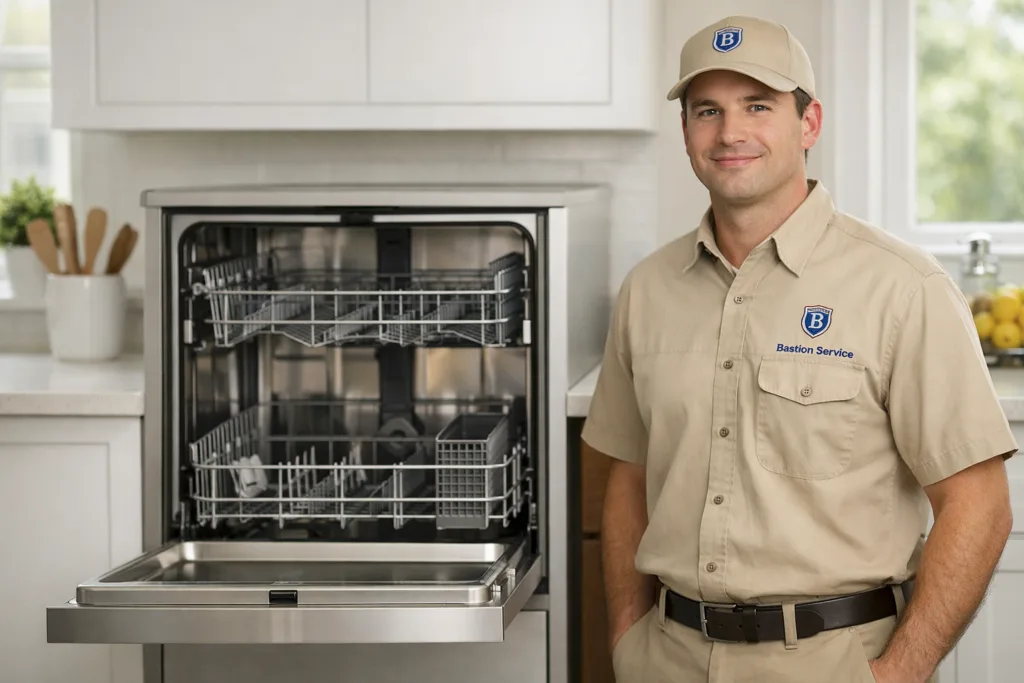
When a dishwasher starts leaving food behind, holding water at the bottom, or dripping onto the floor, the disruption shows up quickly in everyday kitchen cleanup. The most useful next step is figuring out whether the problem is related to washing, draining, heating, sealing, or controls, because similar symptoms can come from very different failures.
Common dishwasher problems and what they often mean
Dishes are still dirty, gritty, or cloudy
If a cycle finishes but plates and glasses still do not look clean, the issue may be more than detergent. Restricted spray arms, poor water fill, a weak circulation pump, clogged filters, or mineral buildup can all reduce wash performance. Cloudy glassware can also point to rinse problems or low water temperature, especially if the machine no longer seems to dry well at the end of the cycle.
When cleaning results have been getting worse over time, it often suggests buildup or wear inside the wash system rather than a sudden electrical failure. If the decline happened all at once, a pump, fill, or heating problem becomes more likely.
Water will not drain out
Standing water in the tub usually indicates a blockage or drain-system fault. A clogged filter, obstructed drain hose, jammed pump, or restriction where the dishwasher connects to the sink drain can all produce the same symptom. In some cases, the unit may seem to complete the cycle even though the drain portion is not working correctly.
Drain issues should not be ignored for long. Water left sitting in the machine can lead to odor, repeated cycle problems, and extra strain on the pump.
Water leaks from the door or underneath
Leaks may come from a worn door gasket, a cracked hose, a loose fitting, an overfill condition, or internal spray pressure pushing water in the wrong direction. Door leaks are sometimes mistaken for a bad seal when the real problem is a wash arm issue or improper leveling.
Even a small amount of leaking matters. Moisture beneath a dishwasher can affect flooring, cabinets, and hidden areas under the appliance before the full extent of the damage is visible.
The dishwasher will not start
If the dishwasher has power but does not begin a cycle, possible causes include a faulty door latch, control problem, interface failure, or a switch that is not signaling the machine correctly. Sometimes the problem appears to be electrical when it is actually a latch or safety-related issue keeping the unit from running.
The cycle starts and then stops
A dishwasher that begins normally and then shuts down partway through may be dealing with drainage trouble, overheating, control faults, or a component that fails once it warms up. Intermittent stopping can be especially frustrating because the machine may work once and fail the next time.
It is making new noises
Buzzing, grinding, rattling, or loud humming often points to debris in the pump area, wear in a motor component, a damaged spray arm, or vibration caused by installation movement. A dishwasher that was previously quiet and is now noticeably loud is often giving an early warning that a part is wearing out or something is obstructing normal operation.
Why the same symptom can have different causes
Dishwashers are full of overlapping systems. Poor cleaning may come from low water fill, weak circulation, heating problems, or clogged spray paths. A leak may be caused by a gasket, but it may also start because the machine is overfilling or spraying water where it should not. Standing water could be a simple blockage or a failing drain pump.
That is why symptom-based repair decisions work best when the full pattern is considered: when the issue started, whether it happens every cycle, whether the machine still heats, and whether other signs like odor, moisture, or unusual noise are appearing at the same time.
Signs you should stop using the dishwasher
Some dishwasher issues are inconvenient. Others can create bigger household problems if the appliance keeps running. It is smart to pause use if you notice:
- Water leaking onto the floor
- Repeated standing water after cycles
- A burning smell or signs of electrical trouble
- Loud grinding or harsh buzzing from the pump area
- Cycles that stop mid-program over and over
- Poor cleaning combined with no heat or no draining
In West Los Angeles homes, catching these warning signs early can help avoid cabinet damage, flooring issues, and more extensive component failure inside the appliance.
What a repair visit should clarify
A useful service call should do more than identify the visible symptom. It should determine whether the problem is in the wash system, drain path, water inlet, heating circuit, latch assembly, or electronic controls. That helps homeowners understand not just what has failed, but also whether continued use is safe and whether the repair makes practical sense for the condition of the machine.
For many households, the most important questions are straightforward: what is causing the problem, is it likely to get worse soon, and is the recommended fix worth doing. Good dishwasher repair in West Los Angeles should answer those questions clearly.
Repair or replace?
Not every malfunction means a dishwasher is nearing the end. Many common problems involving pumps, hoses, inlet valves, door seals, latches, and drain components are often repairable when the rest of the machine is still in decent condition. Replacement becomes more reasonable when there are multiple major failures, ongoing reliability issues, or an older unit with a costly control-system problem.
A sensible recommendation usually depends on several factors:
- The age of the dishwasher
- The condition of the racks, tub, and interior components
- Whether the issue is isolated or part of a repeated pattern
- The cost of the failed part compared with the condition of the appliance overall
That kind of comparison helps prevent two common mistakes: replacing a unit that could have been repaired, or investing in a machine that is already showing broader signs of decline.
Simple observations that help before service
Before scheduling repair, it can help to note a few details about the symptom. For example, does the dishwasher fill with water normally? Does it sound like it is washing? Does it drain at all, or leave the full tub at the end? Is the leak coming from the front, the side, or underneath? Does the problem happen on every cycle or only sometimes?
These observations can make diagnosis faster and help separate a drainage issue from a circulation problem, or a sealing issue from an overfill condition. Homeowners do not need to disassemble anything, but paying attention to what part of the cycle is failing can be very helpful.
Household conditions that can affect dishwasher performance
Not every complaint starts with a broken major part. In some homes, dishwasher performance is affected by sediment, hard water residue, restricted filters, or loading patterns that interfere with spray coverage. A machine may still run, but not clean or rinse as effectively as it should. Over time, those smaller issues can contribute to pump strain, heating trouble, and premature wear.
That is why recurring symptoms deserve attention even if the dishwasher still technically finishes a cycle. A machine that runs without cleaning well is still telling you something is wrong.