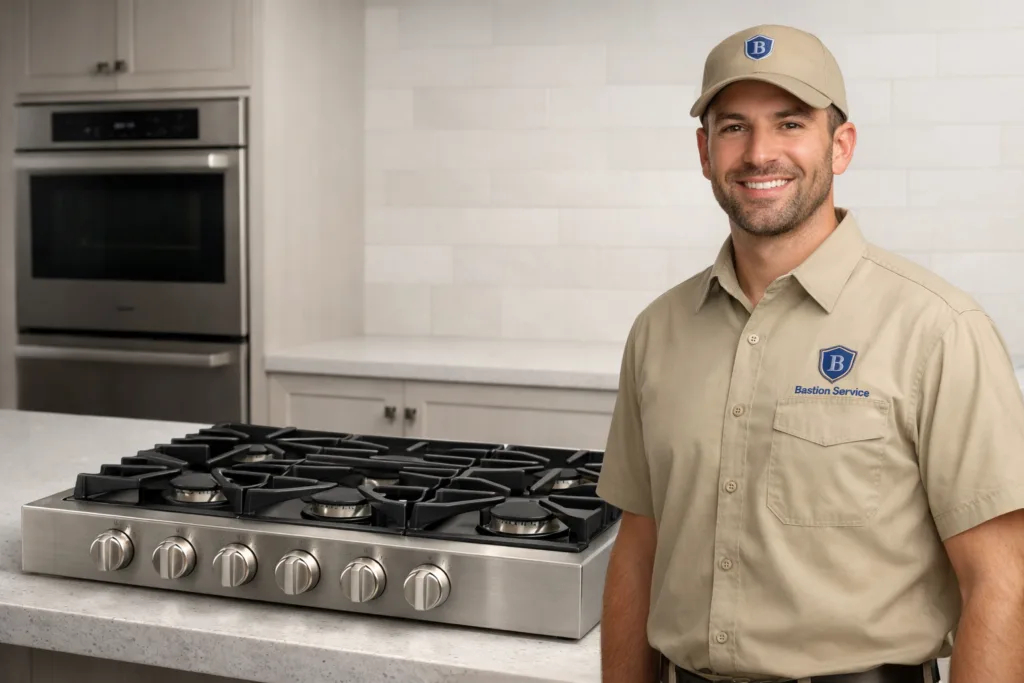
Common Dacor cooktop problems in Century City homes

Cooktop failures usually show up first as a small inconvenience: a burner that takes too long to light, a heating zone that runs hotter than expected, or controls that respond only some of the time. With Dacor units, those surface symptoms can come from very different internal causes, so the most useful starting point is matching the symptom pattern to the likely failure area.
Related Dacor and cooktop service paths in Century City include Dacor Appliance Repair in Century City, Cooktop Repair in Century City, and Dacor Refrigerator Repair in Century City.
Burners that click but do not light
On gas cooktops, repeated clicking without ignition often points to trouble around the ignition system rather than the gas supply alone. Moisture after cleaning, a misaligned burner cap, debris in the burner head, or a worn spark igniter can all cause the burner to fail to light reliably. If the clicking continues after the area is dry and properly assembled, the cooktop should be inspected before regular use continues.
If you notice a persistent or strong gas odor, stop using the appliance and treat it as a safety issue first. That situation calls for immediate caution, not trial-and-error operation.
Weak, uneven, or unstable flame
A burner flame that looks low, patchy, or uneven can affect everything from boiling speed to simmer control. In daily use, homeowners often notice food cooking inconsistently or one pan heating much more slowly than another on the same burner size. Common causes include blocked burner ports, burner head wear, valve problems, or issues affecting how gas is delivered and ignited at the burner.
When the flame changes after the cooktop warms up, that can be an important clue. Intermittent performance may indicate a component that works when cool but becomes unreliable during normal cooking temperatures.
Electric or induction zones not heating correctly
On electric and induction Dacor cooktops, a heating zone may stay cold, cycle off too soon, overheat, or fail to hold a selected setting. Those symptoms can come from a bad element, a sensor problem, a damaged switch, or an electronic control fault. Two cooktops can appear to have the same issue from the surface while requiring very different repairs underneath.
If one zone behaves differently from the others under the same cookware and settings, that usually points to a component issue rather than normal performance variation.
Controls that are inconsistent or unresponsive
Unresponsive touch controls, loose-feeling knobs, indicator lights that do not match the selected setting, or zones that power on only intermittently often suggest a failure in the control interface or related electrical components. In some cases, the issue is isolated to one burner control. In others, it reflects a broader problem with the cooktop’s internal power or control system.
Cracked glass or visible surface damage
Glass cooktop damage is more than a cosmetic concern. A crack can affect safe operation, cleaning, and heat transfer, and it may also allow moisture or debris to reach components below the surface. If the top is cracked, chips are spreading, or heating zones beneath the damaged area are acting unpredictably, use should be limited until the unit is evaluated.
What different symptoms often mean
Looking at how the problem appears in real use can help narrow down whether repair is likely to be simple or more involved.
- Only one gas burner misbehaves: often tied to that burner’s cap, igniter, head, or valve-related components.
- All gas burners click strangely: may point to a shared ignition issue, switch problem, or moisture affecting the system.
- One electric zone overheats: commonly associated with a failed switch, sensor, or element control issue.
- Heat level does not match the setting: can indicate regulation failure rather than total loss of power.
- Intermittent shutdowns: may suggest overheating protection, wiring faults, or electronic control problems.
- Problems after cleaning: often involve moisture, misalignment, or residue affecting ignition and control response.
Why diagnosis matters before replacing parts
Dacor cooktops can have model-specific components, and several failures can create nearly identical symptoms. A burner that will not heat, for example, might be caused by the element itself, the control behind it, the wiring feeding it, or a sensor that is sending incorrect information. Replacing the most obvious part without testing can add cost without fixing the actual problem.
This matters even more with intermittent complaints. A cooktop that works normally for part of the day but acts up after extended use often has a component failing under heat or load. Those are issues that usually cannot be judged accurately by appearance alone.
Signs it is time to schedule service
Homeowners in Century City usually schedule cooktop service when the appliance is still partly working but no longer working predictably. That is often the best time to act, before added wear spreads to other components.
- Burners take multiple tries to ignite
- Clicking continues after ignition or when the cooktop is off
- One burner heats much faster or slower than the others
- Controls respond inconsistently or not at all
- The cooktop shuts off unexpectedly during use
- A heating zone stays on high or will not maintain low heat
- The unit trips power or shows signs of electrical instability
- There is visible glass damage or impact cracking
When continued use can make the repair worse
Some cooktop problems stay relatively contained if addressed early. Others tend to worsen with repeated use. Continued ignition attempts can wear out spark components more quickly. An overheating electric zone can place extra stress on switches and controls. A burner that is not regulating properly can affect cookware, cooking results, and the condition of nearby parts.
Repeated clicking, unstable flame, unexpected shutdowns, and cracked glass are all signs that it is better to pause normal use until the problem is identified. The longer an abnormal burner or control issue is ignored, the greater the chance that a single-component repair turns into a more expensive service visit.
Repair or replacement: how the decision is usually made
Whether to repair a Dacor cooktop or replace it depends on the appliance’s age, condition, part availability, and how isolated the failure really is. If the issue is limited to a defined component such as an igniter, switch, element, or burner-related part, repair is often worthwhile. If the cooktop has multiple failing systems, recurring electronic problems, or significant surface damage along with internal faults, replacement may make more sense.
For many Century City households, the deciding factors are less about a single symptom and more about the overall picture: how the cooktop has been performing recently, whether this is a first repair or a repeated issue, and whether the expected repair restores normal daily use without chasing one problem after another.
What homeowners can check before service
There are a few simple observations that can help make the problem easier to identify:
- Note whether the issue affects one burner or multiple burners.
- Check whether the problem happens every time or only after the cooktop has been in use.
- On gas models, make sure burner caps are seated correctly after cleaning.
- Look for signs of spills, moisture, or burned-on debris around the affected area.
- Pay attention to whether indicator lights, sounds, or control responses match the selected setting.
These checks can be helpful, but they are not a substitute for testing internal components when the cooktop continues to misbehave.
What effective cooktop service should accomplish
The goal of service is not just to get a burner working for the moment. It should identify the failed part or system, explain why the symptom is happening, and clarify whether the repair is likely to restore stable everyday performance. That gives homeowners a sensible basis for deciding on the next step instead of guessing from surface symptoms alone.
When a Dacor cooktop in Century City has ignition trouble, uneven heating, control problems, or surface damage, the right repair path depends on what testing shows under normal operating conditions. A proper evaluation helps separate minor issues from broader wear and gives you a realistic idea of whether repair is the practical choice.