




Unexpected appliance problems are frustrating partly because the visible symptom is not always the real failure. A Dacor refrigerator that feels warm, a dishwasher that stops mid-cycle, or an oven that bakes unevenly can each stem from several different causes. The most useful first step is to focus on what the appliance is doing, when the issue started, and whether the problem is getting worse.
How to evaluate Dacor appliance symptoms at home
Before scheduling repair, it helps to narrow the symptom into a simple pattern. Is the appliance completely nonfunctional, intermittently failing, leaking, making new noise, or running with reduced performance? That distinction often points the diagnosis in the right direction.
Homeowners in Playa Vista can usually gather helpful observations without taking anything apart:
- whether the problem happens every cycle or only sometimes
- whether the appliance recently showed an error code
- whether performance dropped gradually or failed all at once
- whether there is heat, water, frost, odor, or unusual sound involved
- whether resetting power changed anything
These details matter because premium appliances often have overlapping symptoms. Poor oven performance, for example, may come from a heating issue, a sensor issue, or a control issue. A refrigerator that runs constantly may be responding to an airflow problem, a door seal problem, or a cooling-system fault.
Refrigerator and freezer problems that should not wait
Dacor refrigerator and freezer issues usually become urgent when food safety is involved. If the refrigerator compartment is warming, the freezer is softening food, frost is building where it should not, or the unit is running almost nonstop, it is smart to treat the problem as time-sensitive.
Common symptom patterns include:
- warm fresh-food section with a colder freezer
- freezer temperature rising or ice cream turning soft
- water collecting under drawers or beneath the unit
- excess frost on interior panels
- fan noise, buzzing, clicking, or repeated start attempts
- ice maker not producing or dispensing properly
Not every cooling complaint means a major system failure. Some problems come from blocked airflow, fan issues, defrost faults, sensor drift, or door sealing problems. Others are more involved. What matters most is how quickly temperatures recover and whether the appliance can still hold a safe range consistently.
If the cabinet feels warmer than usual, food spoils faster, or frost keeps returning after being cleared, continued use may add stress to other components. Early diagnosis helps separate a repairable component problem from broader wear.
Dishwasher symptoms that point to more than dirty dishes
A dishwasher often gives warning signs before it stops completely. Dishes may come out cloudy, gritty, wet, or only partly cleaned. Cycles may take longer than normal, the machine may hum without washing properly, or water may remain in the bottom after completion.
With Dacor dishwashers, the most common household complaints tend to fall into a few groups:
- poor cleaning from circulation or spray issues
- standing water from drainage restrictions or pump problems
- leaks from door sealing, overfilling, or internal component wear
- cycle interruption from latch, control, or sensor faults
- poor drying from heating or rinse-related problems
Leaks deserve prompt attention, especially in finished kitchens. Even minor dripping can damage flooring, trim, or surrounding cabinetry over time. If the dishwasher is shutting off mid-cycle, leaving detergent behind, or repeatedly failing to drain, waiting usually does not improve the outcome.
Some issues are simple maintenance-related concerns, but recurring drainage, noise, or leak symptoms typically mean the appliance needs a closer look.
Cooktop and range issues homeowners notice first
Dacor cooktops and ranges usually announce trouble through ignition behavior, heating inconsistency, or control problems. On gas models, repeated clicking, delayed ignition, weak flame, or burners that light unevenly are common warning signs. On electric models, slow heating, overheating, or burners that do not regulate correctly often point to a failing component in the heating or control circuit.
Typical symptom patterns include:
- burner clicks repeatedly after ignition
- burner will not light or lights only sometimes
- flame is uneven or unstable
- surface element will not heat or stays too hot
- oven portion of the range heats slowly or unevenly
- touch controls or knobs do not respond as expected
Repeated clicking is not just a nuisance. Moisture, alignment, ignition components, or wiring can all be involved, and forcing repeated use may wear related parts further. If a burner is not operating normally, or if heat output is noticeably inconsistent, it is better to stop guessing and have the fault isolated properly.
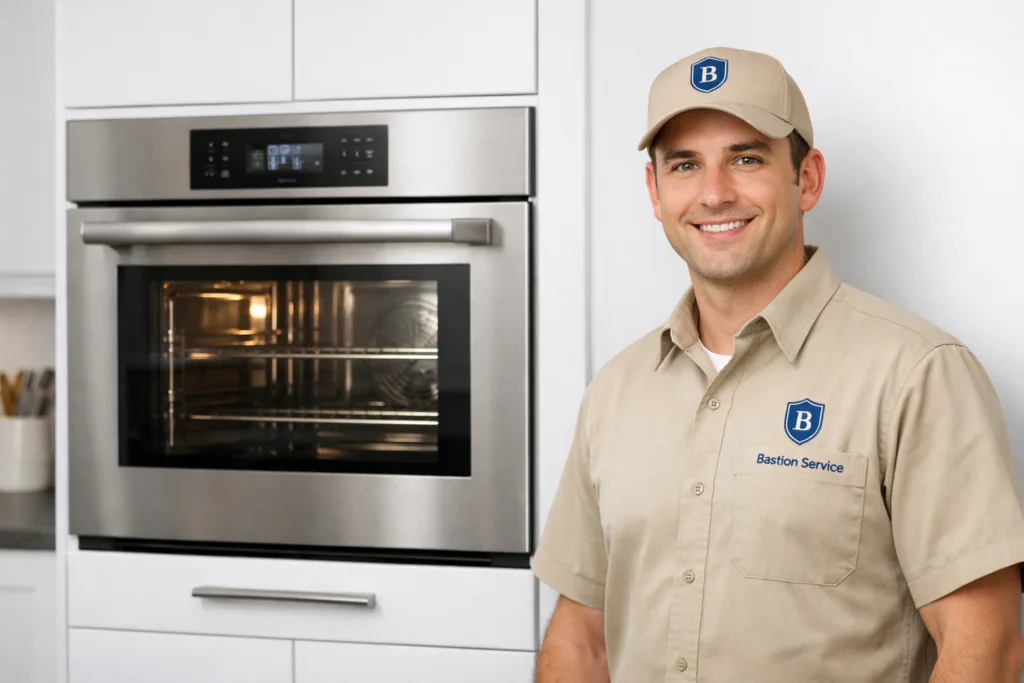
Oven and wall oven performance problems
Oven problems are often easier to live with than refrigerator problems, which is why they are commonly delayed. But slow preheating, hot spots, inaccurate temperatures, broil failure, convection issues, or random shutdowns usually get worse rather than better.
Common Dacor oven and wall oven symptoms include:
- preheat taking much longer than before
- food browning unevenly or finishing at different rates
- temperature not matching the setting
- broil not working or working weakly
- door not sealing well
- display or control errors interrupting operation
These complaints may involve igniters, elements, sensors, relays, fans, controls, or calibration issues. Because many cooking problems develop gradually, households often adapt by rotating pans, adding cook time, or changing rack positions. That workaround can hide a real fault for weeks.
If the oven is clearly off target, shuts off unexpectedly, or struggles to maintain stable heat, repair is worth considering before the problem affects more components or leaves the unit unusable at an inconvenient time.
Why the same symptom can mean different repairs
One reason appliance diagnosis matters is that identical complaints can come from very different failures. A warm refrigerator is not always a sealed-system issue. A dishwasher that hums is not always a bad pump. An oven that does not heat is not always a failed element or igniter. Symptom-based evaluation helps clarify:
- whether the issue is electrical, mechanical, drainage-related, ignition-related, or control-related
- whether the appliance can be used safely while waiting
- whether one failed part is the main cause or only part of a larger problem
- whether the repair scope is likely to be limited or extensive
That is especially important with premium residential appliances, where unnecessary parts replacement can become costly without solving the underlying issue.
When repair makes sense and when replacement enters the conversation
Most homeowners do not decide between repair and replacement based on brand alone. The better question is whether the appliance has been reliable overall and whether the current problem appears isolated or part of repeated decline.
Useful factors to weigh include:
- the age of the appliance
- how well it has performed up to now
- whether this is a first major issue or one of several
- the condition of key systems beyond the failed part
- the likely total cost relative to remaining useful life
A well-maintained Dacor refrigerator, dishwasher, cooktop, oven, range, wall oven, or freezer is often worth repairing when the issue is limited and identifiable. Replacement becomes a more serious consideration when multiple systems are deteriorating, performance remains unstable after prior repairs, or the appliance is approaching the end of its practical lifespan.
Signs that a small problem is becoming a larger one
Many appliances fail gradually. Small changes in noise, timing, or consistency often show up before a complete breakdown. Paying attention to those shifts can reduce disruption and prevent avoidable damage.
Watch for changes such as:
- cycles taking noticeably longer
- new buzzing, grinding, rattling, or clicking sounds
- temperature drift in cooling or cooking appliances
- water appearing where it should not
- controls needing repeated input to respond
- doors no longer sealing as firmly as before
If the appliance still works but no longer works normally, that is often the best moment to address it. Waiting until it stops completely can mean more inconvenience, more damage around the appliance, or a wider repair scope.
What Playa Vista homeowners should do before scheduling service
A little preparation can make the service process easier. Write down the model if it is accessible, note any error message exactly as shown, and be ready to describe whether the issue is constant or intermittent. If there is a leak, standing water, cooling loss, burning smell, or abnormal electrical behavior, stop using the appliance until it can be evaluated.
For households in Playa Vista, the most effective path is usually simple: pay attention to the symptom pattern, avoid workarounds that may worsen the problem, and make repair decisions based on what the appliance is actually doing rather than on assumptions.


