




Dacor appliances are designed with advanced cooking, cooling, and cleaning systems, so the same outward symptom can come from very different internal faults. A refrigerator that seems warm, an oven that drifts off temperature, or a dishwasher that stops with water inside may all require more than a quick part swap. The most useful first step is to match the symptom to the system involved so the repair decision is based on the actual condition of the appliance.
For specific Dacor appliance paths in Mid-Wilshire, review Dacor Refrigerator Repair in Mid-Wilshire, Dacor Freezer Repair in Mid-Wilshire, and Dacor Dishwasher Repair in Mid-Wilshire.
How to evaluate a Dacor appliance problem at home
Before arranging repair, it helps to notice a few details about how the appliance is failing. Is the problem constant or intermittent? Did it start suddenly after working normally, or has performance been getting worse over time? Are there unusual sounds, visible leaks, error codes, burning smells, repeated clicking, or temperature changes?
Those details often point to the right category of failure:
- Heating problems in ovens, ranges, and cooktops may involve elements, igniters, relays, sensors, or controls.
- Cooling problems in refrigerators and freezers may involve airflow, defrost components, fans, sensors, sealed-system faults, or door sealing issues.
- Water movement problems in dishwashers may involve pumps, valves, filters, spray arms, drain systems, or leak points.
- Control problems can appear across nearly any appliance when buttons stop responding, cycles fail to start, or error codes repeat.
For households in Mid-Wilshire, paying attention to the symptom pattern can also help determine whether the appliance can wait a short time for service or whether it should be taken out of use right away.
Refrigerator and freezer symptoms that should not be ignored
Dacor refrigerator and freezer issues tend to become more urgent than they first appear. Many owners notice the problem only after food softens, condensation appears, or the compressor seems to run constantly. By that point, the unit may already be struggling with airflow, defrosting, or temperature regulation.
Signs of a developing cooling problem
- Fresh food section feels warm while the freezer still seems cold
- Ice cream softens or frozen items begin to thaw
- Heavy frost forms on interior panels or around stored food
- Water appears under drawers or near the bottom of the unit
- Fans become unusually loud, or clicking starts without normal cooling
- Doors do not seem to seal tightly
These symptoms may point to a blocked drain, failed evaporator fan, defrost fault, sensor issue, damaged gasket, or a more serious cooling-system problem. A built-in or premium refrigerator is often worth evaluating carefully because replacement can be more disruptive than repair, especially when fit and finish matter in an existing kitchen.
If temperatures are clearly rising, it is best not to keep opening the doors unnecessarily or hope the problem corrects itself. Continued operation under strain can worsen food loss and increase wear on major components.
Dishwasher problems that affect both cleaning and the kitchen around it
When a Dacor dishwasher starts underperforming, the issue is not always just poor wash results. A dishwasher can also create cabinet moisture, floor damage, and cycle interruptions that turn a small problem into a larger household inconvenience.
Common dishwasher symptom patterns
If dishes come out gritty, cloudy, or still dirty, the cause may be weak spray pressure, poor water heating, blocked spray arms, filter problems, or wash pump issues. If standing water remains after the cycle, the problem may involve the drain pump, drain path, or electronic controls that fail to complete the drain sequence.
Leaks deserve faster attention. Water near the door, under the machine, or around nearby cabinetry may come from a door gasket, loose connection, cracked component, overfilling condition, or internal circulation problem. Not every leak is severe at first, but repeated moisture exposure can damage surrounding surfaces.
A dishwasher that starts and stops unpredictably, fails to latch correctly, or flashes errors can also indicate a control or safety-switch problem rather than a simple cleaning issue.
Cooktop and range issues often begin as inconsistent performance
Dacor cooktops and ranges are often called in for problems that begin intermittently. A burner may click several times before lighting, a flame may look uneven, or an electric element may heat inconsistently before failing more completely. Those early symptoms matter because they often reveal wear, contamination, or electrical faults before the appliance stops working altogether.
Gas burner and ignition concerns
Repeated clicking, delayed ignition, burners that fail to light, and uneven flame patterns can be caused by buildup in burner ports, moisture after cleaning, failing igniters, switch issues, or wiring faults. If ignition behavior changes suddenly, that is a sign the problem should be evaluated rather than ignored.
If there is a strong or persistent gas odor, stop using the appliance and treat it as a safety concern first.
Electric heating and control problems
On electric cooktops and ranges, weak heat, elements that do not cycle correctly, or controls that respond inconsistently may point to failed elements, switches, relays, or sensor and board issues. A range that trips breakers, sparks, or shows signs of overheating should not stay in normal use until the cause is identified.
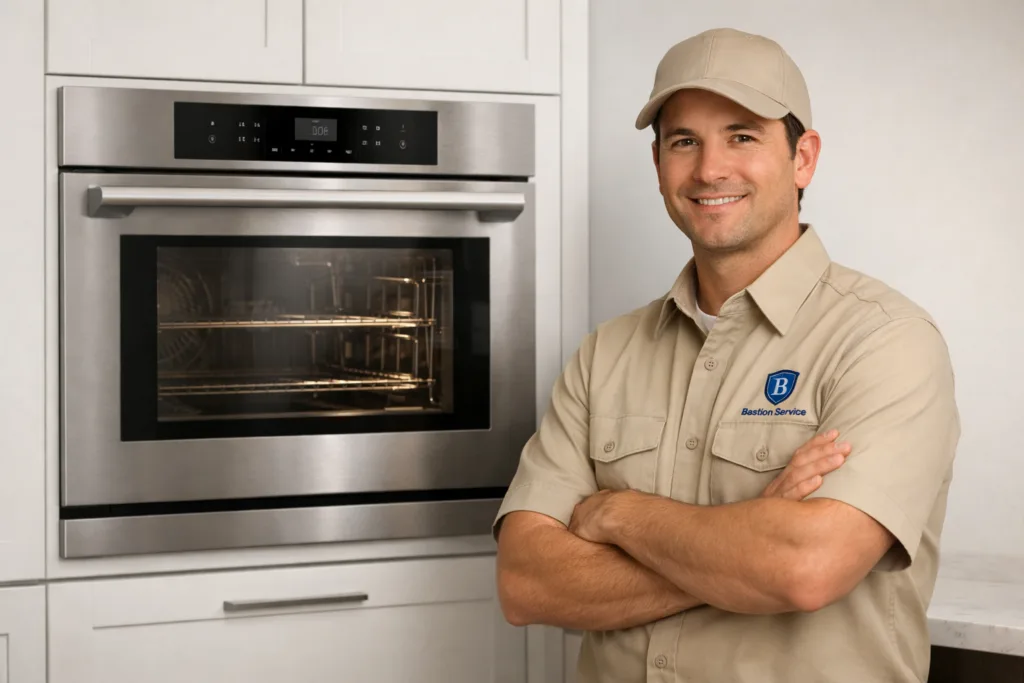
Oven and wall oven faults usually show up in cooking results first
Dacor ovens and wall ovens often give warning signs before a full failure. Homeowners may notice longer preheat times, food browning unevenly, or recipes taking longer than usual. These are not just convenience issues. They often indicate that the oven is no longer regulating heat correctly.
Symptoms that suggest an oven repair need
- Slow or incomplete preheating
- Temperature swings during baking
- Broil function not working
- Display powers on but oven does not heat
- Door does not close or seal properly
- Fan noise changes or convection performance drops
- Error codes appear during heating cycles
Possible causes include bake or broil element failure, a weak igniter, temperature sensor problems, relay or control board faults, fan issues, or hinge and door-seal wear. In a wall oven installation, repair is often attractive when the rest of the appliance remains in good condition, since replacing a built-in unit can involve added planning and fit concerns.
When to stop using the appliance and schedule service promptly
Some problems are inconvenient but manageable for a brief period. Others can damage the appliance further or create safety and property concerns. In a household kitchen, the following signs usually mean the unit should not stay in regular use:
- Persistent gas smell or irregular burner ignition
- Burning odor, sparking, or repeated breaker trips
- Refrigerator or freezer failing to maintain temperature
- Dishwasher leaking onto the floor or into cabinetry
- Oven overheating, shutting off unexpectedly, or showing repeated error codes
- Grinding, buzzing, or fan noise paired with poor performance
- Visible water pooling around any kitchen appliance
Acting early can prevent secondary damage, especially when water, heat, or cooling loss is involved.
Repair or replace: what usually makes the decision easier
With Dacor appliances, the right choice usually comes down to the number of failing systems, the condition of the appliance overall, the likely repair outcome, and how disruptive replacement would be. A single identifiable failure in an otherwise solid appliance often supports repair. Multiple recent breakdowns, major cooling-system trouble, or widespread control issues can shift the balance toward replacement.
Homeowners in Mid-Wilshire also tend to weigh installation complexity. A built-in refrigerator, wall oven, or premium range may justify repair more often because replacing it can involve sizing, finish matching, and kitchen coordination that go beyond the appliance itself.
A useful service decision is not just about whether the unit can be made to run again. It is about whether the repair addresses the real cause of the problem and offers a reasonable path forward for daily household use.
What to have ready before a repair visit
A little preparation can make the diagnosis more efficient. Try to note:
- The full model if it is easy to access
- When the problem started
- Whether the issue is constant or intermittent
- Any error codes shown on the display
- Unusual sounds, smells, leaks, or temperature changes
- Whether the problem appeared after a power outage, cleaning, or recent moving of the appliance
That history is often more helpful than a general description like “not working right,” especially on premium appliances with multiple systems interacting at once.
Choosing the next step for a Dacor appliance in Mid-Wilshire
Whether the issue involves cooling, drainage, heating, ignition, or controls, the most helpful approach is to judge the appliance by its actual symptoms instead of assuming the fix is obvious. Dacor refrigerator, freezer, dishwasher, cooktop, oven, range, and wall oven problems can look similar on the surface while coming from very different causes underneath.
For households in Mid-Wilshire, the best next step is usually the one that clarifies risk, likely repair scope, and whether continued use makes sense. That kind of practical evaluation helps turn a frustrating kitchen problem into a workable plan.


