
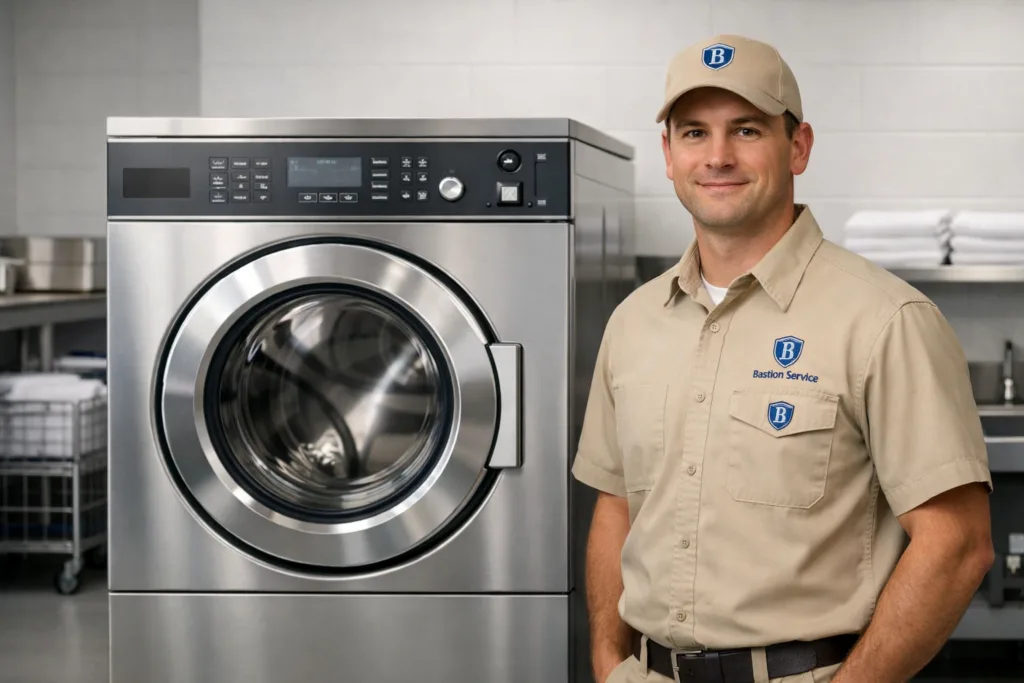




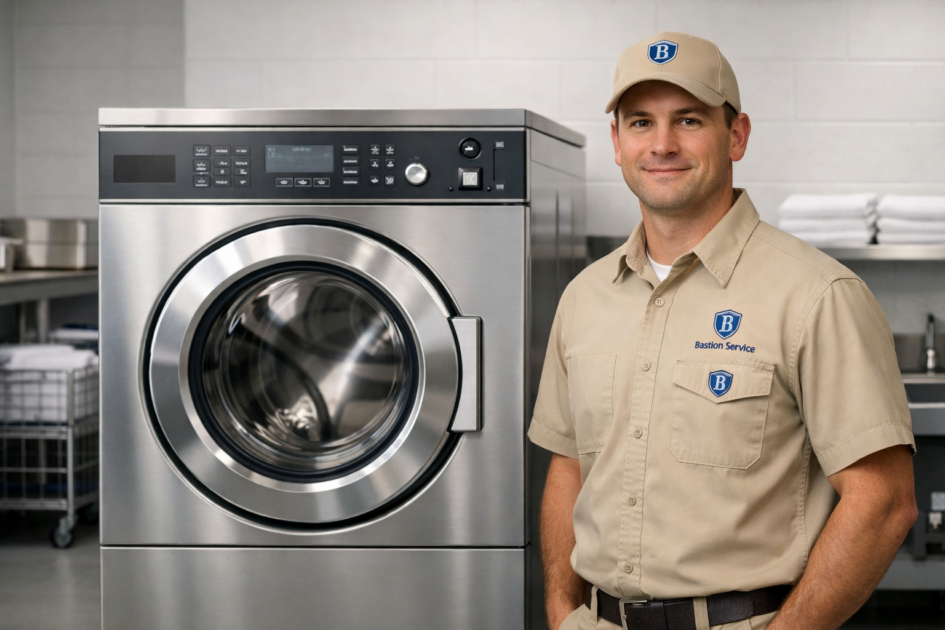
Missed wash cycles can disrupt staffing, inventory flow, sanitation routines, and customer-facing operations within hours, especially when a machine is part of a daily production workflow. The most useful first step is identifying whether the problem is isolated to the washer itself, tied to utility conditions, or developing from wear that has been building over time.
Related commercial equipment paths in Mar Vista include Speed Queen Washer Repair in Mar Vista and Wascomat Washer Repair in Mar Vista.
Commercial washer problems that deserve prompt attention
A washer that will not start may be dealing with a door or lid lock fault, control failure, power-supply interruption, or user-interface issue. If the unit fills but does not agitate or spin, the problem may involve the motor, belt, drive components, capacitor, or electronic controls. When standing water is left in the tub, technicians typically look at the drain pump, hose restrictions, pressure sensing, and control response during the drain phase.
Leaks are another common reason businesses call for service. Water can escape from supply hoses, inlet valves, pump assemblies, tub seals, door gaskets, or an overfill condition caused by inlet or sensing faults. Even a minor leak matters in a commercial setting because it can affect floors, nearby equipment, employee safety, and the ability to keep the laundry area operating normally.
Excess vibration, repeated out-of-balance stops, or loud banging during spin often point to worn suspension parts, installation issues, overloaded cycles, or drum support wear. These symptoms usually get worse under full-capacity use, so a machine that seems manageable during lighter loads may become unreliable during peak operating periods.
How common symptoms help narrow the cause
Poor cleaning, residue, or incomplete rinsing
If loads come out with detergent residue, uneven cleaning results, or cycle times that do not match normal performance, the issue may involve weak water inlet flow, improper drain-out, control problems, or reduced spin speed. In commercial use, these symptoms often show up first as slower laundry turnover rather than a complete shutdown, but they still signal a washer that is no longer performing to spec.
Washer not draining or leaving loads too wet
When a washer completes a cycle with water still in the tub or leaves textiles unusually heavy and wet, the cause may be a blocked drain path, failing pump, pressure-sensing problem, or spin-system fault. If items are reaching the drying stage saturated instead of properly extracted, Commercial Dryer Repair in Mar Vista may also be worth considering when delays are affecting the full laundry workflow rather than one machine alone.
Noise, burning smell, or overheating concerns
Grinding, scraping, sharp knocking, or a hot electrical odor should not be ignored. Those signs can point to bearing wear, motor stress, pulley damage, wiring issues, or control components overheating under load. Continued use in this condition can increase parts damage and turn a contained repair into a longer outage.
Error codes and intermittent shutdowns
Some commercial washers fail in a clear, repeatable way, while others stop mid-cycle only under heavier demand. Intermittent faults often suggest a sensor issue, wiring connection problem, board failure, or component that tests inconsistently once the machine heats up or reaches higher spin loads. That is why a machine that occasionally recovers on restart still deserves evaluation before it drops out of service completely.
When to stop using the machine
It is usually best to stop operation if the washer is leaking, tripping breakers, failing to drain, making severe mechanical noise, stopping mid-cycle, or producing a burning smell. Running the unit further can damage the motor, pump, control system, or adjacent equipment, and it can create avoidable safety issues in the laundry area.
Businesses should also schedule service when the machine is technically still running but showing declining results. Longer cycle times, inconsistent extraction, repeated imbalance events, or occasional fill and drain problems are often early indicators of a fault that will become more disruptive if ignored.
Repair versus replacement for commercial laundry equipment
Repair is often the right choice when the washer is structurally sound and the fault is limited to parts such as pumps, valves, door locks, hoses, controls, or drive components. Replacement becomes more likely when the equipment has repeated major failures, extensive wear across multiple systems, or downtime patterns that no longer support the operation.
For most businesses, the decision is less about age alone and more about reliability, service history, parts condition, and the cost of lost throughput. A machine with a single targeted failure can still have years of useful service left, while a washer with recurring electrical and mechanical problems may no longer be the best investment.
What businesses in Mar Vista should expect from a service visit
A productive commercial washer service call focuses on symptom verification, cycle behavior, component testing, and visible wear points that affect uptime. That may include checking fill performance, drain speed, spin response, lock operation, vibration patterns, error history, and signs of leakage or overheating. The goal is to identify the cause of the failure and determine whether the issue is isolated, repeatable, or part of a larger reliability concern within the laundry setup.
For operations in Mar Vista, the priority is usually restoring predictable performance rather than simply getting the machine to run one more cycle. A sound diagnosis helps clarify whether the washer needs a focused repair, a broader corrective plan, or a replacement decision before downtime spreads further into daily operations.


