
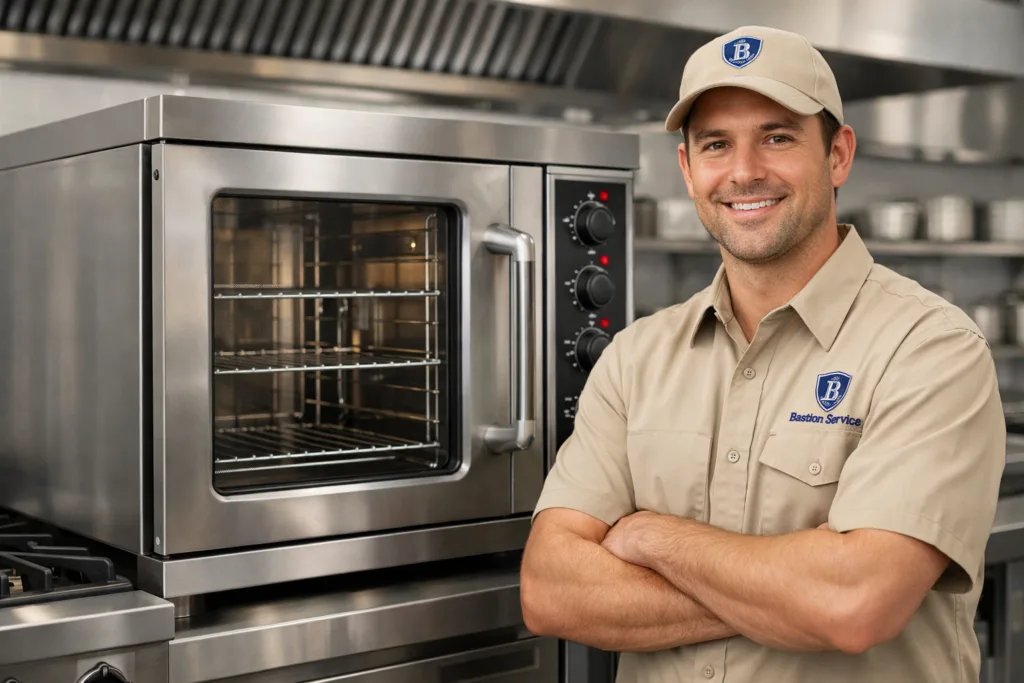




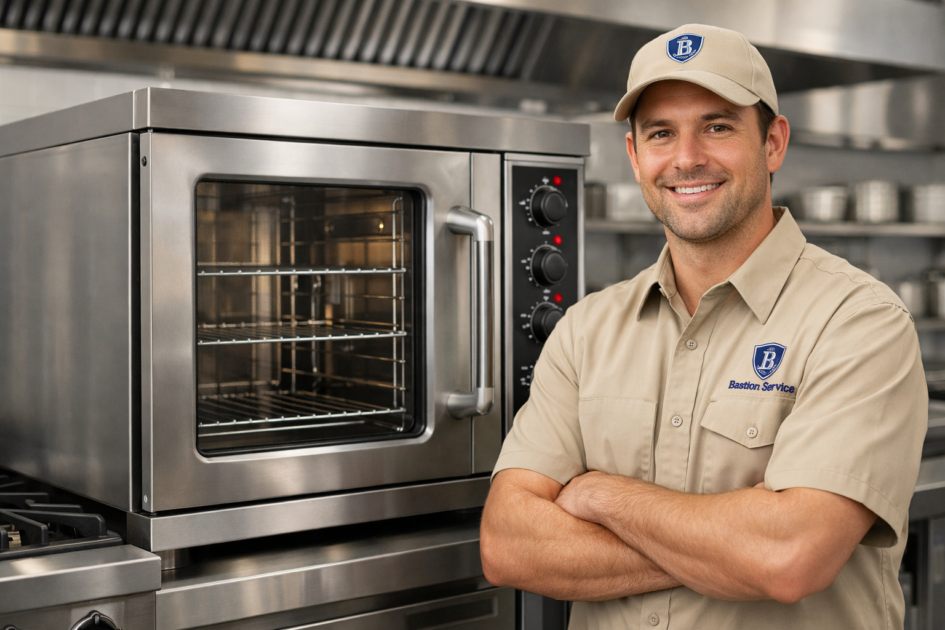
Temperature-related complaints often start subtly in a busy kitchen. An oven may still run, but batches take longer, browning becomes inconsistent, or staff begin rotating pans to compensate for hot and cool zones. Those symptoms can point to failing heating elements, ignition weakness, sensor drift, airflow problems in convection systems, worn door gaskets, or control issues that prevent the unit from holding a stable setpoint.
Related commercial equipment paths in Inglewood include Blodgett Oven Repair in Inglewood and Southbend Oven Repair in Inglewood.
Common commercial oven problems and what they may indicate
Slow preheat is one of the earliest signs that something is wrong. When an oven takes noticeably longer to reach temperature, production timing suffers and the equipment may struggle even more once the door is opened repeatedly during service. Depending on the unit type, the cause may involve an igniter that is no longer drawing properly, a weak burner pattern, a damaged element, or a control problem that interrupts normal heat sequencing.
Uneven cooking is another frequent complaint in commercial settings. If one rack finishes early while another lags behind, or if products consistently come out underdone on one side, the issue may be broader than simple calibration. Convection fan trouble, poor airflow, insulation loss, warped door alignment, and inaccurate sensing components can all create uneven results that waste product and disrupt consistency.
Intermittent shutdowns deserve attention even when the oven restarts. A unit that cuts out mid-cycle, flashes errors, or drops temperature during heavy use may be responding to an electrical fault, overheating condition, failing relay, flame-sensing problem, or unstable control board behavior. In a business environment, those interruptions can quickly turn into delayed orders and avoidable downtime.
Signs the issue may be getting worse
Some operators adapt to a struggling oven by extending cook times or raising temperatures, but that workaround can hide a developing fault. If the unit now needs longer recovery after the door opens, needs repeated resets, or only behaves correctly at certain settings, the problem is usually advancing rather than resolving itself. Continued operation under those conditions can place extra strain on serviceable parts and make the repair more involved.
Watch closely for warning signs that call for prompt service, including tripped breakers, a burning smell, visible wiring damage, repeated ignition hesitation, or error codes that return after a reset. These symptoms are especially important when the oven is central to daily output, because a partial failure often becomes a full outage at the worst possible time.
Gas-related symptoms require added caution. If there is a persistent gas odor, stop using the equipment and follow site safety procedures before arranging appliance service. If the concern is repeated clicking, delayed ignition, or unstable burner performance without a gas smell, the oven should still be checked before normal production continues. If the same heat and recovery problems are affecting open-oil cooking equipment on the line, Commercial Fryer Repair in Inglewood may be the better service path for that unit.
How oven symptoms affect kitchen performance
Commercial ovens do more than heat food; they shape timing across prep, cooking, holding, and plating. When temperature accuracy slips, the impact spreads beyond one menu item. Staff may need to babysit batches, remake product, or stage orders differently to compensate for unreliable cooking performance. That adds labor pressure and makes output less predictable during peak service.
For bakeries, commissaries, and restaurant kitchens, inconsistency can also affect food quality standards. Weak browning, overcooked edges, pale centers, or poor texture often trace back to heat-delivery problems that the control panel alone does not reveal. A proper diagnosis helps separate simple adjustments from component failures so decisions are based on the actual fault rather than guesswork.
Repair versus replacement considerations
Not every oven problem means the equipment is at the end of its service life. Repair is often the sensible option when the fault is isolated and the rest of the unit remains structurally sound. Controls, sensors, igniters, relays, fans, heating elements, and door-related components are common areas where targeted repairs can restore stable performance without replacing the full unit.
Replacement becomes more likely when problems are stacking up, parts support is limited, or the oven no longer returns to dependable operation after prior service. For businesses in Inglewood, the right choice usually depends on how severe the downtime risk is, whether the cabinet and core structure are in good shape, and how critical that oven is to the day’s production flow.
Useful details to gather before service
Clear symptom reporting can shorten the diagnostic process. It helps to note whether the oven is not heating at all, overheating, cooking unevenly, shutting down during use, or taking too long to preheat. It is also useful to identify whether the issue appears only under heavy load, only after the unit has been running for a while, or every time the equipment is started.
Operational context matters too. If staff have noticed changes in bake times, recovery speed, burner behavior, fan noise, or control-panel messages, those details can point the diagnosis in the right direction faster. For a commercial kitchen in Inglewood, that kind of information helps prioritize the repair path that protects output, safety, and day-to-day workflow.


