
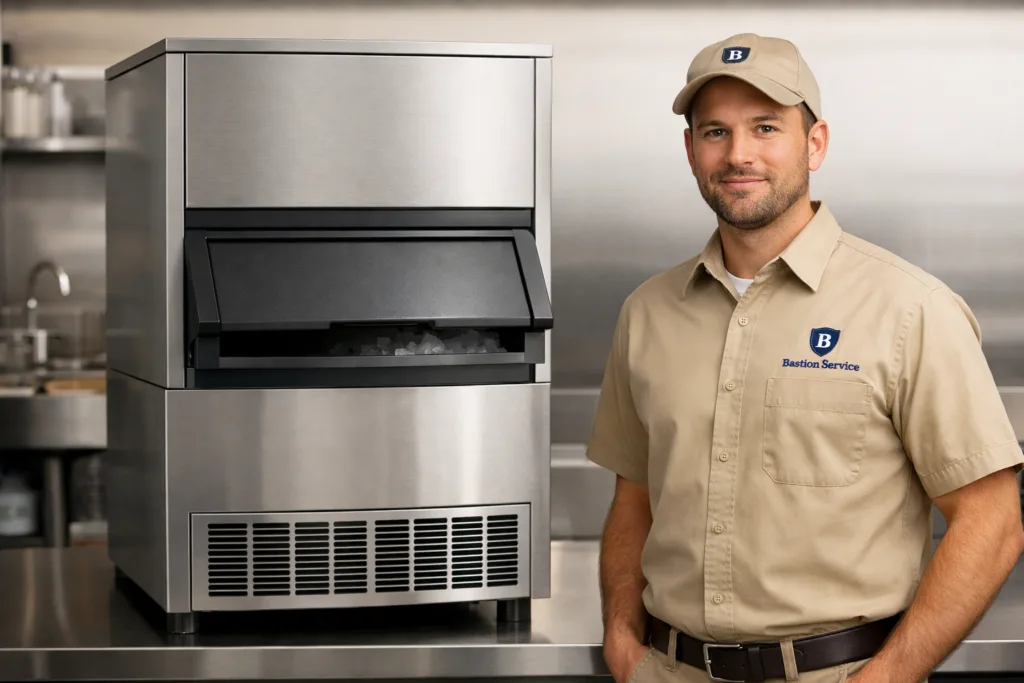




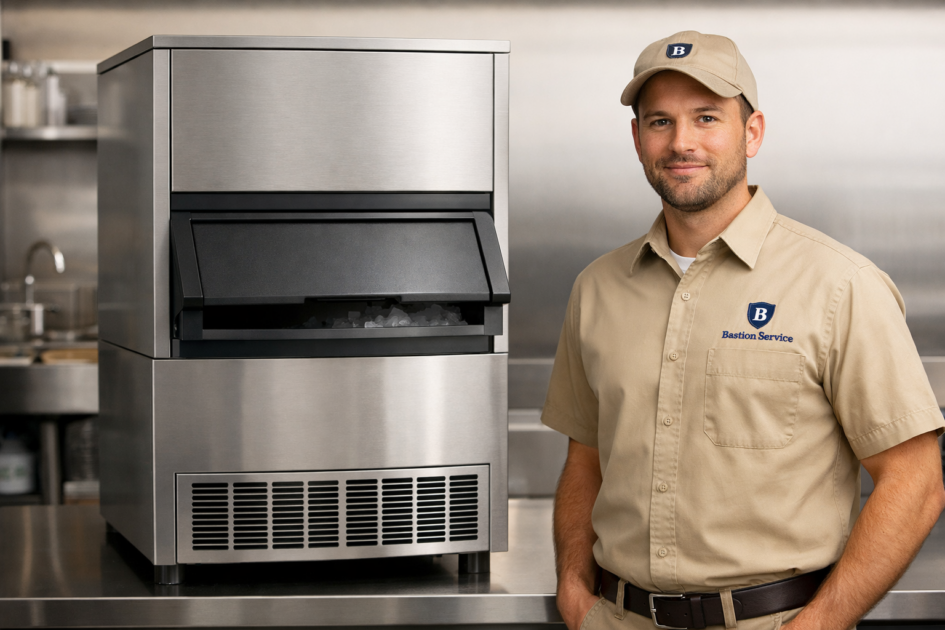
Low production is only one version of an ice machine failure. In many Inglewood kitchens, bars, cafés, markets, and hospitality settings, the bigger issue is that output becomes inconsistent, harvest cycles slow down, or the machine keeps running without filling the bin at the pace the operation expects. That usually points to a problem with water supply, scale buildup, sensing, heat rejection, or refrigeration performance rather than a simple on-or-off failure.
Related commercial equipment paths in Inglewood include Hoshizaki Ice Machine Repair in Inglewood.
Common commercial ice machine symptoms and what they often mean
A machine that makes no ice at all may have a water inlet problem, control fault, failed pump, safety shutdown, or a refrigeration issue that prevents the freeze cycle from completing. If it still produces ice but much more slowly, technicians often look for restricted filters, mineral accumulation, poor condenser airflow, weak cooling performance, or a component that is allowing the cycle to run longer than normal.
Ice quality also matters. Thin cubes, hollow cubes, cloudy ice, clumped ice, or sheets that do not release cleanly can indicate uneven water distribution, sensor errors, scale on key surfaces, improper fill, or temperature instability during freezing and harvest. When bin levels drop even though the machine appears to be operating, the root cause is often reduced production per cycle rather than a full shutdown.
Leaks around the unit should be evaluated promptly. Water on the floor may come from a drain restriction, overflow during fill, cracked tubing, valve trouble, internal icing, or meltwater that is not leaving the machine correctly. In a commercial setting, that is not only an equipment issue but also a workflow and safety concern.
Why the same symptom can come from different failures
Commercial ice machines are sensitive to both water-side and refrigeration-side conditions. A slow machine may be dealing with inlet water restrictions, while another machine with the same visible symptom may be struggling to reject heat because the condenser is dirty or the fan is not performing correctly. That is why symptom-based guessing often leads to unnecessary parts replacement and longer downtime.
Intermittent shutdowns can be especially misleading. A unit may restart after being reset, only to fail again once temperatures rise, a sensor reads out of range, or a drain or fill issue repeats. Businesses often notice this first as a service rhythm problem: the machine works for part of the day, then falls behind during the busiest period.
Water flow, fill, and drain problems
When the machine is not filling properly, cubes may form too small, too thin, or not at all. A clogged filter, weak inlet valve, restricted line, or inconsistent water pressure can all affect fill volume. If the issue happens during harvest or refill, staff may describe it as random output loss even though the underlying problem is repeatable and mechanical.
Drain problems can create a different chain of symptoms. Standing water, overflow, internal ice buildup, and sanitation concerns often start with poor drainage. If meltwater or discharge cannot leave the machine efficiently, normal cycles become less predictable and surrounding surfaces can become hazardous during peak use.
Scale buildup and sanitation-related performance loss
In commercial environments, mineral accumulation is a common reason an ice machine loses efficiency gradually. Scale can interfere with water distribution, reduce heat transfer, affect probe readings, and make harvest less reliable. Operators may notice that the machine still runs, but it produces less ice per hour, creates uneven batches, or starts requiring more frequent resets.
Buildup can also mask other problems. A machine with scale may appear to have a major cooling fault when the real issue is restricted flow and poor freeze-surface performance. On the other hand, a scaled machine can also be hiding a failing component, which is why inspection should account for both maintenance condition and actual parts failure.
When freezing, frost, or temperature issues suggest a different appliance problem
If the main symptom is not ice production but frost buildup, poor temperature recovery, or unstable product holding in a separate cold-storage compartment, Commercial Freezer Repair in Inglewood may be the better service path. That distinction matters in commercial spaces where staff may first notice “ice problems” even though the larger issue is happening in adjacent freezing equipment.
Likewise, some operators report warm product, condensation, or cycling problems near prep-line coolers at the same time they notice reduced ice output. If cooling instability is centered in reach-ins or other refrigerated holding equipment, Commercial Refrigerator Repair in Inglewood may be more relevant while the ice machine is evaluated on its own operating conditions.
Signs the machine is running under strain
Unusual noise, long cycle times, hot cabinet surfaces, repeated resets, and inconsistent harvest are all signs that the machine may be operating under stress. A failing fan motor, weak pump, vibrating compressor mount, sensor problem, or airflow restriction can make the machine sound different before it stops altogether. In a commercial setting, that early warning period is the best time to schedule service before output drops further.
Another warning sign is when staff begin compensating manually. Buying bagged ice, rotating bins more aggressively, changing service routines, or delaying prep because the machine cannot keep up are practical indicators that the equipment problem is already affecting operations and should not be treated as minor.
When continued use can increase repair scope
Some machines limp along for days or weeks, but continued operation is not always harmless. Running with poor water flow, unstable sensing, overheating, or incomplete harvest can place extra wear on pumps, motors, valves, and refrigeration components. A machine that is short cycling or repeatedly shutting down is often doing so for a reason, and bypassing that pattern can turn a contained repair into a broader one.
Leaks deserve the same level of urgency. Beyond slip risk, ongoing water exposure can affect surrounding surfaces and create avoidable sanitation concerns in food and beverage environments. If the machine is leaking, freezing in the wrong place, or building ice where it should not, use should be limited until the fault is identified.
Repair versus replacement for commercial equipment
Repair is often the right choice when the failure is isolated and the rest of the machine is still structurally sound. Inlet components, pumps, valves, sensors, controls, fan-related parts, and certain water-system issues can often be addressed without changing the long-term role of the machine in the business. A good assessment looks at age, condition, service history, parts availability, and how much dependable production is likely to return after the work is completed.
Replacement becomes more likely when the machine has repeated major failures, poor overall reliability, declining output despite prior service, or multiple systems wearing out at once. For businesses in Inglewood, the practical question is not just whether a repair is possible, but whether it restores stable ice production without creating another disruption shortly after the machine returns to use.
What businesses in Inglewood should expect from service
The most useful service visit identifies whether the problem is tied to water supply, drainage, scale, sensing, refrigeration performance, airflow, or a control-related shutdown. That gives decision-makers a clearer picture of urgency, likely repair scope, and whether the issue is isolated to the ice machine or part of a wider refrigeration problem in the workspace.
For commercial operations in Inglewood, that kind of diagnosis supports better decisions around uptime, staffing, sanitation, and purchasing. Whether the machine is making no ice, slow ice, poor-quality ice, or leaking during operation, the goal is to get past guesswork and move toward reliable daily production.


