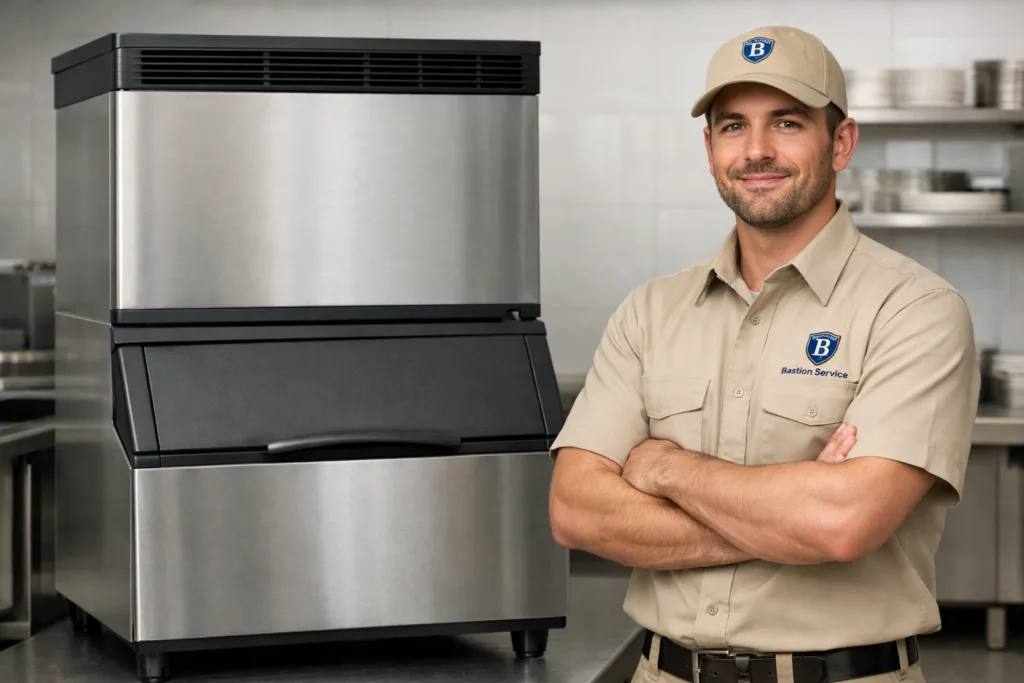




Commercial ice machine problems can disrupt service faster than many other equipment issues because they affect beverage stations, food holding routines, prep workflows, and sanitation expectations all at once. When output drops or the machine starts leaking, the important step is identifying whether the fault comes from water supply, drainage, refrigeration performance, controls, or maintenance-related buildup before the unit is pushed into a larger failure.
Related commercial equipment paths in El Segundo include Hoshizaki Ice Machine Repair in El Segundo.
Common ice machine symptoms and what they may indicate
Low ice production or no ice
A machine that runs without keeping up with demand may have a restricted water feed, a failing inlet valve, scale on critical components, weak cooling performance, or a sensor issue that disrupts freeze and harvest timing. If production slows gradually, businesses often notice the problem first during peak periods when bin recovery takes longer than normal.
Thin, cloudy, or misshapen ice
Changes in cube quality can point to mineral buildup, poor water flow, uneven freezing, or temperature-control problems inside the machine. These symptoms matter because they often show up before a full shutdown, giving operators a chance to address the problem before the machine starts producing unusable ice or stops cycling correctly.
Leaks, overflow, or water around the unit
Water on the floor may come from a clogged drain, cracked line, sticking valve, poor leveling, or a harvest issue that causes melting and overflow. In a commercial setting, that can quickly become both an equipment problem and a workplace hazard, especially in kitchens, bars, breakrooms, and hospitality spaces where floor safety and cleanliness matter every day.
Loud operation or irregular cycling
Buzzing, rattling, grinding, or repeated starts and stops may indicate a worn pump, fan trouble, loose hardware, motor strain, or a control fault interrupting normal operation. A machine that sounds different than usual should be evaluated early, because ongoing mechanical stress often turns a contained repair into a longer outage.
Why diagnosis matters before repair approval
Commercial ice machines combine refrigeration, water delivery, drainage, sensors, and sanitation-sensitive surfaces in one system. Similar symptoms can overlap. Poor output, for example, might be caused by scale, a water flow restriction, a failing component in the sealed system, or a control issue changing cycle timing. A proper diagnosis helps determine whether the fix is a targeted repair, cleaning-related correction, parts replacement, or a broader recommendation based on age and condition.
Some businesses also discover that the ice issue is part of a wider cold-storage problem. If cooling instability is centered in the freezer compartment rather than the ice head or bin area, Commercial Freezer Repair in El Segundo may be the better service path.
Likewise, when staff are seeing warmer product temperatures, condensation, or inconsistent holding conditions in reach-ins or prep coolers at the same time, Commercial Refrigerator Repair in El Segundo may be more relevant than treating the ice machine as the only source of trouble.
When to schedule service
Service is usually warranted when output falls below normal business demand, ice quality changes, recovery time becomes noticeably slower, the machine begins stopping mid-cycle, or staff have to keep resetting controls to get through the day. Early service is also a smart move when the machine still works intermittently, because intermittent faults are often harder on components than a clean, obvious failure.
Waiting too long can make the repair path less favorable. Scale buildup can reduce water flow and efficiency, drain issues can turn into recurring overflow, and abnormal cycling can increase wear on pumps, valves, and refrigeration components. What begins as a production complaint can become a sanitation concern or an unexpected shutdown during operating hours.
Issues that can affect business operations
Ice machines are often treated as support equipment until they stop meeting demand. In practice, they can affect beverage quality, food safety routines, staff productivity, and customer experience very quickly. Restaurants, office environments, healthcare-related settings, and hospitality operations in El Segundo all rely on consistent production, so even partial performance loss can create workarounds that cost time and disrupt normal service.
Leaks and overflow deserve especially quick attention because they create multiple risks at once: possible water damage, slip hazards, and reduced confidence in the machine’s sanitation condition. A unit that keeps running while leaking should not automatically be considered safe to leave in service.
When continued use may worsen damage
Continued operation is risky when the machine is leaking, making unusual noise, failing to complete freeze or harvest cycles, or producing clearly inconsistent ice under normal load. Even if the unit still makes some ice, that does not mean the underlying problem is stable. Running a struggling machine can increase wear, lead to more expensive component failure, and leave the business with unpredictable supply at the worst possible time.
Repair versus replacement considerations
Repair is often the practical option when the issue is isolated, the machine is otherwise in solid condition, and the equipment still fits current production needs. Replacement becomes more worth discussing when breakdowns are becoming frequent, sanitation or reliability concerns continue after repeated service, or the current machine no longer supports the volume the business requires.
For many businesses in El Segundo, the decision comes down to uptime, age, overall condition, repair scope, and whether the machine can return to dependable daily production after service. A thorough evaluation helps separate a correctable fault from a larger lifecycle issue so operations can plan around the real condition of the equipment rather than the symptom that happened to show up first.