
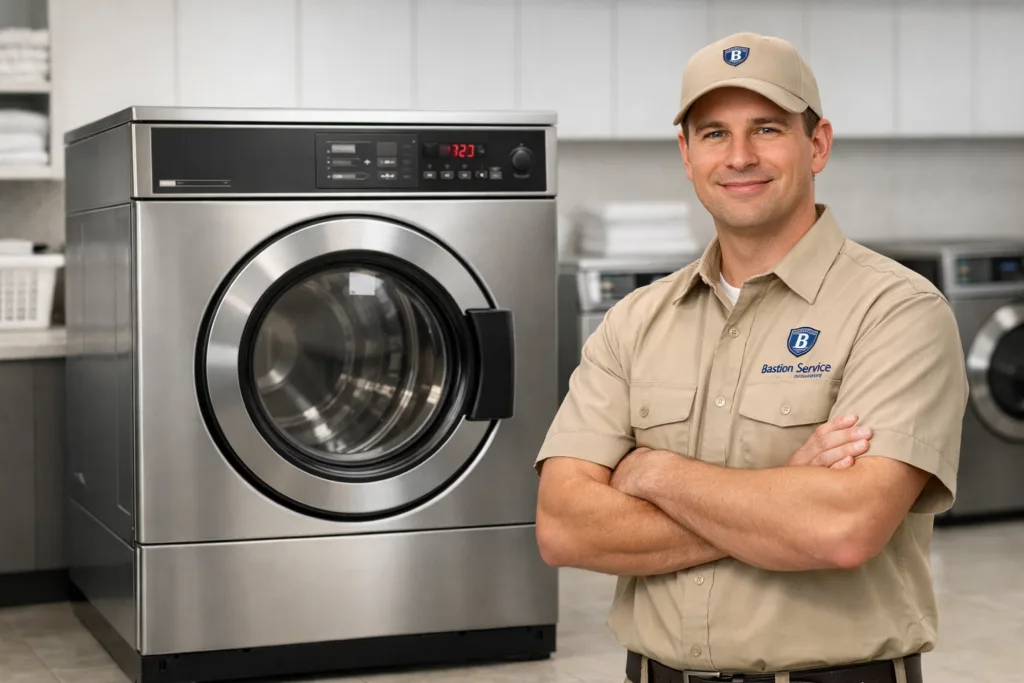




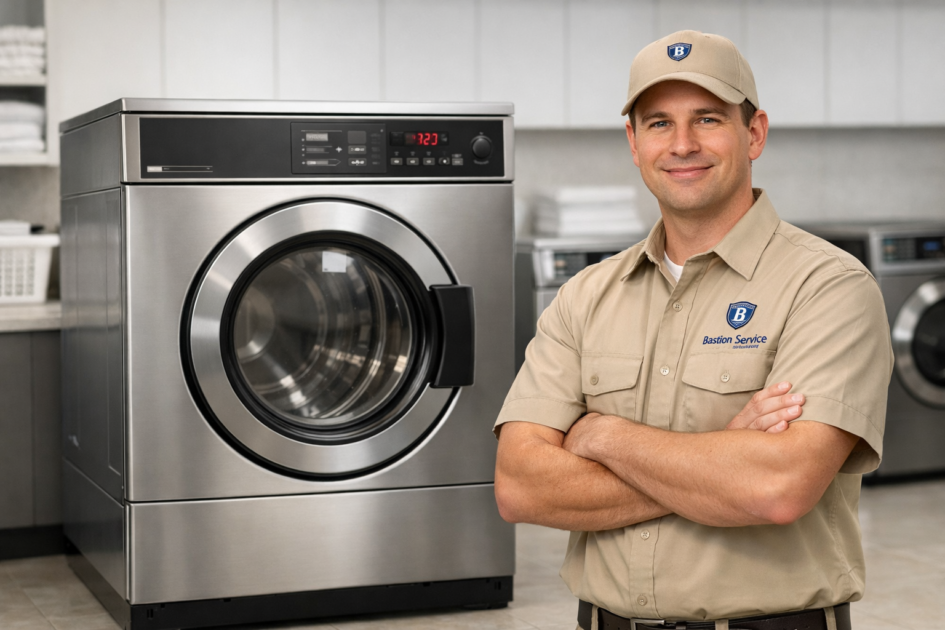
Commercial dryers usually show trouble before they fail completely. Longer cycle times, inconsistent heat, unexpected shutdowns, and new noise patterns all point to a machine that is no longer operating efficiently. In a business setting, those changes matter because even one underperforming dryer can slow turnaround, create laundry backlogs, and put pressure on staffing and scheduling.
Related commercial equipment paths in Sawtelle include Speed Queen Dryer Repair in Sawtelle and Wascomat Dryer Repair in Sawtelle.
Symptoms that usually point to dryer trouble
Some problems are obvious, such as a unit that will not start or a drum that stops turning. Others are easier to miss at first, including loads that come out warmer than usual but still damp, cycles that seem to run longer every week, or heat that feels uneven from one load to the next. These symptoms often indicate issues with heating components, airflow, moisture sensing, drive parts, controls, or electrical supply.
Businesses in Sawtelle often notice performance issues in a few predictable ways:
- Dryer runs but produces little or no heat
- Loads take too long to dry
- Unit starts intermittently or does not start at all
- Dryer stops mid-cycle
- Drum turns with scraping, squealing, or thumping sounds
- Cabinet becomes unusually hot or the machine gives off a burning smell
Each of those signs can come from more than one cause, which is why symptom-based guessing often leads to repeated downtime instead of a lasting fix.
No heat and weak drying performance
A commercial dryer that tumbles without heating may have a failed heating element, ignition-related fault on a gas model, thermal cutoff problem, relay issue, or power-supply problem. In some cases, the dryer is technically heating but not reaching or holding the temperature needed to dry efficiently, which can make the problem look smaller than it is.
Long dry times are frequently blamed on heat alone, but airflow is just as important. Restricted venting, lint buildup, blower wheel problems, or poor air movement through the cabinet can leave loads damp even when the machine still generates some heat. In a commercial operation, that means more labor, more machine time, and less predictable throughput.
If laundry leaves the wash side unusually wet before drying even begins, Commercial Washer Repair in Sawtelle may be the better service path before focusing only on dryer performance.
Start failures, shutdowns, and intermittent operation
When a dryer does not start, the issue may involve the door switch, latch assembly, timer, control board, motor, wiring, or incoming power. Intermittent starting can be especially disruptive in commercial use because the machine may appear functional during one shift and fail during the next, making planning difficult.
Mid-cycle shutdowns often point to overheating, a motor protection trip, failing controls, loose electrical connections, or sensor-related faults. A dryer that repeatedly stops partway through a load is not just inconvenient; it can create rework, increase utility use, and interrupt the timing of the entire laundry process.
Breaker trips or repeated resets deserve prompt attention. Those symptoms can reflect electrical stress, overheating conditions, or failing components that should not be left in service until they become a larger operational problem.
Noise, vibration, and drum movement issues
Unusual sound is one of the clearest early warnings that a commercial dryer needs attention. Squealing can suggest belt or idler wear. Thumping may indicate worn rollers, flat spots, or load balance problems. Scraping can point to drum support failure, blower interference, or contact between internal parts that should not be touching during operation.
Noise matters because mechanical wear rarely stays isolated for long. A bad roller can affect belt tension. A failing idler can increase strain on the motor. A damaged support component can lead to drum misalignment and additional internal wear. Addressing these issues early is usually easier than waiting for the machine to stop turning completely.
Why airflow problems are so often overlooked
Airflow restrictions are among the most common reasons a commercial dryer loses efficiency. The machine may still run, still heat, and still finish some loads, but not at the speed or consistency the business expects. When airflow drops, heat can build up inside the system, drying times increase, and safety components may begin shutting the unit down to prevent damage.
Common airflow-related causes include:
- Lint accumulation inside the cabinet or exhaust path
- Restricted or poorly performing vent runs
- Weak blower performance
- Moisture sensing issues that extend cycle time
- Operating conditions that overload the dryer beyond normal use
Because airflow problems can imitate heating failure, replacing parts without testing can waste time and money while the original cause remains unresolved.
What a commercial diagnosis should clarify
A useful service evaluation should do more than identify one failed part. It should help determine whether the problem is isolated, whether there are related wear issues developing elsewhere in the machine, and whether the dryer remains a sound repair candidate for the workload it handles.
That distinction matters in commercial settings. A dryer with a single component failure may be a straightforward repair. A dryer with heat problems, worn drum supports, recurring shutdowns, and visible signs of heavy wear may require a broader decision about ongoing reliability and operating cost. Looking at the machine as a complete asset gives a better basis for repair planning than reacting to one symptom at a time.
When service should be scheduled
It is usually better to schedule service when performance drops become consistent rather than waiting for a full outage. A dryer that now needs two cycles for a normal load, overheats the room, leaves laundry damp at random, or makes new mechanical noise is already affecting efficiency even if it still technically runs.
Prompt service is especially important when the machine shows signs of overheating, emits a burning odor, trips electrical protection, or shuts down unpredictably. Those symptoms can increase wear on surrounding systems and disrupt daily workflow far beyond a single appliance.
Repair versus replacement in a commercial setting
Repair is often the right move when the failure is limited, the machine is structurally sound, and the expected result is a reliable return to service. Replacement becomes more relevant when the dryer has repeated breakdowns, multiple worn mechanical systems, declining drying consistency, or repair needs that no longer make sense for the unit’s age and condition.
Downtime cost should be part of the decision. A machine that can be restored quickly may be worth repairing even if it is not new. On the other hand, a dryer that repeatedly disrupts staffing, turnaround, or customer commitments may cost more in lost productivity than a replacement decision would.
Commercial service priorities in Sawtelle
For businesses in Sawtelle, dryer repair decisions usually come down to a few practical questions: what failed, whether continued use creates additional risk, how likely the problem is to repeat, and whether the machine can return to dependable performance without ongoing interruption. The most helpful repair process keeps the focus on uptime, cost control, and realistic next steps for the equipment you rely on every day.


