
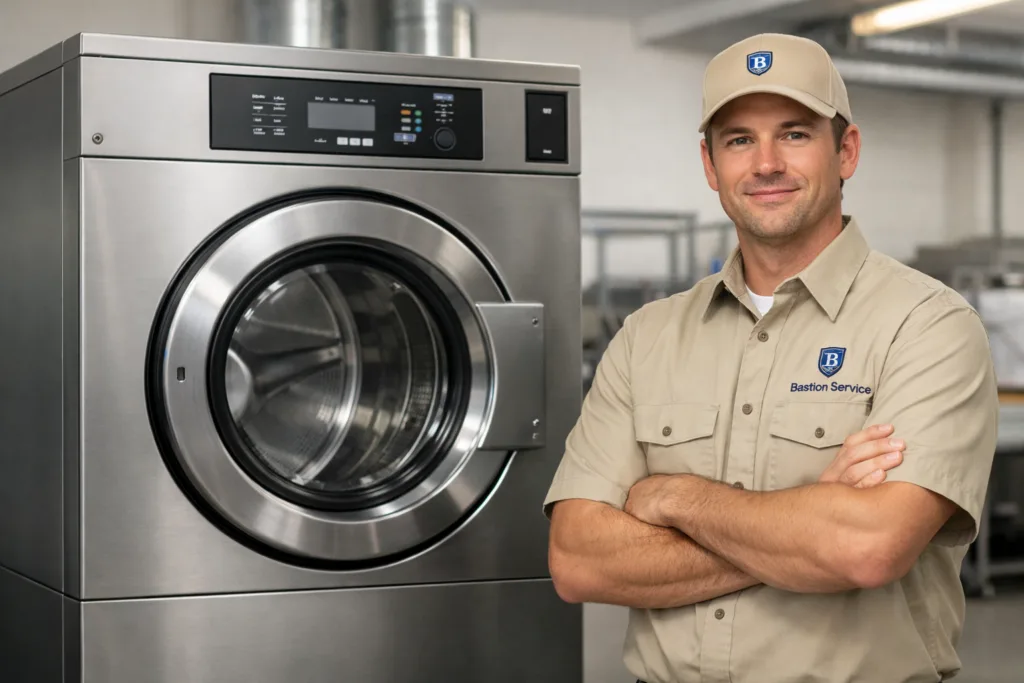




Common commercial dryer symptoms and what they may indicate
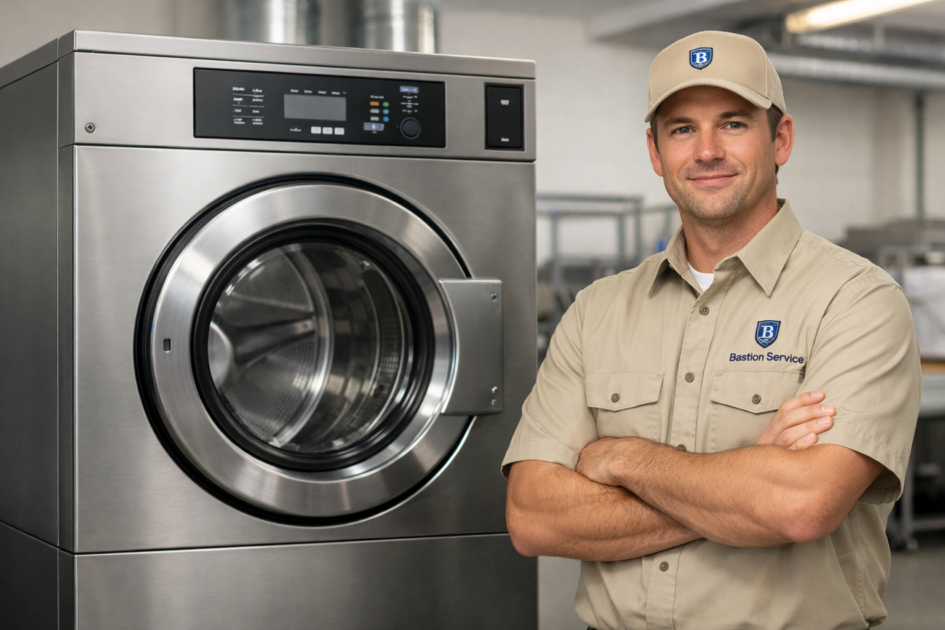
In a business laundry environment, dryer problems rarely stay isolated for long. A single machine with reduced performance can slow linen turnover, delay uniforms, and force staff to rework loads that should have finished on schedule. The most useful next step is to identify whether the issue is tied to heat production, airflow, moisture sensing, drum movement, controls, or power supply.
Related commercial equipment paths in Playa Vista include Speed Queen Dryer Repair in Playa Vista and Wascomat Dryer Repair in Playa Vista.
One of the most common service calls involves a dryer that runs but does not dry well. In commercial equipment, long dry times can point to restricted exhaust airflow, failing heating elements, ignition trouble, thermostat faults, sensor issues, or controls that are not advancing the cycle correctly. Even when the unit still tumbles, poor drying performance increases energy use and creates avoidable workflow delays.
A dryer that will not start at all may involve a door switch problem, incoming power issue, failed control component, motor fault, or a safety device that opened after overheating. If the machine starts only sometimes, stops mid-cycle, or trips out under load, the problem often needs electrical and mechanical testing before the dryer is put back into regular operation.
Noise is another warning sign that should not be ignored. Squealing, scraping, thumping, or grinding may indicate worn rollers, drum support wear, belt problems, idler failure, or bearing damage. In a commercial setting, those parts can deteriorate quickly under repeated use, so a noise complaint that begins as a nuisance can become a shutdown if the machine keeps running without inspection.
Airflow and heat problems that affect drying performance
Many drying complaints begin with airflow. If warm air cannot move through the drum and out of the exhaust path as intended, moisture stays in the load and cycle times stretch out. That often shows up as damp items at the end of a normal program, unusually hot cabinet surfaces, repeated high-limit shutdowns, or loads that need to be run twice.
Heat-related faults can look similar at first but come from different causes. A dryer with no heat, intermittent heat, or overheating may have trouble with heating components, flame sensing, gas ignition systems, thermostats, thermal protection devices, relays, or control logic. Distinguishing between an airflow restriction and a heat-generation problem matters because the wrong assumption can lead to repeat service calls and more lost time.
Businesses in Playa Vista often notice these issues first through operations rather than through the machine itself. Staff may report that towels stay damp, uniforms feel unusually hot, or production falls behind despite the same number of loads. Those changes are usually signs that the dryer is no longer cycling efficiently and should be checked before the problem spreads to scheduling and output.
Drum movement, shutdowns, and mechanical wear
If the dryer hums but does not tumble, the issue may involve the drive motor, belt, pulley system, drum supports, or a seized mechanical component. A drum that turns unevenly or binds under heavier loads can put stress on the motor and controls, especially in equipment that runs throughout the day.
Unexpected shutdowns are also important to evaluate carefully. A machine that stops mid-cycle may be overheating, losing power intermittently, failing to read safety conditions correctly, or struggling with a motor that is drawing beyond normal limits. Restarting the unit again and again may keep work moving temporarily, but it can also accelerate wear or hide a problem that is becoming more serious.
Burning smells, repeated breaker trips, and visibly excessive heat around the unit are stronger warning signs. Those symptoms suggest that continued use could damage additional components or create safety concerns. In commercial laundry service, stopping to inspect the machine is usually less disruptive than pushing it until a full failure takes multiple units out of rotation.
When the dryer issue may actually start earlier in the laundry process
Not every “dryer problem” begins inside the dryer. If loads are coming out excessively wet, unbalanced, or inconsistent from the wash side, the dryer may be forced to work longer and harder than normal just to finish routine cycles. If the bottleneck starts with extraction, fill, drain, or spin performance, Commercial Washer Repair in Playa Vista may be the better service path before blaming the dryer alone.
Looking at the full laundry workflow helps prevent partial fixes. When washers and dryers operate as a system, poor throughput on one side often creates apparent symptoms on the other. That is especially true when teams are trying to maintain steady volume and cycle timing across multiple loads during busy operating hours.
Repair versus replacement considerations
Replacement is not always the right answer when a commercial dryer starts failing. If the fault is limited to a serviceable component and the rest of the machine remains structurally sound, repair is often the more practical option. That can be especially true when the drum, cabinet, motor system, and controls are otherwise in usable condition for the demands of the business.
Replacement becomes more relevant when breakdowns are frequent, multiple major systems are failing together, parts support is poor, or repair cost is rising alongside lost productivity. For many businesses, the real decision comes down to overall equipment reliability, expected downtime, and whether the machine can return to normal service without becoming a recurring interruption.
What a productive service visit should accomplish
A worthwhile commercial dryer service call should do more than address the most obvious symptom. The visit should confirm whether the problem is tied to airflow, heating, drum drive, controls, safety cutoffs, or power delivery, and it should show whether the machine can return to operation with confidence. That approach helps reduce repeat failures, unnecessary parts replacement, and uncertainty about ongoing performance.
For businesses in Playa Vista, early service is usually the better decision when a dryer starts taking longer to dry, shutting down unexpectedly, overheating, or making new mechanical noise. Commercial laundry equipment often gives warning signs before a total failure, and addressing those symptoms sooner can protect uptime, labor efficiency, and day-to-day operations.


