
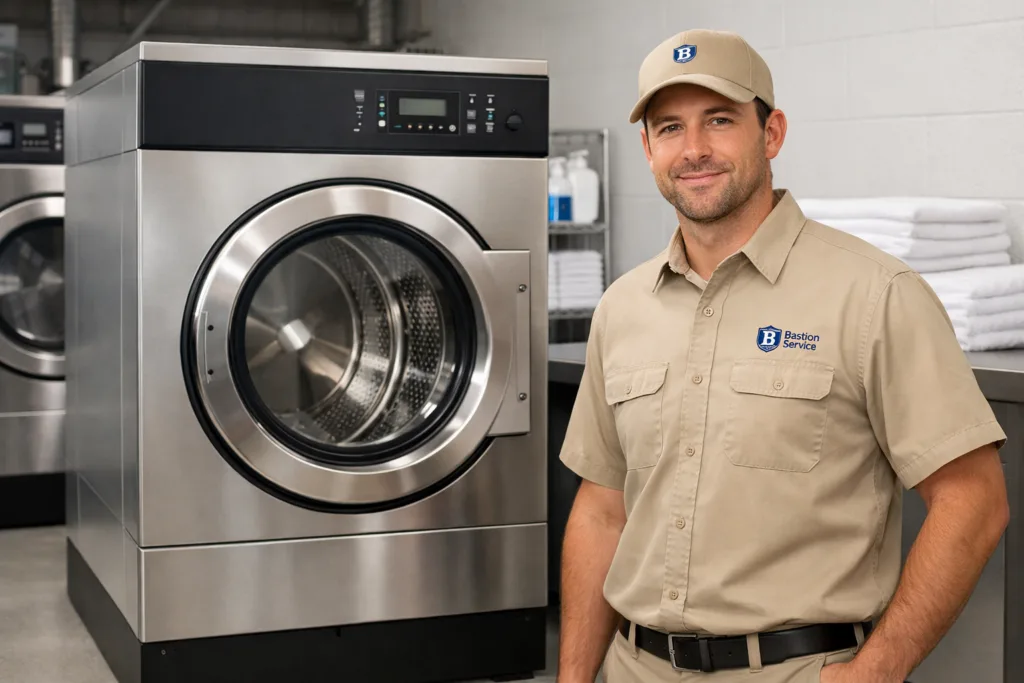




Dryer problems tend to spread beyond one machine quickly in a commercial setting. Damp loads, repeated restarts, rising utility use, and staff workarounds usually point to a fault that needs more than a simple reset. In Palos Verdes Estates, businesses often benefit most from service that separates airflow issues from heating failures, control faults, and mechanical wear before approving repairs.
Related commercial equipment paths in Palos Verdes Estates include Speed Queen Dryer Repair in Palos Verdes Estates and Wascomat Dryer Repair in Palos Verdes Estates.
Symptoms That Usually Point to Dryer Trouble
Long dry times are one of the most common complaints on commercial dryers. That symptom can come from restricted exhaust, lint buildup in the air path, weak heat output, moisture-sensing problems, or a drum that is not turning with the right speed and consistency. When loads come out warm but still damp, the problem is not always the heater itself.
A dryer that tumbles without producing heat may indicate a failed heating element, blown thermal protection, ignition trouble on a gas unit, thermostat failure, wiring damage, or a control issue. If the machine will not start at all, technicians often need to evaluate door switches, start circuits, belts, motors, safety interlocks, and electronic controls rather than assuming a single bad part.
Shutdowns during the cycle also matter. A dryer that runs for a few minutes and stops may be overheating, tripping a safety device, binding mechanically, or losing power through a failing control or connection. In a business environment, intermittent faults are especially disruptive because they create unpredictable turnaround times.
Noise, Heat, and Airflow Problems Should Not Be Ignored
Squealing, thumping, scraping, or heavy vibration usually signals wear in rollers, idler pulleys, drum glides, bearings, supports, or the drive system. These sounds rarely improve on their own. Continued use can increase drag on the motor, damage the drum, and create a more expensive repair path than if the issue were addressed earlier.
Excess cabinet heat, a burning smell, or repeated high-limit trips can point to restricted ventilation or heat that is not moving through the machine correctly. That kind of stress can shorten component life and may affect the safety and reliability of the equipment area. In commercial laundry workflows, poor airflow also reduces throughput because every load takes longer to finish.
Why Diagnosis Matters Before Parts Are Replaced
Dryer symptoms can be misleading. A machine that seems to have a heat problem may actually be struggling with clogged venting or weak airflow. A unit that appears to have an electrical issue may be shutting down because drum resistance is causing overheating. Replacing parts based only on the visible symptom can lead to repeat service calls and more downtime.
A thorough evaluation helps determine whether the fault is isolated or whether there is secondary wear elsewhere in the machine. For example, a failed belt may be straightforward, but if the belt failed because rollers were seizing or the motor was straining, those related issues should be identified at the same time. That is often the difference between a short-term fix and a durable repair decision.
How Dryer Problems Affect the Rest of the Laundry Workflow
Commercial dryers do not operate in isolation. When one unit begins taking extra cycles, finished loads stack up, labor gets redirected, and scheduling becomes less predictable. If the bottleneck starts earlier in the laundry process with fill, drain, spin, or leak symptoms, Commercial Washer Repair in Palos Verdes Estates may be the better place to start.
For businesses using multiple laundry machines, this kind of diagnosis helps identify whether the delay is truly on the drying side or whether wet loads are reaching the dryer with too much retained moisture. That distinction matters because a dryer may appear inefficient when the root issue is happening upstream.
When Service Should Be Scheduled
Service is worth scheduling promptly when the dryer needs multiple cycles to finish a normal load, stops mid-cycle, fails to heat, makes new mechanical noises, or shows inconsistent performance from one batch to the next. Those symptoms usually indicate active wear or a system fault rather than normal aging.
It is also wise to schedule service when staff have started compensating manually by reducing load size, restarting cycles, rotating work between machines, or avoiding one unit altogether. Once operators are changing routine workflow to keep production moving, the equipment problem is already affecting costs and uptime.
Repair or Replace?
Repair is often the sensible choice when the issue is limited to defined service items such as heating components, sensors, thermostats, belts, rollers, switches, igniters, or airflow-related parts, and the machine remains structurally sound. In many cases, restoring normal airflow and replacing worn drive parts can return a commercial dryer to stable performance.
Replacement becomes a stronger consideration when the unit has repeated major failures, significant drum or cabinet deterioration, chronic control problems, or stacked repair needs that no longer support reliable operation. The right decision depends less on one failed component and more on the overall condition of the machine, expected downtime, and whether the dryer still fits the demands of the business.
What Businesses Usually Want Clarified
Most commercial service decisions come down to three points: what is actually failing, how urgently it affects operations, and whether continued use is likely to cause additional damage. For dryer equipment in Palos Verdes Estates, the most useful next step is understanding whether the problem is heat, airflow, controls, or mechanical wear so the repair plan matches the real source of the downtime.


