
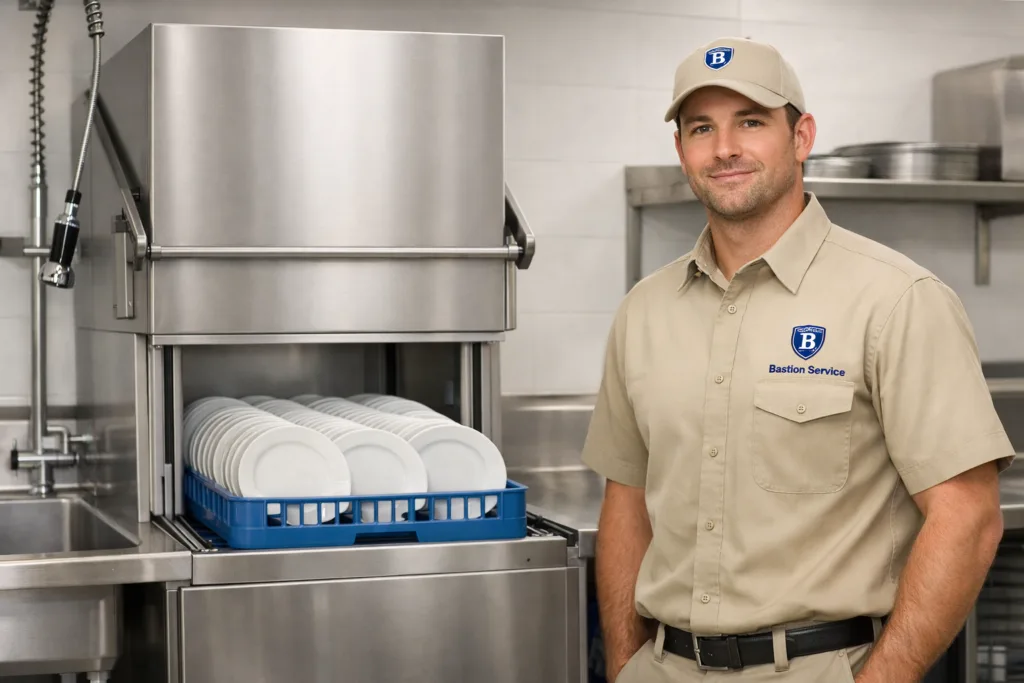




Operational issues that often start with the dishwasher

In a commercial setting, dishwasher trouble rarely stays limited to one machine. Dirty wares coming back through the line, racks stacking up, or cycles taking too long can slow prep, service, and cleanup at the same time. What looks like a simple wash problem may actually involve fill, drain, heat, pump, or control-related failures, which is why symptom-based diagnosis matters before parts are ordered or replacement is considered.
Related commercial equipment paths in Redondo Beach include Commercial Refrigerator Repair in Redondo Beach, Commercial Freezer Repair in Redondo Beach, and Hobart Dishwasher Repair in Redondo Beach.
For businesses in Redondo Beach, the main concern is usually uptime. A unit that still runs but performs inconsistently can create almost as much disruption as one that stops completely, especially when staff have to rewash items, wait on racks, or work around leaks and shutdowns.
Common commercial dishwasher symptoms and what they may point to
Poor wash results
If plates, utensils, pans, or glassware are coming out with residue, spots, or debris, the fault may involve spray arm blockage, weak wash pressure, circulation problems, filter buildup, rinse issues, or low operating temperature. In some cases, the machine is technically running through a cycle but not completing the wash action needed for consistent results.
When poor cleaning appears gradually, businesses may not notice the pattern right away. By the time the problem becomes obvious, the dishwasher may already be working under strain.
Drain problems or standing water
Water left in the machine after a cycle often points to a restricted drain path, pump trouble, hose blockage, check valve issues, or a control sequence problem that prevents proper completion. Slow drainage can also affect the next cycle, leading to carryover water, odors, and inconsistent operation.
If staff are finding themselves pausing between loads, draining manually, or restarting cycles to get the machine through service, the unit should be evaluated before a full stoppage develops.
Low rinse temperature or heat-related issues
Commercial dishwashers depend on stable heating performance for proper operation. If the machine is not reaching expected rinse conditions, possible causes can include heating element failure, bad sensors, thermostat issues, relays, wiring problems, or control faults. Heat-related problems can also show up as longer cycles, error conditions, or dishes that come out looking dull or not fully finished.
Leaks around the unit
Leaks may come from door gaskets, pumps, hoses, valves, fittings, internal seals, or tank-related wear. Even minor water escape around a dishwasher should be taken seriously in a commercial environment because it can affect flooring, create cleanup issues, and expose nearby equipment or electrical areas to moisture.
Pump noise, humming, or interrupted cycles
Grinding, rattling, humming, or sudden cycle interruptions can suggest motor strain, worn pump components, obstructions, loose hardware, or electrical issues. A change in sound is often one of the earliest signs that a dishwasher is no longer operating normally. Catching that change early can help limit additional wear on the drive and circulation system.
Fill problems or incomplete startup
If the machine does not fill correctly, fills slowly, or stops before wash action begins, the issue may be tied to the inlet valve, float assembly, water supply, level sensing, or control response. Fill-related faults can also make the dishwasher appear to have a wash or heating problem when the real issue starts earlier in the cycle.
Why the same symptom can have different causes
Commercial dishwashers are systems, not single-part machines. One visible symptom can come from several different failures. For example, poor wash results might be caused by pump performance, but they could also stem from low water level, partial drain issues, blocked spray arms, or inadequate heating. A unit that stops mid-cycle may have a control issue, but it may also be reacting to a sensor, fill, or safety-related fault.
That is why a practical service approach starts with how the machine behaves during operation rather than guessing from the symptom alone. The goal is to identify the actual failure point, not just the most obvious complaint.
When service should be scheduled promptly
It is usually time to schedule commercial dishwasher service when the unit:
- Leaves wares dirty or inconsistent from load to load
- Drains slowly or leaves standing water
- Does not maintain expected rinse or wash temperature
- Leaks during or after operation
- Makes new noises during fill, wash, or drain
- Stops mid-cycle or needs repeated restarts
- Shows declining performance during busy shifts
Early service can help prevent a limited repair from becoming a broader pump, control, or moisture-related problem.
Signs continued use may cause more damage
Some machines can limp through service for a short time, but that does not always mean continued operation is safe for the equipment. Running a dishwasher with active leaks, poor drainage, overheating, repeated interruptions, or abnormal pump noise can increase wear on internal parts and create additional electrical or mechanical failures.
If staff are compensating by rewashing loads, skipping certain cycles, mopping around the unit, or manually clearing water between runs, the machine is already affecting workflow more than it should. At that stage, delaying repair often raises both downtime and total repair scope.
Repair versus replacement considerations
Replacement is not always the best answer for a commercial dishwasher problem. If the failure is isolated and the rest of the machine is structurally sound, repair often makes business sense. That is especially true when the issue is limited to a serviceable component such as a pump assembly, valve, control-related part, sensor, or drain component.
Replacement becomes a more serious consideration when the unit has a history of repeat failures, significant internal wear, hard-to-support parts, multiple system problems at once, or declining performance that no longer fits operational demand. The decision should come down to condition, repair scope, expected reliability after service, and how much downtime the business can reasonably absorb.
What a service evaluation should cover
A useful commercial dishwasher evaluation should look at the reported symptoms and the machine’s actual cycle behavior. That includes fill performance, wash action, drain function, temperature-related operation, leak points, pump condition, door sealing, and signs of electrical or control irregularities. When done well, the evaluation helps separate a targeted repair from a larger equipment decline.
Businesses in Redondo Beach generally need more than a quick guess. They need to know what failed, whether related components are showing wear, and whether the dishwasher is likely to return to reliable service after the repair is completed.
Commercial dishwasher repair support in Redondo Beach
Bastion Service helps businesses in Redondo Beach with commercial dishwasher repair focused on symptom-based troubleshooting and service recommendations that match the machine’s condition and the demands of daily operation. Whether the problem involves poor wash results, drain issues, leaks, low rinse temperature, pump trouble, or cycle failure, the most productive next step is a proper diagnosis tied to how the unit is actually performing.


