
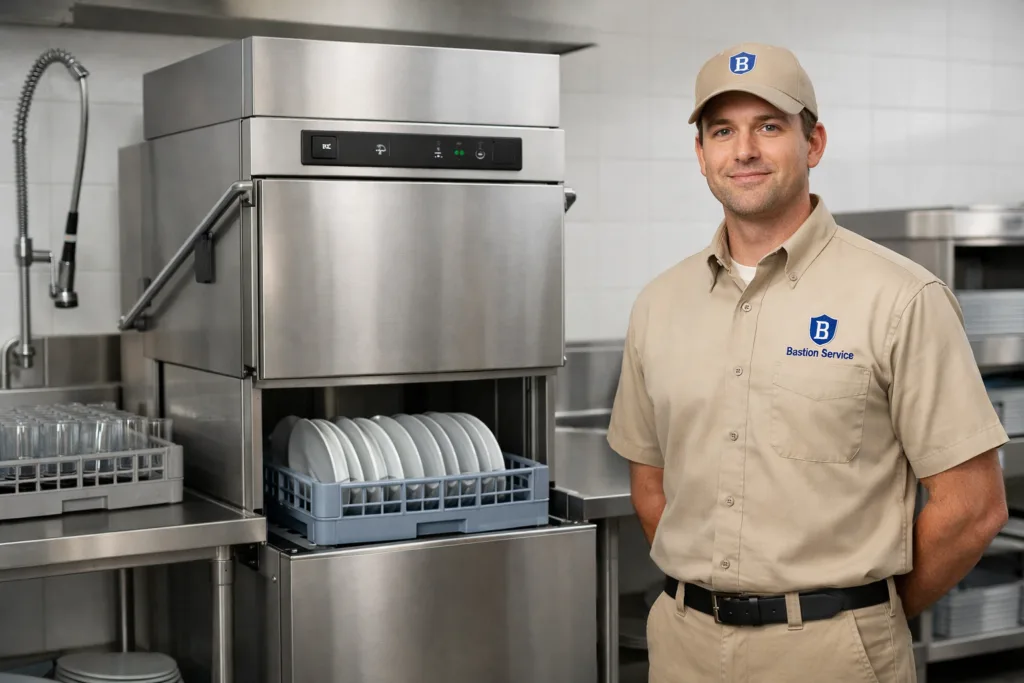




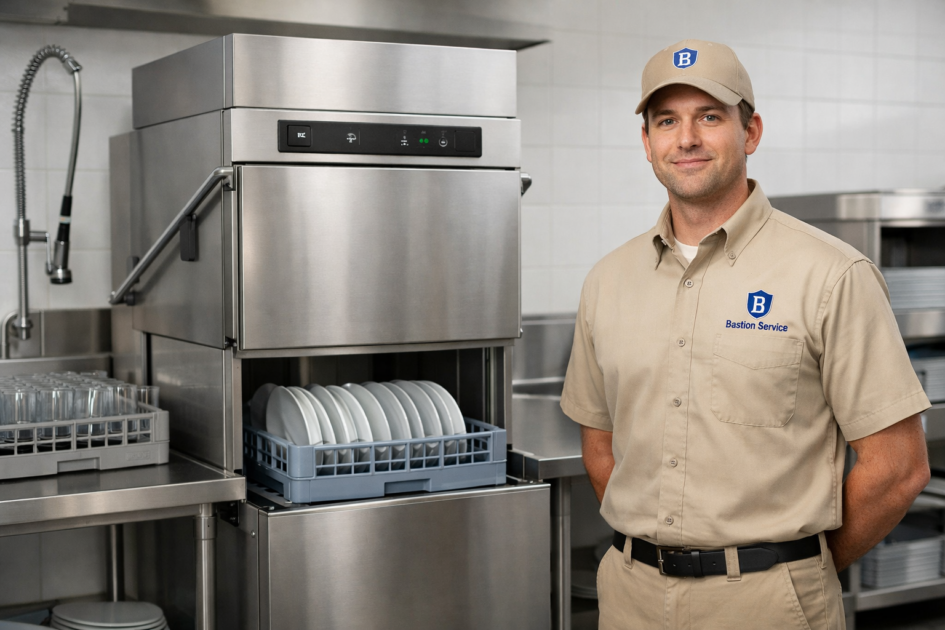
In a busy dish area, even a single dishwasher fault can ripple through prep, service, cleanup, and sanitation routines. What matters most is identifying the failed function early so the repair plan matches the actual problem instead of the visible symptom alone.
Related commercial equipment paths in Hermosa Beach include Commercial Refrigerator Repair in Hermosa Beach, Commercial Freezer Repair in Hermosa Beach, and Hobart Dishwasher Repair in Hermosa Beach.
Problems that commonly interrupt commercial dishwasher operation
Most service calls begin with one of several disruptive issues: poor wash results, slow or incomplete draining, low rinse temperature, leaks, fill problems, unusual noise, or cycles that stop before completion. In a commercial setting, those failures can quickly create labor bottlenecks, force manual washing, and reduce consistency during peak hours.
One symptom does not always equal one cause. A machine that leaves residue on wares may have circulation trouble, but it may also be underfilling, not heating correctly, or draining poorly between stages. A dishwasher that will not start may have a door-switch issue, a control fault, or an electrical supply problem. Symptom-based diagnosis is what separates a targeted repair from unnecessary part replacement.
How specific symptoms point to different failures
Poor cleaning results or cloudy dishes
When racks come out with food particles, streaking, film, or uneven wash coverage, the issue often involves restricted spray arms, blocked filters, weak pump pressure, detergent feed problems, or wash water that never reaches proper temperature. In some cases, the unit appears to complete a normal cycle while still missing the conditions needed for reliable commercial cleaning.
If staff start rerunning loads to compensate, the dishwasher is already affecting throughput. Rewash cycles add water and energy use, increase labor time, and still may not solve the underlying performance problem.
Standing water or slow draining
Water left in the tank or chamber after a cycle usually suggests a drain obstruction, drain pump trouble, check-valve failure, or a control issue that is preventing the drain sequence from finishing correctly. Grease, debris, and scale buildup can all contribute to this symptom in a commercial environment.
Drain problems should be addressed quickly because they can lead to odors, overflow risk, and added strain on pumps and related components.
Low heat or sanitizing concerns
If the dishwasher is not reaching expected wash or rinse temperature, operators may notice poor cleaning, slower drying, or concerns about sanitation performance. Common causes include failed heating elements, thermostats, high-limit components, sensors, relays, wiring faults, or control-board issues.
Temperature complaints are especially important in foodservice operations because the machine may still run while not delivering the performance staff expect from normal operation.
Leaks around the machine
Leaks can come from worn door gaskets, loose hoses, cracked fittings, pump seals, overfilling, or drainage restrictions that force water out where it does not belong. Small leaks often become larger service issues if they are ignored, especially when water begins affecting nearby surfaces, flooring, or adjacent equipment.
In a commercial workspace, even a modest leak creates a housekeeping and safety concern in addition to the equipment problem itself.
Noise, vibration, or mid-cycle stopping
Grinding, loud humming, harsh vibration, or repeated cycle interruption can point to motor problems, pump wear, obstructions in moving components, latch-switch failures, capacitor issues, or electronic control faults. A dishwasher that pauses unpredictably or shuts down under load usually needs prompt attention because continued operation can turn a single failure into multiple damaged parts.
No-fill or low-fill conditions
If the unit starts but does not take in enough water, cleaning quality can drop immediately. Low-fill problems may involve inlet valves, float assemblies, pressure sensing, supply restrictions, or controls that are not advancing correctly. A machine running with the wrong water level often produces weak wash action and inconsistent cycle results.
Why accurate diagnosis matters before approving repair
Commercial dishwashers can present the same outward complaint for very different reasons. A no-heat condition might be caused by a failed heater, but it could also stem from a sensor issue, wiring problem, relay failure, or board-level fault. A leak might be a simple gasket issue or a sign of fill control trouble and pressure imbalance elsewhere in the system.
For businesses in Hermosa Beach, that distinction matters because downtime planning, staffing adjustments, and repair cost decisions depend on knowing the actual repair scope. An informed evaluation helps determine whether the issue is isolated and repairable, whether additional wear is present, and whether continued use could make the situation more expensive.
When continued use is likely to make the problem worse
Some dishwasher issues should not be pushed through another shift. It is usually wise to stop using the unit and arrange service if you notice any of the following:
- Water leaking onto the floor or around the base
- Standing water after the cycle ends
- Failure to heat or sanitize as expected
- Burning smells or repeated breaker trips
- Grinding, loud humming, or new vibration
- Cycles that stop mid-run or fail to finish
- Repeated no-start or fill failures
Temporary workarounds often increase wear. Repeated restarts, manual draining, rerunning racks, or assigning staff to compensate for machine failure may keep operations moving briefly, but those measures rarely reduce the final repair scope.
Repair or replacement: how businesses usually evaluate the decision
Many commercial dishwasher problems are repairable when the machine is otherwise in solid condition and the failure is limited to one system such as heating, pumping, draining, filling, or controls. Targeted repair often makes sense when the unit has been operating reliably and the current issue is clearly defined.
Replacement becomes a more serious consideration when the dishwasher has a pattern of repeat breakdowns, severe corrosion, chronic leakage, multiple failing systems, or parts availability issues that make future downtime difficult to manage. The key is not simply the age of the machine, but whether the equipment still offers stable day-to-day value after repair.
What a useful service evaluation should cover
A strong commercial dishwasher assessment should explain more than whether the unit turns on. It should identify which function has failed, whether the issue is mechanical or electrical, what components are involved, and how the problem affects safe and consistent operation. For managers and operators, that information is what helps with scheduling, approval, and expectations for returning the machine to service.
Bastion Service helps businesses in Hermosa Beach with commercial dishwasher repair focused on clear diagnosis, practical service guidance, and dependable local support for dish-area uptime.
Keeping dishwasher issues from disrupting the entire workflow
Commercial dishwasher faults rarely stay isolated for long. What begins as slower draining, weak cleaning, or inconsistent heating can become a larger interruption once staff are forced to change routines around the machine. Early attention usually gives businesses the best chance to limit downtime, avoid secondary damage, and make a sound repair decision before the problem affects more of the operation.


