
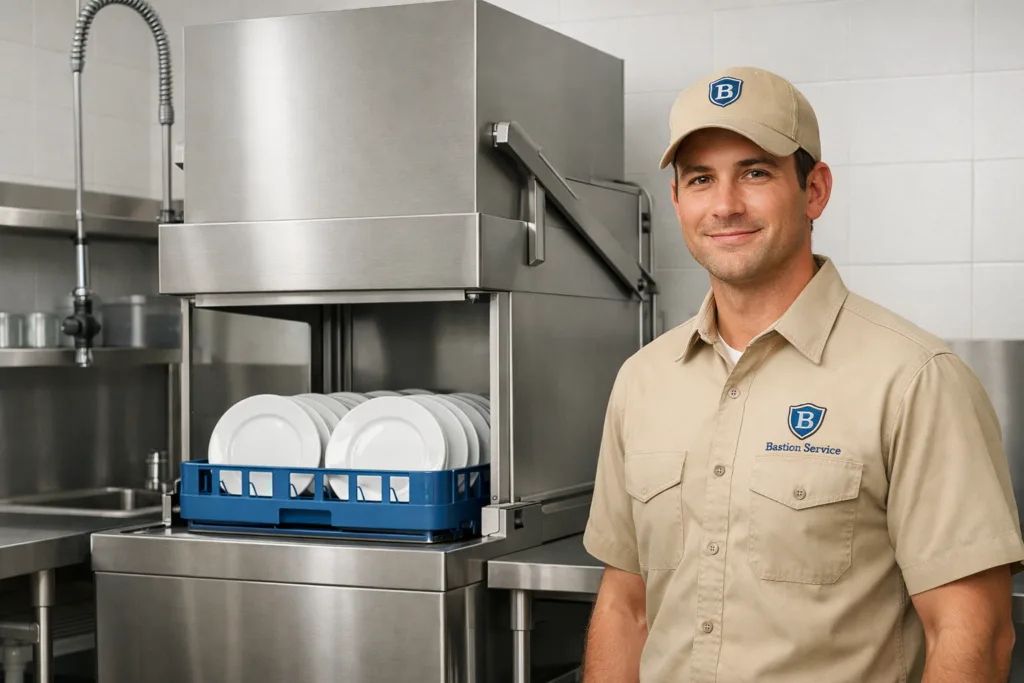





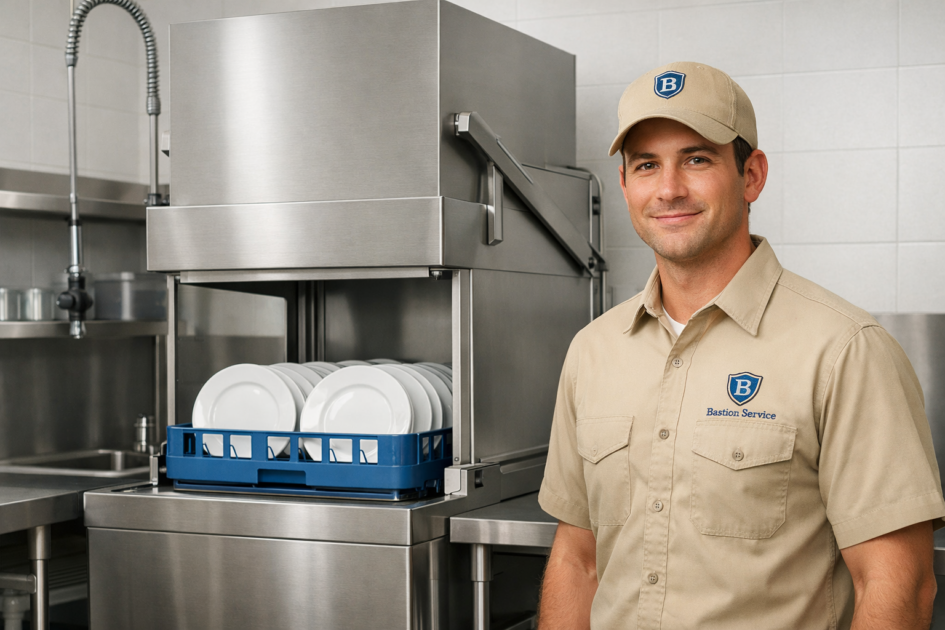
When a commercial dishwasher starts leaving racks unclean, extending cycle times, or leaking onto the floor, the disruption can spread through the entire dish area quickly. In busy Hawthorne operations, even a partial performance issue can create rewash volume, slow kitchen support, and add labor pressure during service windows.
Related commercial equipment paths in Hawthorne include Commercial Refrigerator Repair in Hawthorne, Commercial Freezer Repair in Hawthorne, and Hobart Dishwasher Repair in Hawthorne.
The most effective next step is to identify the actual fault before approving repairs or continuing to run the machine. Similar symptoms can come from very different causes, and a unit that still powers on may still have a problem serious enough to affect sanitation, utility use, or equipment life.
Common commercial dishwasher issues that interrupt workflow
Commercial dishwashers depend on coordinated fill, wash, drain, heating, and control functions. When one part of that process breaks down, the results often show up as poor cleaning, standing water, low temperature, leaks, or cycles that stop unexpectedly.
Poor wash results and repeat cleaning
Dishes, utensils, or racks coming out with residue, haze, grease, or spotting can point to more than one issue. Wash pressure may be low because of clogged spray arms, pump wear, blocked filters, scale buildup, or supply problems affecting detergent or rinse action. In a commercial setting, poor results do not stay isolated for long. Staff end up rewashing items, throughput drops, and clean inventory becomes harder to maintain during peak periods.
Drain problems and water left in the machine
If water remains in the tank after a cycle or drains slowly, the cause may involve a blocked drain path, pump failure, obstructions, check valve issues, or a control problem that prevents normal drain operation. Standing water can also lead to odor concerns, overflow risk, and extra strain on components that are trying to operate under restricted conditions.
Low rinse temperature or heating failure
A dishwasher that is not heating correctly may leave items wet, cloudy, or inadequately cleaned. Possible causes include failed heating elements, thermostat issues, control faults, scale accumulation, relay problems, or electrical supply interruptions. For businesses that rely on consistent sanitizing performance, temperature-related issues usually need prompt attention rather than continued trial use.
Leaks, unusual sounds, and interrupted cycles
Water on the floor may come from worn door gaskets, split hoses, loose fittings, damaged seals, or internal overflow conditions. Grinding, rattling, or loud humming can indicate a pump problem, motor trouble, or debris in moving parts. If the machine stops mid-cycle, fails to start, or resets unexpectedly, the issue may involve switches, wiring, sensors, or control board faults.
Why symptom-based diagnosis matters
Commercial dishwasher systems are interconnected, so the visible problem is not always the failed part. A unit that will not heat may have a heater issue, but it may also be responding to a fill fault, a safety condition, or a control problem. A leak near the base of the machine could come from a simple hose issue or from a failing pump seal that points to larger wear.
That is why diagnosis should come before major repair decisions. Confirming the root cause helps prevent unnecessary parts replacement, shortens downtime, and gives a clearer picture of whether the equipment is worth repairing or nearing the point where replacement should be considered.
Signs the dishwasher should be taken out of service
Some commercial dishwasher problems are inconvenient but manageable for a short period. Others can worsen quickly and create safety, sanitation, or property concerns. It is generally best to stop using the machine and arrange service if you notice any of the following:
- Active leaking outside the unit
- Drainage failure or recurring standing wastewater
- Burning smells or repeated electrical trips
- Sharp decline in cleaning quality despite normal loading and chemicals
- New grinding, squealing, or heavy humming noises
- Frequent cycle interruptions or controls that do not respond normally
Continuing to run the machine in these conditions can turn a contained repair into a larger one. Leaks can damage nearby flooring, drain restrictions can overwork pumps, and unresolved heating problems can affect sanitation performance and increase wear on related components.
Repair or replace?
Many commercial dishwasher failures are repairable when the machine is otherwise in solid condition and the issue is limited to components such as pumps, heaters, valves, switches, controls, seals, or hoses. In those cases, a targeted repair can restore dependable operation without the cost and disruption of replacing the unit.
Replacement becomes a more serious consideration when problems are recurring, multiple systems show wear at the same time, parts are difficult to source, or downtime has started to affect operations more than the machine is worth. For Hawthorne businesses, the real question is often not whether a dishwasher can be fixed, but whether the repair is likely to support stable performance over time.
What a service-focused evaluation should cover
A useful commercial dishwasher repair visit should start with confirming the complaint and checking the systems tied most directly to the symptom. That typically includes fill operation, drain behavior, wash action, heating response, pump and motor performance, door sealing, and core electrical and control functions.
The goal is to determine whether the problem is isolated, whether continued use risks additional damage, and what repair path makes the most operational sense. For kitchens, cafeterias, foodservice facilities, and other commercial settings in Hawthorne, that kind of assessment helps management make decisions based on uptime, sanitation needs, and the overall condition of the equipment rather than guesswork alone.
How dishwasher problems affect more than the dish station
When a commercial dishwasher is underperforming, the impact usually reaches beyond the machine itself. Clean item turnover slows, prep support may be affected, staff time gets redirected to manual washing, and service rhythm can become harder to maintain. Even a problem that seems minor at first, such as slower draining or inconsistent heating, can add friction across the operation by the end of the day.
Addressing the issue early often limits both downtime and collateral strain on the rest of the workflow. A machine that is evaluated promptly is usually easier to plan around than one that is pushed until it fails completely.
Commercial dishwasher repair support in Hawthorne
Bastion Service helps businesses in Hawthorne with commercial dishwasher repair focused on identifying the actual cause of poor wash results, drain problems, leaks, low rinse temperature, pump issues, and cycle failures. When dishwasher performance starts affecting daily operations, a thorough evaluation can help clarify whether repair is the right next step and what action best supports dependable dish-area uptime.


