
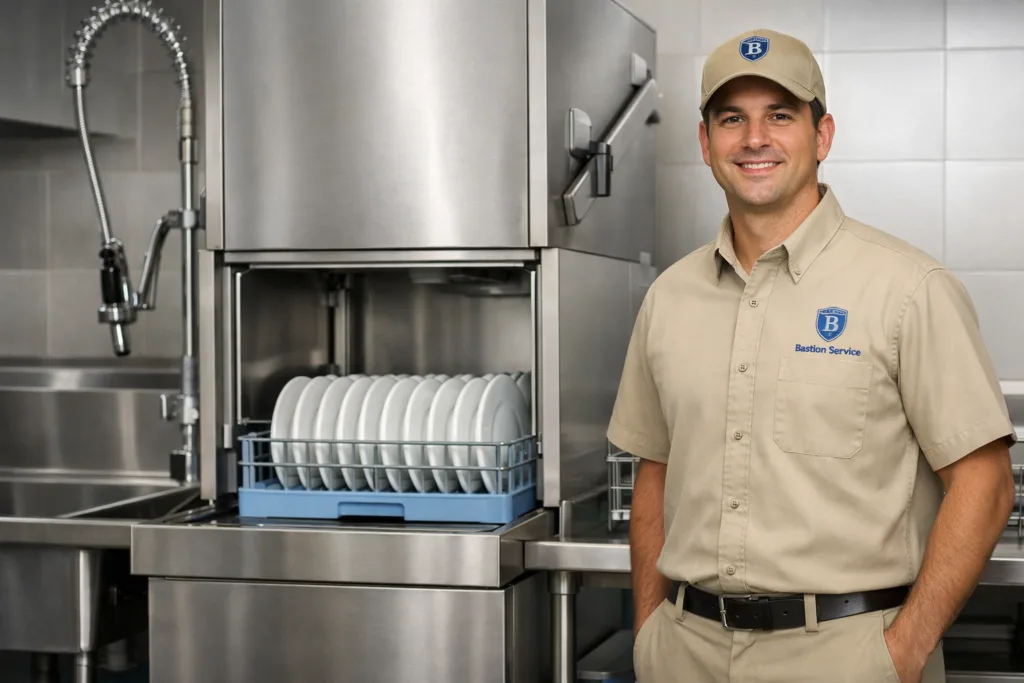




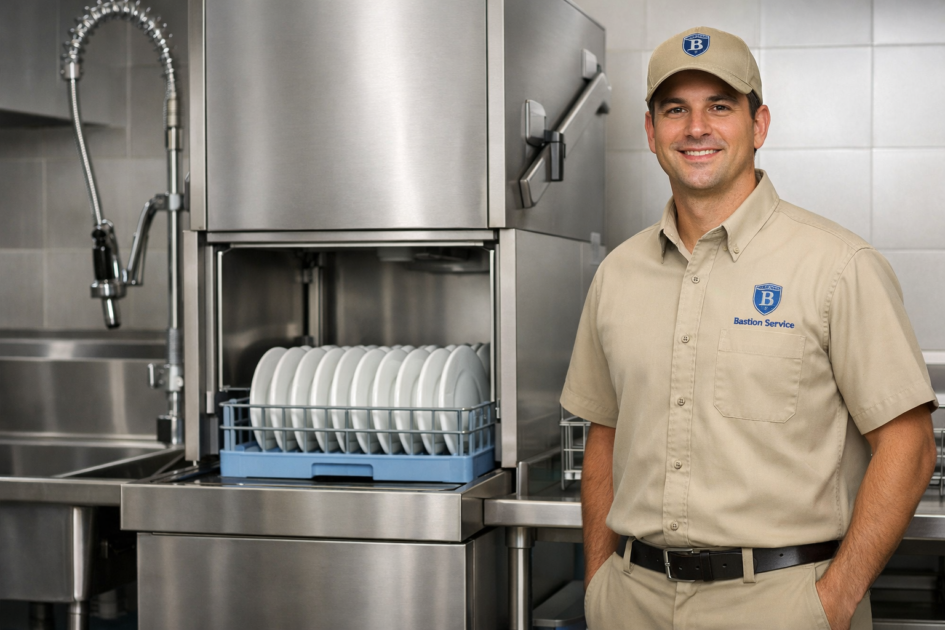
Commercial dishwashing equipment is tied directly to sanitation flow, labor pacing, and how smoothly a kitchen or dish area can keep moving. When a unit starts leaving residue on wares, filling too slowly, failing to drain, or stopping in the middle of a cycle, the problem usually reaches beyond the machine itself and starts affecting turnover, staffing rhythm, and service consistency.
Related commercial equipment paths in Del Rey include Commercial Refrigerator Repair in Del Rey, Commercial Freezer Repair in Del Rey, and Hobart Dishwasher Repair in Del Rey.
How commercial dishwasher problems usually show up in daily operations
Some failures are obvious right away, such as water on the floor or a machine that will not start. Others build more gradually, including longer cycle times, weak spray action, inconsistent rinse temperature, or the need to run the same rack twice. In a commercial setting, those early warning signs matter because they often point to wear in pumps, heating components, valves, sensors, controls, or drain-related parts before a full shutdown happens.
For businesses in Del Rey, the most useful service approach is to match the visible symptom with the system most likely causing it. That helps separate a repairable component issue from a broader equipment condition problem and keeps the decision focused on uptime, safety, and reliable performance.
Common symptoms and what they may indicate
Poor wash results
If dishes, utensils, or racks are coming out with residue, film, or food soil, the cause may involve low wash pressure, blocked spray arms, circulation pump wear, scale buildup, detergent feed issues, or a heating problem that keeps the wash process from performing correctly. Poor cleaning can also come from inconsistent fill levels or restricted water movement inside the unit.
Repeatedly sending loads through a second cycle may keep work moving for the moment, but it also increases water use, labor time, and equipment strain. When wash quality drops, it is usually a sign the machine needs more than a simple reset.
Drain problems or standing water
Water left in the tank after a cycle often points to a clogged drain path, drain pump trouble, hose restrictions, sensor faults, or an issue in the connected drainage setup. A slow-draining machine can also trigger cycle interruptions or leave soils circulating where they should have been removed.
Drain issues should be addressed early because they can lead to odors, overflow conditions, and added stress on motors and controls if the unit keeps trying to operate under the same fault.
Low rinse temperature or sanitizing concerns
If the machine is not reaching proper rinse temperature, the problem may be tied to the heater, booster system, thermostat, temperature sensor, contactor, or control board logic. In some cases, the dishwasher fills and washes normally but still cannot complete the final sanitizing portion of the cycle as expected.
For commercial operations, low rinse temperature is not just a performance issue. It affects compliance, consistency, and confidence that warewashing output is suitable for ongoing service.
Leaks, overflow, or water around the machine
Leaks can come from worn door gaskets, split hoses, loose fittings, failing pump seals, overfill conditions, cracked components, or internal spray escaping where it should not. Even a small leak deserves attention in a work environment because it can become a slip hazard and may point to a part that is close to failing completely.
If the leak appears only during certain portions of the cycle, that timing can help narrow the issue to filling, draining, circulation, or door sealing rather than a general plumbing problem.
Fill issues or low water level
When a commercial dishwasher does not fill properly, wash performance often drops right away. Common causes include inlet valve problems, float switch faults, sensor issues, restricted supply flow, or control failures that interrupt the fill sequence. A machine running with low water can sound different, spray weakly, and leave inconsistent results across each rack.
Fill problems are worth checking quickly because continued operation under low-water conditions can affect pumps, heaters, and cycle reliability.
Cycle failures, shutdowns, and error conditions
A dishwasher that stops mid-cycle, will not advance, or displays repeated errors may be dealing with a control issue, door switch problem, sensor fault, motor trouble, or an electrical supply interruption. Intermittent stoppages are especially disruptive because they create uncertainty for staff and make it hard to depend on the unit during busy periods.
When the machine works once and fails the next time, that pattern usually suggests an issue that should be diagnosed before the fault becomes a complete outage.
Why pump-related issues deserve quick attention
Pumps play a major role in wash pressure, water movement, and drainage. If a circulation pump is weakening, staff may notice reduced cleaning performance, unusual humming, grinding, or changes in how forcefully spray arms operate. If the drain pump is failing, the machine may finish cycles with water still inside or take much longer to empty than normal.
Because pump issues can affect multiple parts of dishwasher performance at once, they are often mistaken for unrelated problems. A pump-related diagnosis can help explain why the unit is washing poorly, sounding different, and slowing down all at the same time.
Signs the unit should not stay in regular use
Some symptoms indicate the dishwasher should be assessed before staff continue relying on it through normal production. These include:
- Water leaking onto the floor
- Failure to reach expected rinse temperature
- Standing water that does not drain out
- Burning smells, electrical tripping, or repeated shutdowns
- Grinding, loud pump noise, or abnormal motor sounds
- Severe fill problems or overflow conditions
Running the machine under these conditions can turn one failed part into a larger repair by affecting nearby components, increasing wear, or creating safety concerns in the dish area.
Repair or replacement: what usually matters most
Many commercial dishwasher problems are tied to serviceable parts such as pumps, inlet valves, heaters, sensors, switches, hoses, seals, and controls. If the cabinet, tank, and core structure of the machine remain in good shape, repair is often the reasonable path.
Replacement becomes a stronger consideration when the dishwasher has repeated major failures, advanced corrosion, multiple systems failing at once, or a repair scope that still leaves concerns about long-term reliability. The key question is not only whether the machine can be made to run again, but whether it can return to steady business use without ongoing disruption.
What Del Rey businesses should watch for before a full breakdown
Commercial dishwasher failures rarely appear without warning. Delays between cycles, inconsistent cleaning, odd noises, visible steam or heat irregularities, and occasional drainage problems are all signs that the machine may be moving toward a more serious interruption. Catching those changes early can reduce the risk of a complete loss of dish-area capacity during active service hours.
For Del Rey businesses, a diagnosis-driven repair process helps identify whether the issue is isolated, recurring, or part of broader machine wear. That gives operators a better basis for deciding on repair timing, operational adjustments, and whether the unit is still a good fit for the demands placed on it.
Commercial service that supports workflow
Dishwasher repair in a business environment should do more than address the most visible symptom. It should clarify why the symptom is happening, what systems are involved, and whether the machine is likely to return to stable performance after service. When a commercial dishwasher begins affecting sanitation pace, staff efficiency, or equipment availability, timely troubleshooting helps limit disruption and supports a more predictable return to operation.


