





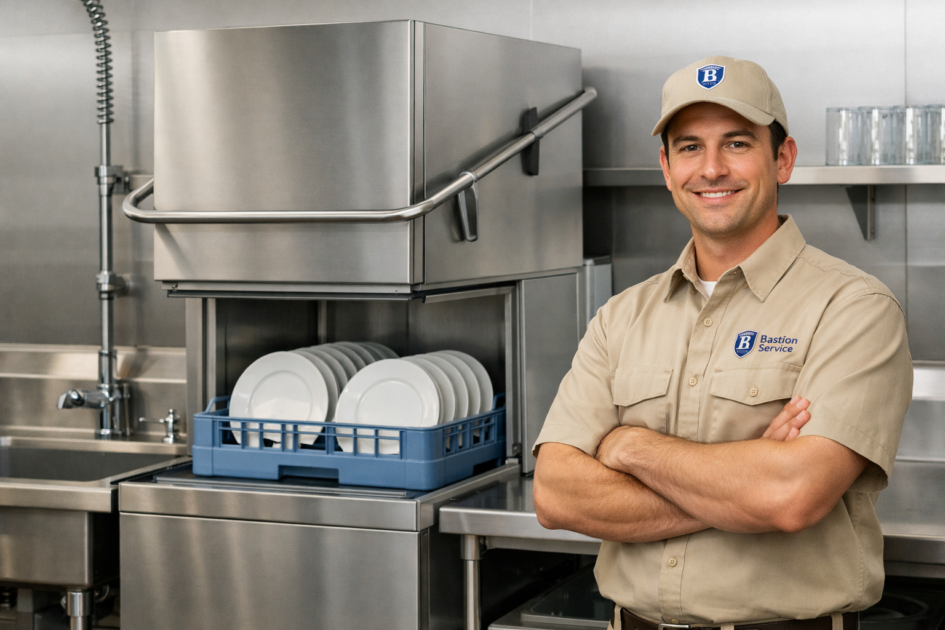
Commercial dishwashers often show warning signs before they stop completely. Dirty ware, standing water, weak rinse temperature, leaks, and cycle interruptions can all slow dish-area throughput, increase rewash volume, and put pressure on staff during busy service periods. The most useful next step is to identify whether the problem is tied to wash action, drainage, heating, controls, or a developing mechanical fault.
Related commercial equipment paths in Brentwood include Commercial Refrigerator Repair in Brentwood, Commercial Freezer Repair in Brentwood, and Hobart Dishwasher Repair in Brentwood.
Commercial dishwasher issues that commonly interrupt operations
Many service calls start when the machine still powers on but no longer performs consistently. That can create just as much disruption as a full breakdown, especially when racks have to be rerun or staff start working around an unreliable cycle. In Brentwood commercial settings, common dishwasher problems include:
- Poor wash results, film, spotting, or leftover debris
- Drain problems that leave water in the unit
- Low rinse temperature or weak heating
- Leaks around the door, hoses, pump area, or underneath the machine
- Slow fills, overfilling, or failure to fill correctly
- Cycle failures, shutdowns, or controls that stop responding
- Unusual noise from the pump, motor, spray system, or internal components
These symptoms may appear one at a time or in combination. A dishwasher with poor wash performance, for example, may also have circulation issues, heating loss, or partial drain restriction affecting the full cycle.
What different symptom patterns can mean
Poor wash results and repeat loads
If dishes, glasses, trays, or utensils are coming out dirty, the problem may involve blocked spray arms, reduced pump pressure, water circulation issues, detergent delivery problems, or incorrect wash temperature. In a commercial environment, poor results quickly affect labor because staff end up sorting, rerunning, or hand-cleaning items that should have cleared in one pass.
When this issue starts gradually, it can be easy to overlook until output drops. If wash quality has changed noticeably, the machine usually needs more than a basic reset.
Drain problems and standing water
Water remaining in the tank or sump after a cycle often points to a blocked drain path, clogged filter area, drain pump issue, hose restriction, or control fault that prevents proper drain-out. If the unit is reused in that condition, residue can build up faster and internal components may be put under more strain.
Slow drainage is not always a minor issue. In many commercial dishwashers, weak draining can affect the next cycle, interfere with rinse performance, and contribute to odor or sanitation concerns.
Low rinse temperature or weak heat
When final rinse temperature drops or the machine is not heating as expected, likely causes can include heating element failure, thermostat problems, sensor faults, relays, wiring issues, or board-related control failure. Heat-related complaints matter because they affect cycle effectiveness and can slow turnover when items do not come out ready for use.
If staff notice that loads are finishing cooler than normal or performance changes at busy times, the issue may be developing under demand rather than showing as a complete no-heat condition.
Leaks around the machine
Leaks can come from worn door gaskets, cracked hoses, loose fittings, pump seals, fill components, or internal parts that have begun to fail under pressure. Even a small recurring leak can create larger problems if water reaches flooring, wall areas, or nearby equipment.
A leak that appears only during part of the cycle can be especially important because it may indicate pressure-related failure rather than simple condensation or splash-over.
Fill issues and water level problems
If the dishwasher fills too slowly, does not fill enough, or overfills, the cause may involve an inlet valve, float system, sensor issue, supply restriction, or control problem. Incorrect filling affects the entire wash process. Too little water can reduce cleaning performance, while overfilling may lead to overflow, inconsistent cycling, or drain-related complaints.
Machines with intermittent fill problems often become harder to trust in daily use because the fault may not appear on every cycle.
Cycle failures and control problems
A unit that stops mid-cycle, will not start reliably, or shows erratic panel behavior may have a door switch issue, timer fault, board problem, relay failure, or electrical interruption. These symptoms often lead to the most disruptive downtime because the machine becomes unpredictable even when other components seem to be working.
If a dishwasher is canceling cycles, freezing at one stage, or needing repeated resets, further operation can increase the chance of a complete outage.
Why diagnosis matters before repair approval
Commercial dishwasher symptoms often overlap. Poor cleaning may be caused by circulation loss, heating problems, drain restriction, fill issues, or control failure. A leak may come from a gasket, but it can also be tied to overfilling or pump seal wear. That is why replacing parts based on the visible symptom alone can lead to extra cost and longer downtime.
For businesses in Brentwood, a proper diagnosis helps clarify whether the issue is isolated, whether multiple systems are involved, and whether the machine remains a practical repair candidate based on age, condition, and daily workload. Bastion Service helps businesses in Brentwood with commercial dishwasher repair focused on clear diagnosis, practical service guidance, and dependable local support for dish-area uptime.
Signs the dishwasher should not stay in regular use
Some issues allow limited short-term operation, but others are more likely to worsen with continued use. It is usually wise to stop regular operation and schedule service when:
- The machine is leaking consistently onto the floor
- Water is not draining out at the end of cycles
- The pump or motor is making grinding, humming, or harsh noise
- Rinse temperature has dropped sharply
- The dishwasher is shutting down, tripping power, or failing mid-cycle
- Water fill behavior has become erratic or excessive
- Controls are unresponsive or cycle stages are not advancing normally
Waiting too long can turn a manageable repair into a larger mechanical or electrical problem, especially when the equipment is being pushed through repeated loads every day.
Repair versus replacement considerations
Many commercial dishwasher problems are repairable when the failure is limited to a pump-related component, heating part, drain system issue, sensor, fill valve, gasket, latch, or control component. Repair often makes sense when the machine still matches the operation’s capacity needs and the overall condition is otherwise sound.
Replacement becomes a more serious consideration when there are repeated breakdowns, multiple system failures, chronic wash inconsistency, or repair needs that no longer fit the age and workload of the equipment. For some operations, the decision comes down to whether the dishwasher can support reliable daily throughput without repeated interruptions.
What to note before scheduling service
Helpful details can make troubleshooting more efficient. Staff should try to note:
- Whether the problem happens on every cycle or only during heavy use
- Any error codes or indicator light behavior
- Whether the issue involves washing, draining, filling, heating, or multiple stages
- When leaks appear and where water is visible
- Whether unusual sounds are new, constant, or getting worse
- Whether the machine has recently slowed down rather than failed all at once
That information can help narrow the likely fault path and support a faster service recommendation.
Service that supports dish-area uptime
When a commercial dishwasher starts affecting output, the main concern is usually not just whether it runs, but whether it can keep up with daily demand without creating rewash, delays, or sanitation-related disruption. In Brentwood, dishwasher service is most valuable when the problem is assessed in terms of operating risk, repair scope, and the machine’s ability to return to dependable use.
A thoughtful repair decision starts with understanding the actual failure, the condition of the surrounding systems, and whether continued operation makes sense for the business. That approach helps avoid guesswork and keeps attention on uptime, workflow, and equipment reliability.


