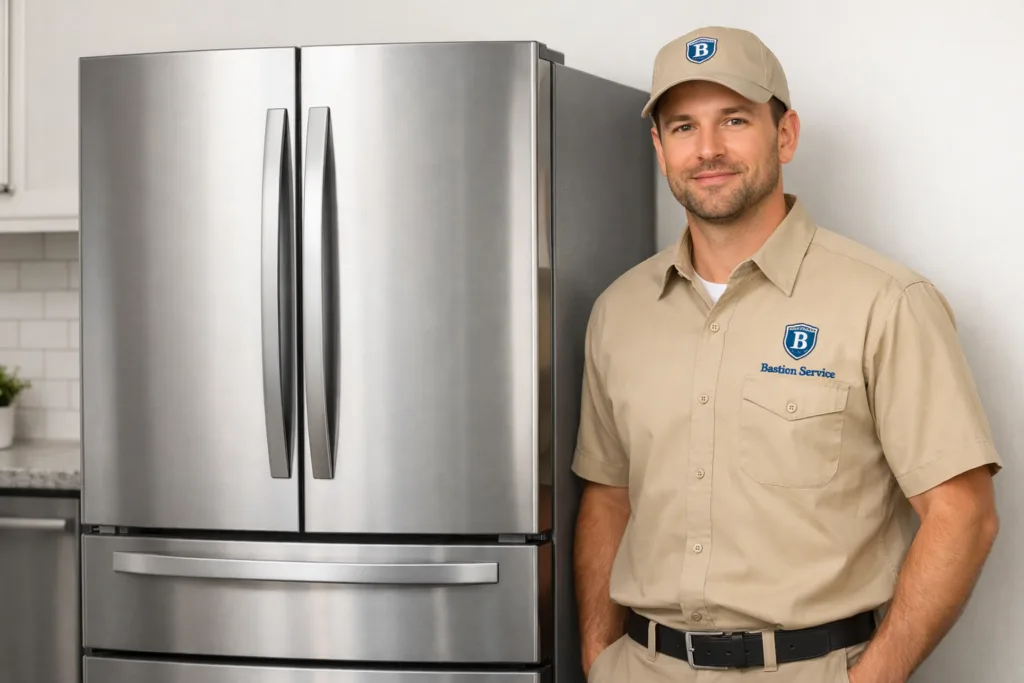
A Bosch refrigerator that stops holding temperature, collects frost, leaks, or starts making new noises can throw off everyday kitchen routines quickly. Because several systems can create similar symptoms, the most useful first step is to narrow down what the appliance is actually doing before deciding on repair.
How Bosch refrigerator problems usually show up
Many residential refrigerator calls start with one visible issue, but the root cause may be somewhere else in the cooling path. A warm fresh-food section may come from weak airflow rather than a failed compressor. Frost behind interior panels may point to a defrost problem instead of a door being left open. Water on the floor may come from a blocked drain rather than the water line itself.
In Rancho Park homes, paying attention to the symptom pattern can help determine how urgent the problem is and whether continued use could lead to food spoilage, excess moisture, or added strain on the appliance.
Common Bosch refrigerator symptoms and what they may mean
Refrigerator not cooling enough
If the refrigerator section feels too warm, produce spoils early, or drinks never get fully cold, possible causes include restricted airflow, evaporator fan problems, sensor issues, electronic control faults, dirty condenser areas, or sealed system trouble. A unit that is slowly drifting warmer may still be running, but it is no longer preserving food the way it should.
If both sections are warming up, the issue may be more serious than a minor setting problem. If only one section is affected, the failure may be localized to airflow, defrost, or temperature sensing.
Freezer cold but refrigerator warm
This is one of the more common symptom patterns in built-in and freestanding refrigeration. In many cases, cold air is being created but not moving correctly into the fresh-food compartment. Ice buildup around the evaporator, a failing fan motor, blocked vents, or a defrost system failure can all produce this result.
When this pattern continues, the refrigerator section often becomes unreliable first, even though the freezer still seems normal.
Water leaking inside the refrigerator or onto the floor
Leaks often come from a clogged defrost drain, water supply connection issues, filter housing problems, inlet valve faults, or ice maker-related components. Even a small recurring leak deserves attention. Moisture can damage nearby flooring, create odors, and lead to hidden water accumulation under or behind the unit.
- Puddles near the front can point to drain or door-seal moisture issues.
- Water under crisper drawers may suggest a drain blockage.
- Leaks near the rear of the unit may relate to supply line or valve problems.
Frost buildup or sheets of ice
Frost on food packages, ice around vents, or heavy accumulation behind interior freezer panels often indicates a defrost failure, poor door sealing, or an airflow issue. In some cases, moisture is entering the cabinet and freezing repeatedly. In others, the refrigerator is not clearing normal frost during its defrost cycle.
If frost returns soon after being wiped away, the problem usually needs more than a simple reset.
Unusual noise or louder operation
Bosch refrigerators can make normal operating sounds, but new clicking, buzzing, rattling, humming, or fan scraping noises may signal a developing fault. Noises can come from fan motors, vibration from leveling problems, ice contact with a fan blade, compressor start issues, or loose mounting components.
A refrigerator that suddenly runs louder and longer than usual may also be struggling to maintain target temperature.
Ice maker or water dispenser not working properly
Slow ice production, no ice, low water flow, or dispenser issues may relate to filter restriction, frozen fill tubes, valve problems, supply line issues, or control faults. If ice maker performance drops at the same time cooling changes appear, both symptoms should be considered together rather than treated as separate problems.
Signs the problem is becoming urgent
Some refrigerator issues can wait a short time for scheduling, while others should be addressed quickly. Homeowners in Rancho Park should move faster when they notice:
- food temperatures becoming clearly unsafe
- the unit running almost constantly
- repeated or worsening leaks
- visible frost spreading behind drawers or panels
- burning smells, electrical tripping, or repeated clicking without normal cooling
- rapid temperature swings after the doors have remained closed
If food is softening in the freezer or dairy is warming in the fresh-food section, it is usually best not to wait for the problem to sort itself out.
When continued use can cause more damage
Refrigerators often keep running even while performance is declining. That can make the issue seem manageable for a few days, but continued operation may create secondary problems. A weak fan can fail fully. Poor airflow can lead to longer run times. A drain issue can keep sending water onto flooring. A door gasket problem can increase condensation, frost, and compressor workload.
If the unit is leaking steadily, making severe noises, or not holding temperature, reducing door openings and arranging service promptly is usually the safest approach.
Repair or replace: what usually matters most
Many Bosch refrigerator problems are still good repair candidates, especially when the failure is tied to a fan motor, sensor, control component, drain problem, gasket, valve, or ice maker-related part. Replacement becomes a more serious consideration when the refrigerator has a major sealed system issue, repeated expensive failures, or overall wear that makes another repair difficult to justify.
The decision usually comes down to:
- the confirmed failed component or system
- overall condition of the refrigerator
- whether the repair is likely to restore stable daily use
- whether multiple problems are appearing at once
What to do before service
A few quick observations can make diagnosis easier and help separate a minor issue from a more complex one:
- Check whether the freezer and refrigerator sections are both affected.
- Listen for fan noise changes when doors open and close.
- Look for frost behind drawers or on the back interior wall.
- Note whether water appears in one repeated location.
- See if the display shows error behavior or if settings keep changing unexpectedly.
- Pay attention to how often the compressor seems to be running.
These details can be more useful than a general description like “it stopped working,” especially when symptoms come and go.
What a service visit should accomplish
A worthwhile service visit should identify which system is failing, explain why the symptom is happening, and outline the next step in plain terms. That may mean replacing a targeted component, testing a defrost or airflow problem, evaluating a water system fault, or determining that a larger sealed system issue is involved.
For Bosch refrigerator repair in Rancho Park, the goal is not just to quiet a noise or clear visible frost for the moment. It is to restore reliable cooling performance based on how the refrigerator is behaving in the home and whether the repair path makes sense for the appliance’s condition.