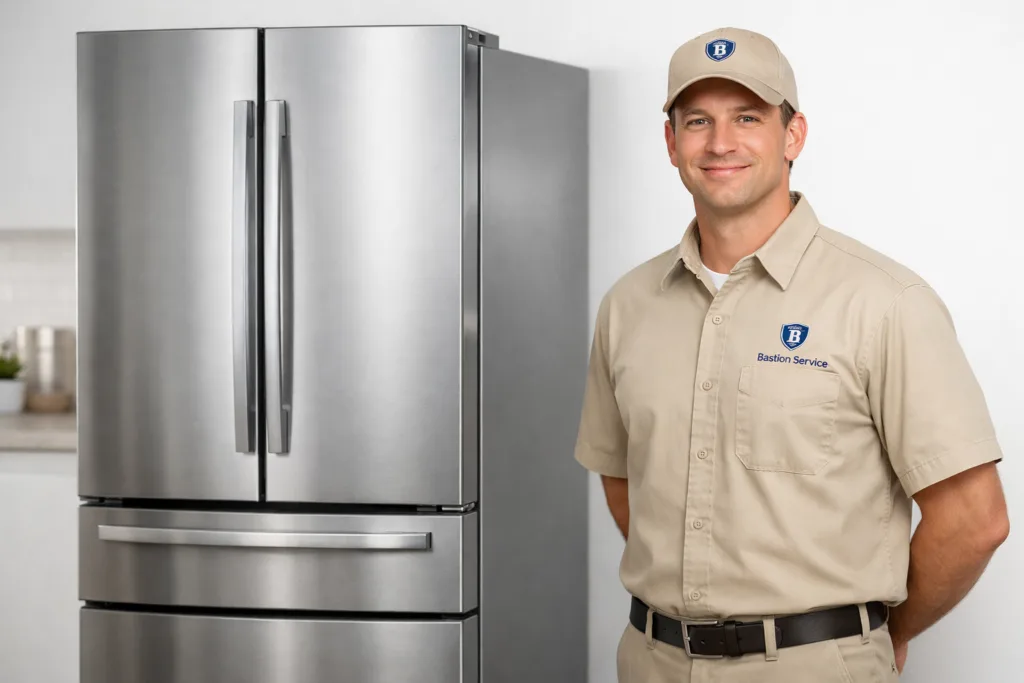
Temperature swings, moisture, frost, and new noises often trace back to different systems inside the refrigerator, even when they appear related from the outside. With Bosch units, the most useful starting point is to match the symptom pattern to the likely source of trouble so the repair path is based on what the appliance is actually doing.
Related Bosch and refrigerator service paths in Century City include Bosch Appliance Repair in Century City, Refrigerator Repair in Century City, and Bosch Washer Repair in Century City.
Start with the symptom, not the assumption
A refrigerator can be running, lit up, and still failing to cool correctly. In many homes in Century City, the first signs are subtle: food spoils sooner than expected, drinks are not as cold, vegetables freeze in one drawer while the top shelves feel warm, or the freezer seems slower to hard-freeze new items. Those details matter because they help separate airflow problems from control failures, frost blockage, water system issues, and more serious cooling concerns.
Watching how the refrigerator behaves over a day or two can also help. Notice whether the issue is constant or intermittent, whether it changes after the doors are opened often, and whether the freezer and fresh food sections are failing together or separately.
Common Bosch refrigerator symptoms and what they may indicate
Fresh food section is warm
If the refrigerator compartment is warming while the freezer still seems partly normal, airflow is often the first area to evaluate. Cold air may not be circulating properly because of frost behind panels, a failing evaporator fan, blocked vents, or a defrost problem that is gradually restricting movement inside the cabinet.
In day-to-day use, this can show up as milk spoiling early, leftovers not staying cold enough, or some shelves feeling much warmer than others. Because food safety can become an issue quickly, a warm fresh food section is usually worth addressing sooner rather than later.
Freezer is softening or not freezing properly
When frozen foods begin to soften, ice cream turns slushy, or ice cubes start melting together, the problem may extend beyond simple air circulation. Possible causes can include fan trouble, control faults, sensor problems, compressor start issues, or a developing sealed system problem. A freezer that cannot hold temperature steadily should not be treated as a minor inconvenience, especially if the change is getting worse each day.
Frost buildup inside the unit
Heavy frost is not always caused by the same failure. In some cases, warm air is entering through a door sealing problem. In others, the refrigerator may not be defrosting correctly, allowing ice to build up around evaporator components and choke off normal airflow. Frost can also interfere with fans, which then creates noise along with cooling complaints.
If bins are hard to open because of ice, interior panels show thick frost, or vents appear blocked, the unit may be moving from a manageable issue into a larger cooling failure.
Water leaking under or inside the refrigerator
Leaks are commonly linked to a clogged defrost drain, condensation that is not being routed correctly, a water supply connection issue, or an ice maker fill problem. Water under crisper drawers or pooling near the front of the appliance should not be ignored. Even a slow leak can damage flooring, cabinet edges, and nearby surfaces over time.
- Water under drawers may point to a drain issue.
- Water near the front can suggest overflow, condensation, or line-related problems.
- Recurring moisture around the ice maker area may indicate a fill or sealing problem.
Ice maker is not making ice
A Bosch refrigerator that stops producing ice may be dealing with more than just the ice maker assembly itself. Low water flow, a frozen fill tube, valve trouble, temperature instability, or a broader cooling issue can all interfere with normal ice production. If the ice problem appears at the same time as weak cooling or unusual frost, both symptoms should be considered together rather than separately.
Buzzing, clicking, rattling, or fan noise
Not every sound means failure, but a new sound pattern often means something has changed. A rattle may come from vibration or loose mounting. A fan noise can be caused by ice interference or motor wear. Repeated clicking with poor cooling may point to difficulty starting the compressor. A buzzing sound near the back of the unit can also be tied to airflow or mechanical components that need inspection.
The key question is whether the sound is new, louder, or now paired with a performance problem.
Signs the issue is becoming more urgent
Some refrigerator problems can wait a short time for scheduling, but others should move up quickly. It is smart to act faster when you notice:
- food temperatures rising noticeably
- the freezer no longer keeping items solid
- persistent water on the floor or inside compartments
- heavy frost spreading behind drawers or panels
- constant running with little cooling improvement
- repeated clicking or buzzing combined with warm temperatures
These symptoms can lead to food loss, additional part strain, or avoidable water damage if left alone for too long.
Why partial cooling can be misleading
One of the most common household mistakes is assuming the refrigerator is “mostly fine” because it is still cooling a little. Partial cooling often means the unit is struggling through a fault rather than operating normally. Fans may run longer, frost may continue to build, and temperatures may drift enough to affect food quality before there is a total no-cool failure.
That is why symptom-based evaluation matters. A refrigerator that still feels cold in one section can still have a problem serious enough to require repair.
When repair usually makes sense
Many Bosch refrigerator issues are repairable when the fault is tied to specific components such as fans, sensors, controls, drains, valves, door sealing parts, or ice maker-related hardware. In those cases, the goal is to identify the failed part, confirm there is not a larger cooling-system problem behind it, and restore normal temperature performance.
Repair is often the more sensible path when:
- the cabinet and doors are in good condition
- the refrigerator has been reliable overall
- the symptom points to an isolated component failure
- the problem is addressed before secondary damage spreads
When replacement may need to be considered
Replacement becomes part of the conversation when the refrigerator has major cooling-system trouble, repeated breakdowns, or a repair outlook that no longer fits the age and condition of the appliance. That decision should be based on the actual failure, not just on the fact that the refrigerator is currently warm or noisy.
For homeowners in Century City, the most useful comparison is not simply repair cost versus a new unit. It is whether the current appliance has a repair path that is likely to restore stable, everyday use without repeated follow-up problems.
What to do before service is arranged
A few simple observations can make the problem easier to assess and help avoid added trouble in the meantime:
- Check whether both sections are affected or only one.
- Look for visible frost around vents, drawers, or back panels.
- Notice whether the unit is running constantly or turning on and off normally.
- Watch for water under drawers, under the door area, or on the floor.
- Listen for clicking, fan scraping, or unusual buzzing.
If food is already warming or leaking is active, limit heavy use and avoid repeatedly opening the doors. If temperatures remain unsafe, move perishable items elsewhere rather than relying on uncertain cooling.
Household situations that commonly lead to service calls
In Century City homes, refrigerator problems often become impossible to ignore during normal kitchen routines. Groceries that were fine yesterday are suddenly warm. Ice production slows just before guests arrive. Water appears under the crisper drawers with no obvious spill. A refrigerator that used to run quietly begins clicking at night or humming much louder than before.
These are the kinds of changes that usually do not correct themselves. They tend to point to a failing part, blocked airflow, a water management issue, or a cooling problem that is already developing behind the scenes.
What homeowners should expect from a focused repair visit
A worthwhile service approach should determine whether the issue is tied to cooling, airflow, defrost, controls, or the water and ice system, then explain what that means for continued use and repairability. That keeps the process centered on the actual symptom instead of guesswork.
For Bosch refrigerator repair in Century City, the real value is understanding what has failed, whether the refrigerator can be used safely in the short term, and whether the recommended repair is likely to restore consistent everyday performance.