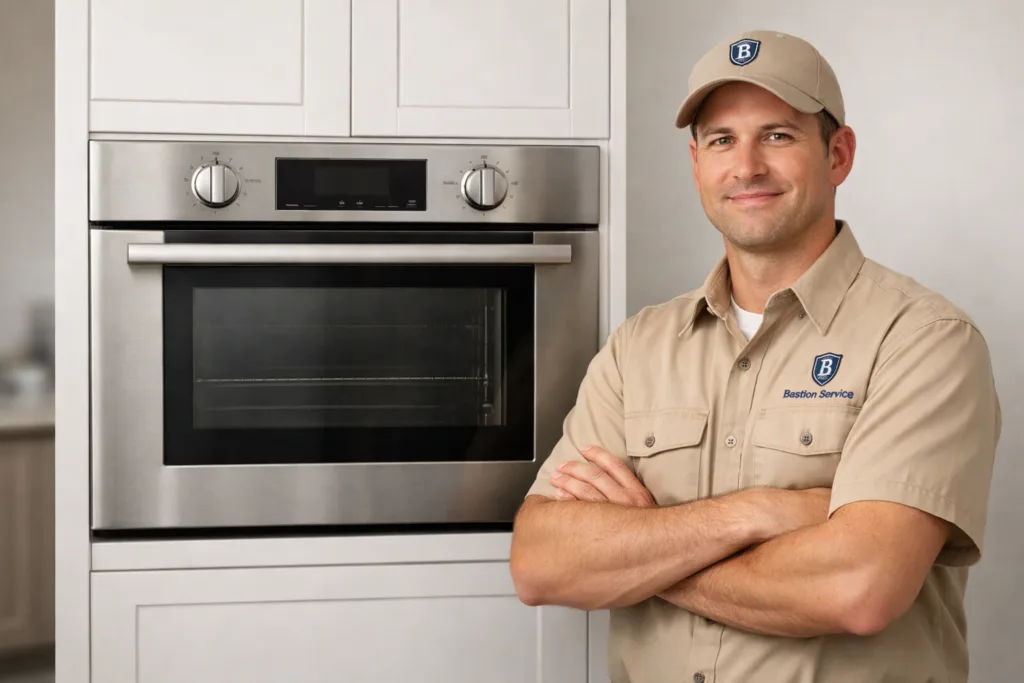
Common Bosch oven problems homeowners notice first

Most oven failures do not begin with a total shutdown. More often, the first signs are subtle: preheat takes longer than usual, cookies brown unevenly, the display acts strangely, or the oven seems hotter or cooler than the selected setting. On Bosch models, those symptoms can point to very different causes, so it helps to look at exactly how the problem shows up during normal cooking.
Related Bosch and oven service paths in Century City include Bosch Appliance Repair in Century City, Oven Repair in Century City, and Bosch Refrigerator Repair in Century City.
If one rack cooks faster than another, the issue may involve heat circulation, sensor readings, or a convection-related component. If the oven starts normally but never reaches temperature, the problem may be tied to the heating system, ignition, or electronic control. When the oven is fully unresponsive, power supply, control failure, and door-lock or safety interlock issues move higher on the list.
Not heating or taking too long to preheat
An oven that powers on but stays cool, heats weakly, or needs far too much time to preheat is often dealing with a failed bake element, a weak igniter on gas models, a faulty temperature sensor, or a control problem that is not delivering power correctly. Sometimes the oven warms slightly and gives the impression that it is working, but the cavity never gets close enough to the target temperature for reliable baking or roasting.
This kind of issue usually becomes more noticeable with foods that depend on stable heat. Bread may stay pale, casseroles may remain cold in the center, and recipes that normally finish on time can require much longer cook times.
Uneven baking and temperature swings
Uneven results are one of the most frustrating Bosch oven complaints because the appliance still appears usable. A batch of food may come out overdone on one side and undercooked on the other, or the oven may run hot one day and cool the next. In Century City homes where the oven is used often, these patterns can signal a drifting sensor, poor convection airflow, a fan issue, or heating components that are cycling inconsistently.
If temperature swings continue, repeated use can lead to wasted food and make it harder to tell whether the problem is worsening. Tracking whether the issue happens during preheat, throughout the full cook cycle, or only with convection mode can help narrow the cause.
Display works, but the oven will not start
When lights and controls appear normal but the cooking cycle will not begin, the fault is usually more specific than a simple power loss. Bosch ovens can be prevented from operating by control board problems, sensor faults, door latch issues, or communication errors between electronic components. If the panel responds but the oven never actually starts heating, the problem usually needs more than a reset.
Error codes, beeping, or random shutoffs
Error codes are useful clues, but they rarely tell the whole story by themselves. The code may relate to temperature sensing, overheating, keypad input, door lock function, or an internal communication fault. Repeated beeping, interrupted cycles, or an oven that shuts off unexpectedly often indicate that the appliance is detecting an unsafe or abnormal condition and stopping operation.
If the same code keeps returning after power cycling the oven, that usually means the underlying fault is still present. Persistent electronic problems are especially important to address early because they can affect more than one function over time.
Symptoms that should not be ignored
Some performance issues are mostly inconvenient. Others can create safety concerns or lead to more expensive repairs if the oven stays in use. Overheating, failure to shut off properly, burning smells, visible sparking, or repeated control faults all fall into the second category.
- If the oven overheats, food burns unexpectedly, or cabinet areas near the door feel unusually hot, stop using it until the cause is identified.
- If the door does not close or seal correctly, heat loss can reduce performance and put extra strain on internal components.
- If a gas Bosch oven shows delayed ignition, inconsistent lighting, or unusual ignition behavior, it should be checked before regular use continues.
- If there is a strong or persistent gas smell, stop using the appliance and follow appropriate gas safety steps before arranging repair.
What technicians usually look at during Bosch oven diagnosis
Because similar symptoms can come from different failures, the diagnosis process usually focuses on the full heating and control path rather than one part alone. That may include checking element or igniter performance, sensor resistance, temperature regulation, fan operation, door function, wiring connections, and the electronic control system.
For example, an oven that seems too cool may not need recalibration at all if the real issue is a weak heating component. An oven that appears to have a bad control board may instead be reacting to incorrect sensor data. Looking at the symptom pattern first helps avoid trial-and-error part replacement.
Repair or replacement: what usually makes sense
Repair is often the better option when the problem is limited to a serviceable component and the oven is otherwise in good condition. Sensors, igniters, elements, fans, and some control-related parts are commonly repairable when the rest of the appliance remains sound. A practical repair plan depends on the exact failure, the condition of the oven overall, and whether there are signs of multiple problems happening at once.
Replacement becomes more likely when there is major electronic damage, repeated breakdown history, or combined faults that drive the repair cost too high for the appliance’s age and condition. For homeowners in Century City, the most useful decision point is usually not the symptom alone, but whether the confirmed fault is isolated and likely to restore normal daily use once repaired.
How to prepare before scheduling service
A few details can make troubleshooting faster and more accurate. Before service, note which functions are affected and whether the issue is constant or intermittent.
- Does the problem affect bake, broil, convection, or all cooking modes?
- Does preheat finish unusually fast, unusually slow, or not at all?
- Are there error codes, beeping patterns, or display glitches?
- Does the issue happen only at high temperatures or during longer cycles?
- Is the door closing normally and sealing evenly?
- Are there unusual smells, noises, or visible signs of heat damage?
That information helps connect the complaint to the most likely system involved and gives homeowners a clearer sense of the next step, whether the oven needs a straightforward repair, should remain off for safety reasons, or may no longer be worth fixing.
Focused help for Bosch ovens in Century City
For residential service in Century City, the goal is to identify why the oven is misbehaving and whether the fix is likely to return stable, everyday cooking performance. When the diagnosis matches the real fault, homeowners can make a better decision about timing, cost, and whether repair is the right move for the appliance they already have.