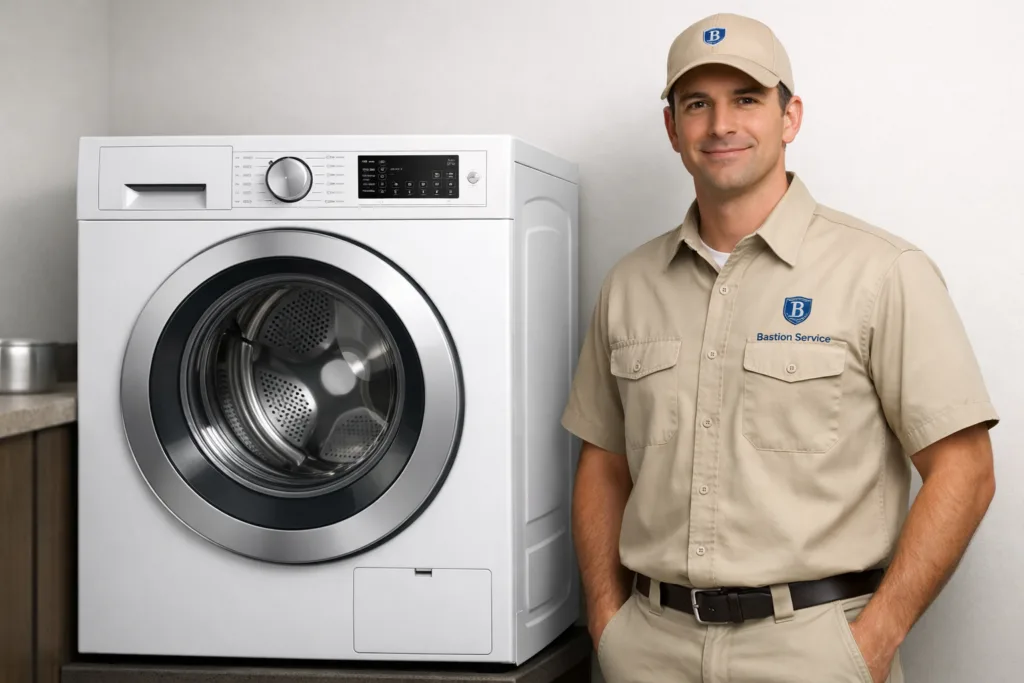
Dryer problems rarely stay minor for long. A Bosch unit that starts taking two cycles to finish a normal load, shuts off before clothes are dry, or begins making new noise is usually signaling an airflow, heating, sensing, or mechanical problem that should be checked before more parts are affected.
Related Bosch and dryer service paths in Century City include Bosch Appliance Repair in Century City, Dryer Repair in Century City, and Bosch Refrigerator Repair in Century City.
Symptoms that usually point to Bosch dryer trouble
Clothes take too long to dry
Long dry times often look like a heating problem, but that is not always the root cause. In many homes, restricted airflow is part of the issue. Lint buildup inside the dryer, a partially blocked exhaust path, or a blower problem can keep moist air from leaving the drum efficiently. The result is laundry that feels warm but still damp, especially with towels, bedding, and heavier loads.
Moisture sensor issues can also cause cycles to end at the wrong time or run inefficiently. If drying performance has gradually declined rather than failing all at once, that pattern often helps narrow the diagnosis.
The dryer tumbles but does not heat
When the drum turns normally but there is no heat, several different parts may be involved. Depending on the model, the fault may relate to the heating element, thermostat, thermal fuse, wiring, control system, or incoming power. Because those failures can produce nearly identical symptoms, testing matters more than replacing the most common part first.
Repeatedly running a no-heat dryer usually does not improve results. It only adds wear to the motor, belt, and drum system while leaving the original failure unresolved.
The dryer will not start
A no-start Bosch dryer can show up in a few ways. Some units appear completely dead. Others power on but do nothing after the start button is pressed. In many cases, the cause involves the door switch, latch alignment, safety circuit, control board, or power supply issue. The exact symptom pattern matters, especially if lights come on but the drum never moves.
The dryer stops during a cycle
If the machine starts normally and then quits before the load is done, overheating is one possibility. A dryer that runs for a while, shuts down, and then works again after cooling can point to airflow restriction or a temperature-related protection issue. Intermittent control faults and failing electrical connections can create similar behavior, so the goal is to confirm whether the unit is protecting itself or losing operation for another reason.
New sounds, vibration, or scraping
Dryers should not thump loudly, squeal, grind, or produce a metal-on-metal sound. Those noises can come from worn support components, blower wheel problems, belt issues, or foreign objects caught where they should not be. Early noise complaints are often easier to address than damage that spreads to the drum, motor, or cabinet.
Why Bosch dryer problems can be misleading
One reason dryer repair is often misjudged is that the same symptom can have multiple causes. A machine that leaves clothes damp may have low heat, poor airflow, inaccurate moisture sensing, or more than one problem at once. A dryer that seems to have a bad control may actually be reacting to a failed safety component. That is why diagnosis should establish what failed, whether the dryer is safe to use, and whether repair is a sensible investment.
When homeowners should stop using the dryer
It is best to stop running the appliance and arrange service if you notice any of the following:
- A burning smell
- Repeated mid-cycle shutdowns
- Breaker trips
- Very hot exterior panels
- Scraping, grinding, or heavy thumping
- Clothes that stay damp after multiple normal cycles
These signs can indicate overheating, mechanical wear, or electrical trouble that may worsen with continued use. Even if the dryer still turns on, postponing service can turn a contained repair into a larger one.
What helps narrow down the cause before service
A few observations can make the appointment more productive. It helps to note whether the drum turns, whether heat is present, whether the display shows an error, and whether the issue happens on every cycle or only with certain loads. Changes in drying time, new noises, or a pattern of stopping after a specific number of minutes are also useful clues.
If the problem started after a recent overload, breaker trip, or unusual smell, that timing can matter too. Homeowners in Century City do not need to disassemble anything, but paying attention to the symptom pattern helps identify whether the likely issue is airflow, heating, sensing, controls, or a mechanical failure.
Repair or replace?
For many households in Century City, repair is worthwhile when the dryer is otherwise in solid condition and the problem is limited to one repairable system. That is often the case with heating faults, switch problems, airflow-related shutdowns, and many common wear items. Replacement becomes more worth considering when the dryer has multiple major failures, a history of repeat breakdowns, or broader age-related wear affecting reliability.
The best decision usually comes down to the condition of the machine as a whole rather than the symptom alone. A dryer that has been performing well until one isolated failure is very different from one with recurring control issues, ongoing noise, and declining performance across several cycles.
What homeowners in Century City can expect from a symptom-based service approach
Good service starts by matching the complaint to how the dryer actually behaves under normal use. For example, “not drying” can mean no heat, weak airflow, incorrect cycle sensing, or heat that cuts out once the dryer warms up. “Won’t start” can mean no power, an open safety circuit, or a control response problem. Separating those patterns avoids unnecessary parts replacement and helps keep the repair focused on the real fault.
For Bosch dryer repair in Century City, that symptom-based approach is often the fastest way to determine whether the appliance needs a straightforward repair, additional testing, or a replacement discussion based on overall condition.