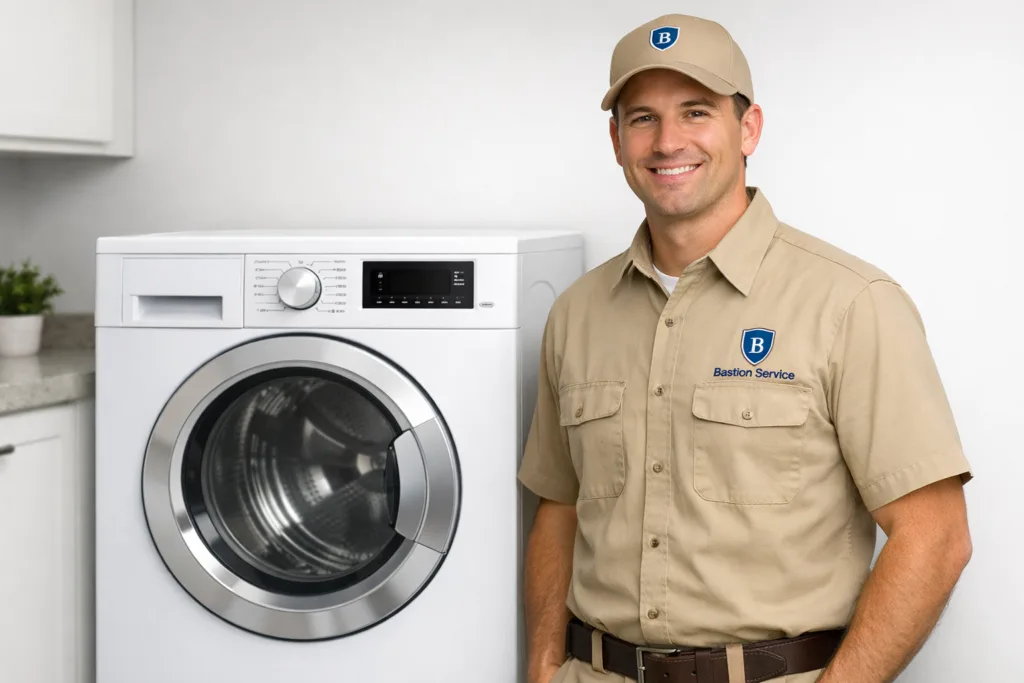
Blomberg dryer problems that deserve attention

Dryer issues often begin as a small change in performance: towels need an extra cycle, the drum sounds different than usual, or the machine pauses before finishing a load. With Blomberg models, those symptoms can come from airflow restrictions, heating faults, worn drum-support parts, sensor problems, or control failures. Looking at the exact symptom pattern is the fastest way to sort out what the dryer is actually doing and what kind of repair makes sense.
Related Blomberg and dryer service paths in Century City include Blomberg Appliance Repair in Century City, Dryer Repair in Century City, and Blomberg Refrigerator Repair in Century City.
For homeowners in Century City, the most useful starting point is to separate a venting problem from an internal appliance fault. A dryer that tumbles normally but dries poorly is not diagnosed the same way as a dryer that will not start at all or one that overheats during a cycle.
Common symptoms and what they may mean
Dryer runs but clothes stay damp
If the dryer turns and seems to heat, but laundry still comes out wet, restricted airflow is one of the first things to consider. Lint buildup, a partially blocked exhaust path, or crushed venting can trap moisture inside the system and stretch dry times. In other cases, the problem may involve a weak heating circuit, a moisture sensor that ends cycles too early, or a control issue affecting temperature regulation.
This symptom often gets worse gradually. Loads may start out only slightly damp and then progress to needing two or three cycles.
No heat or very little heat
When the drum turns but the interior never gets warm enough, the failure is usually in the heating side of the machine rather than the drive system. Depending on the dryer configuration, that can involve heater components, thermostatic safety parts, wiring faults, or electronic controls. A dryer with low heat may still appear functional, but repeated use adds time, energy use, and unnecessary wear.
Dryer will not start
A no-start complaint can come from the door switch, latch alignment, start circuit, control board, thermal protection, or power supply issues. Some dryers show lights or respond to button presses but still will not begin a cycle. That detail matters, because it helps distinguish between a user-interface problem and a failure deeper in the machine.
Long dry times
Long dry times do not always mean the heater has failed. Many dryers still produce heat but cannot move enough air to remove moisture efficiently. Heavy lint accumulation, poor vent flow, overheating that causes the unit to cycle heat off too soon, or sensor issues can all lead to slow drying. If the dryer cabinet feels unusually hot while clothing remains damp, airflow should be checked promptly.
Loud thumping, squealing, or scraping
New mechanical noise usually points to wear in moving parts. Drum rollers, glides, idler components, the blower assembly, or the belt system may be involved. A soft thump at the beginning of a cycle is different from a metal-on-metal scrape or a high-pitched squeal that continues throughout operation. Those differences help narrow the cause and can indicate whether continued use risks damage to the drum or motor system.
Burning smell or overheating
A hot smell, dusty odor, or signs of overheating should not be ignored. Lint inside the cabinet, vent restrictions, failing electrical parts, belt friction, or blower problems can all create excess heat. If the dryer shuts off mid-cycle, feels abnormally hot on the outside, or smells scorched, it is best to stop using it until the source is identified.
Why symptom-based diagnosis matters with Blomberg dryers
Blomberg dryers can show similar outward symptoms for very different internal reasons. For example, damp clothes at the end of a cycle may be caused by vent restriction, weak heat, inaccurate moisture sensing, or control behavior that shortens the cycle. Replacing a part based on guesswork can leave the original problem unresolved.
A proper service approach should verify whether the dryer is heating correctly, moving air properly, sensing moisture accurately, and turning the drum without excess strain or noise. That process helps homeowners avoid paying for parts that do not address the actual failure.
Signs the problem is getting worse
- Loads that used to dry in one cycle now need two or more
- Clothes come out hot but still damp
- The dryer stops before the cycle should be finished
- Noises become louder or more frequent from one week to the next
- The machine starts only intermittently
- The top, door, or side panels feel unusually hot
These changes usually indicate a problem that is progressing rather than correcting itself. Catching it early can prevent a minor repair from becoming a larger one.
When repair is usually worth considering
Repair is often the practical choice when the problem is isolated to a serviceable component and the rest of the dryer remains in solid condition. That may include a heating fault, worn support parts, a failed switch, a sensor issue, or a repairable control-related problem. If the cabinet, drum, and core systems are otherwise in good shape, restoring normal operation is often more reasonable than replacing the appliance.
Replacement becomes more likely when diagnosis reveals multiple failing systems, signs of prolonged overheating, or a repair path that does not make sense compared with the condition of the machine. The best decision usually comes after the fault is confirmed, not before.
What homeowners can notice before service
A few details can make the problem easier to pinpoint:
- Whether the drum turns normally or struggles to start
- Whether the dryer produces any heat at all
- Whether the cycle ends too soon or runs unusually long
- Whether the noise is a thump, squeal, grind, or scrape
- Whether the issue happens on every load or only on certain settings
- Whether the exterior feels hotter than it used to
Noticing these patterns does not replace testing, but it does help connect the symptom to the most likely system involved.
Blomberg dryer repair in Century City for everyday household issues
Most residential dryer calls come down to a handful of real-world problems: clothing not drying on schedule, heat that cuts in and out, a machine that refuses to start, or noise that makes the dryer hard to trust. In Century City homes, those issues are easiest to resolve when the repair is based on how the dryer is failing rather than on a generic part-swapping approach.
If your Blomberg dryer has started showing inconsistent heat, poor drying performance, startup problems, or unusual drum noise, a focused inspection can identify whether the issue is airflow-related, electrical, mechanical, or control-based and help determine the most sensible next step.