





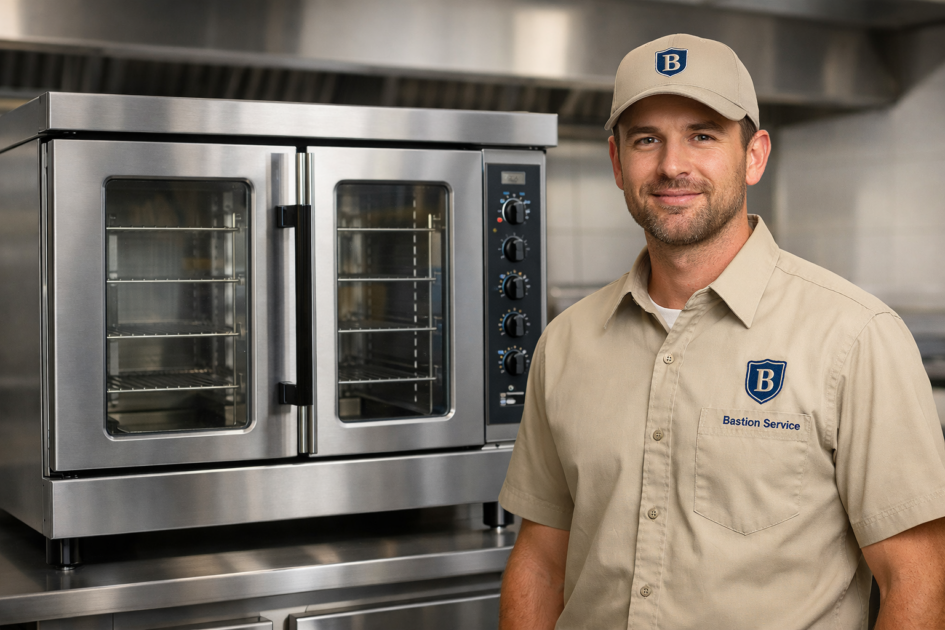
When a Blodgett oven starts missing temperature, heating unevenly, or shutting down during service, production slows fast. For kitchens in Los Angeles, the most useful next step is service that focuses on the exact symptom pattern, operating conditions, and likely failure points before repair work begins. Bastion Service provides Blodgett oven repair for businesses that need to restore heat performance, reduce downtime, and make informed decisions about repair timing.
Related commercial service paths in Los Angeles include Blodgett Commercial Repair in Los Angeles, Commercial Oven Repair in Los Angeles, and Southbend Oven Repair in Los Angeles.
What oven problems usually mean in day-to-day operation
Oven issues rarely stay limited to one bad batch. A unit that preheats slowly in the morning can turn into longer ticket times, inconsistent browning, missed production windows, and added pressure on staff throughout the day. In food-service businesses, even a partially working oven can create workflow problems if temperature recovery is weak or heat distribution is no longer consistent.
That is why symptom-based service matters. The same complaint can come from very different causes, including ignition faults, sensor drift, control failure, airflow problems, worn heating components, or heat loss through door and seal wear. Repair decisions are more effective when the problem is tested under operating conditions instead of guessing from the symptom alone.
Common Blodgett oven symptoms and likely causes
Not heating or taking too long to preheat
If the oven does not heat, struggles to start heating, or takes much longer than usual to reach temperature, the issue may involve igniters, burners, elements, gas delivery, relays, safety limits, controls, or sensors. On some units, the oven may appear to start normally but fail to build enough heat to support steady production.
This type of problem often shows up as delayed opening prep, extended cook times, or repeated need to adjust settings just to maintain output. When the oven is central to daily service, slow preheat is usually a sign that repair should be scheduled before a full no-heat failure follows.
Uneven baking or inconsistent results from rack to rack
Uneven browning, undercooked sections, or different results in the same load usually point to heat distribution problems. Possible causes include weak heating performance, restricted airflow, fan or motor trouble on convection models, calibration drift, failing sensors, or door sealing problems that let heat escape.
Many kitchens first notice this problem through product quality rather than a complete breakdown. If batches are no longer repeatable, the oven may still run, but it is no longer performing reliably enough for consistent production.
Temperature swings or failure to hold set temperature
When an oven overshoots, drops below setpoint, or recovers too slowly between cycles, the cause may be related to thermostat control, sensor accuracy, control board response, heating output, or internal airflow issues. Temperature instability can be especially disruptive during high-volume periods because the unit may seem normal at idle but fail once demand increases.
In practice, this often leads to staff compensating manually, adjusting times and settings from batch to batch, which can hide the real problem for a while. If the oven is no longer predictable, service is usually warranted even if it still appears usable.
Ignition delays, startup faults, or burner problems
Delayed ignition, repeated startup attempts, burner irregularity, or failure to stay lit should be addressed promptly. These symptoms may involve igniters, flame sensing, control sequencing, burner contamination, gas valve issues, or related safety components.
Because startup and burner issues affect both performance and safe operation, they are not good candidates for continued routine use without inspection. A unit that eventually lights can still be developing a larger failure that becomes more disruptive later.
Unexpected shutdowns during operation
An oven that stops mid-cycle, resets unexpectedly, or drops out during use may have an overheating problem, failing control component, intermittent electrical connection, sensor issue, or safety device responding to another fault in the system. Intermittent shutdowns are often among the most frustrating problems because they can be hard to predict and can interrupt production at the worst time.
If the oven is shutting down during active use, the main concern is not just whether it restarts, but why it stopped in the first place and whether continued operation risks broader component damage.
Door, gasket, and heat-retention issues
Worn gaskets, loose hinges, warped doors, and related chamber-sealing problems can reduce efficiency and make temperature recovery weaker than it should be. These issues are easy to overlook because the oven may still heat, but heat loss can affect cook consistency, increase run time, and put extra strain on heating and control systems.
In a busy Los Angeles kitchen, even moderate heat loss can reduce throughput enough to create delays across the line.
Why diagnosis matters before parts are replaced
Oven service is most effective when the symptom is separated from the root cause. A unit that reads low may not need recalibration if the real issue is a failing sensor or weak burner performance. An ignition complaint may not be solved by replacing one visible component if the control sequence or flame verification is also compromised.
Testing matters because similar complaints can overlap. Low heat, uneven baking, slow recovery, and random shutdowns can all connect back to a smaller number of underlying failures. Confirming the actual cause helps avoid repeat visits, unnecessary parts replacement, and extra downtime from chasing the wrong issue.
Signs it is time to schedule repair
Service should be scheduled when the oven begins affecting consistency, timing, or safe operation, especially if staff are already working around the problem. Common signs include:
- Preheat is noticeably slower than normal
- The oven does not reach or hold the selected temperature
- Products bake unevenly or come out inconsistently
- The unit struggles to ignite or start properly
- Burners cycle irregularly or heating is weak
- The oven shuts down during operation
- Door sealing has deteriorated and heat retention is poor
- Error conditions or unusual operating behavior appear
Waiting for complete failure often increases disruption. When the oven is already affecting labor flow or product quality, early repair is usually the better business decision.
When continued use can make the problem worse
Some Blodgett oven problems allow partial operation, but partial operation is not the same as reliable operation. Running a unit with unstable temperatures, recurring ignition trouble, airflow restrictions, or repeated shutdowns can lead to wasted product, damaged components, and a harder repair later.
If symptoms are becoming more frequent, if startup is inconsistent, or if performance changes significantly under load, it is usually best to stop normal use and have the oven evaluated before the issue spreads into additional systems.
Repair or replace?
Replacement is not automatically the right choice just because an oven has a serious symptom. The better decision depends on the age and overall condition of the unit, parts support, repeat repair history, structural condition, and how costly downtime has become for the operation.
Many ovens remain good repair candidates when the fault is isolated and the rest of the unit is still sound. Replacement becomes more likely when there are multiple major issues, recurring reliability problems, chamber deterioration, or repair costs that no longer make sense relative to expected service life. The key is understanding whether the current repair is likely to restore stable performance or only extend a larger decline.
What businesses in Los Angeles usually need from oven service
Most operators are not looking for broad troubleshooting theory. They need to know what failed, how it affects production, whether the oven should stay in use, and what the next repair step should be. That means a service visit should focus on operating symptoms, temperature behavior, startup performance, control response, and the condition of the components that directly affect heating and recovery.
For restaurants, bakeries, hotels, institutions, and other kitchens in Los Angeles, the goal is straightforward: restore dependable oven function with a repair plan based on actual equipment condition, not assumptions.
If your Blodgett oven is not heating correctly, baking unevenly, showing ignition trouble, or shutting down during use, scheduling service early can help limit lost production time and prevent a smaller problem from turning into a larger interruption.


