
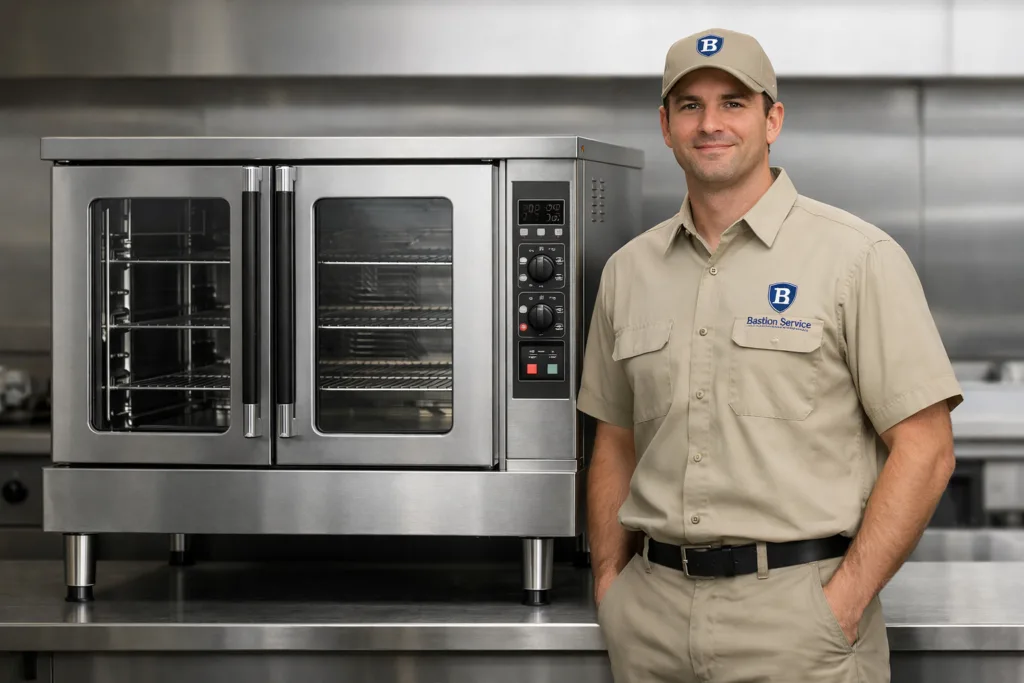




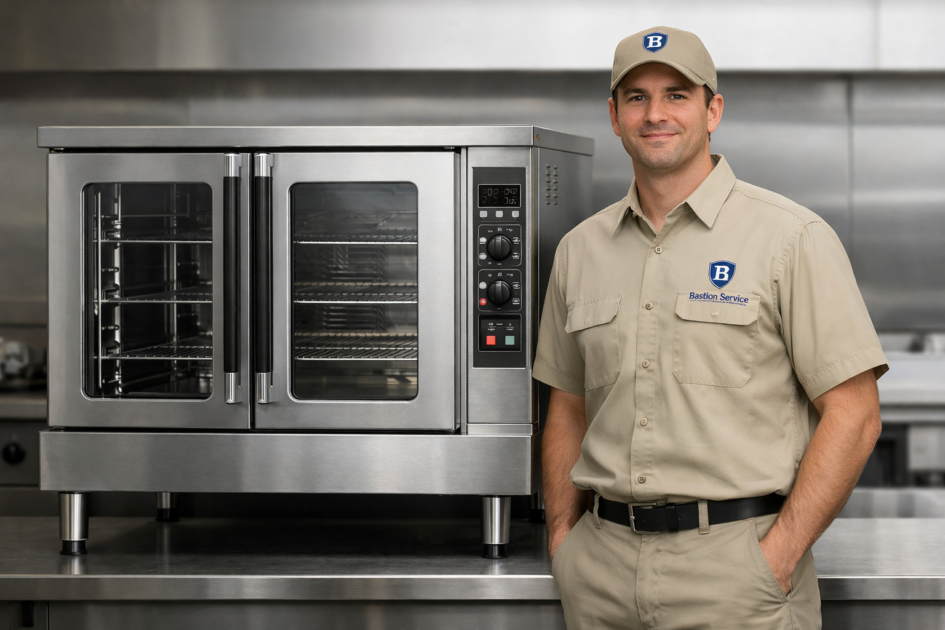
Equipment problems during prep or service rarely stay isolated for long. When Blodgett cooking equipment begins missing temperature targets, delaying recovery, shutting down mid-cycle, or producing uneven results, the smartest next step is to schedule diagnosis based on the actual symptom pattern. For businesses in Venice, that means identifying whether the issue is tied to ignition, heat delivery, controls, airflow, power, or component wear before the problem causes more disruption to kitchen output.
For specific equipment paths in Venice, review Blodgett Oven Repair in Venice and Commercial Appliance Repair in Venice.
Bastion Service helps Venice businesses troubleshoot Blodgett cooking equipment issues with repair planning that fits daily operations. Whether the problem involves an oven that is cooking inconsistently, a unit that starts intermittently, or heat performance that no longer matches production demands, service should clarify what is failing, how urgent the repair is, and whether the equipment can stay in limited use until work is completed.
Common Blodgett cooking equipment issues that lead to repair
Many service calls begin with a complaint that sounds simple: food taking longer than usual, pans browning unevenly, a unit not holding temperature, or a startup sequence becoming unreliable. In practice, those symptoms can point to several different failure points. Blodgett cooking equipment problems often involve heating performance, ignition behavior, sensors, safety circuits, control boards, switches, relays, wiring, or wear in components that affect stable operation.
Because kitchens rely on predictable heat and timing, even small performance changes can create larger production problems. A unit does not need to be completely down to justify service. If staff are adjusting cook times, rotating product to compensate, restarting equipment during a shift, or avoiding one section of the oven because results are inconsistent, repair is already worth evaluating.
Slow heating and weak temperature recovery
If equipment takes too long to preheat or struggles to recover after the door has been opened, the issue may involve burners, igniters, heating elements, sensors, gas flow, airflow, or controls that are no longer responding correctly. Slow recovery often shows up as backed-up tickets, inconsistent batch timing, and pressure on the rest of the line.
This type of problem is especially important when the equipment still appears to function but no longer performs at production pace. Waiting too long can lead to more stress on other components and more lost time for staff who have to compensate manually.
Uneven cooking, hot spots, or cool zones
Uneven results across racks or from one batch to the next usually mean the unit is no longer distributing heat the way it should. Causes may include airflow problems, burner irregularities, calibration drift, failing sensors, damaged seals, or control faults that allow temperatures to swing too far during operation.
For businesses in Venice, this symptom can be more expensive than a full shutdown because it quietly affects product consistency. If recipes that were once reliable now require constant watching or repositioning, service should focus on confirming whether the fault is isolated to one system or reflects broader wear inside the equipment.
Ignition problems and intermittent startup
Delayed ignition, repeated clicking, failed startup attempts, or a unit that lights only sometimes should not be treated as minor inconvenience. Intermittent ignition problems can be tied to igniters, flame sensing, gas delivery, safety components, wiring, or control issues. These faults often become harder to diagnose if the equipment is left in use until the failure becomes constant.
Intermittent startup also creates scheduling risk. A unit that works for breakfast but not for lunch, or starts cold but fails once hot, can disrupt the entire pace of service. Early repair usually reduces the chance of an avoidable outage during a busy shift.
Control failures, resets, and unexpected shutdowns
If settings do not hold, the display becomes erratic, cycles stop unexpectedly, or the equipment shuts down and restarts without warning, the problem may involve electronic controls, relays, wiring, sensors, or power-related faults within the unit. These issues are rarely solved by guesswork or random part replacement.
Shutdown complaints matter because they affect more than one cycle. They create uncertainty for the staff using the equipment, increase the risk of partially cooked product, and make production planning difficult. A service visit should identify whether the fault is isolated to a control-related failure or whether other systems are contributing to the shutdown pattern.
How oven symptoms usually translate into repair decisions
Blodgett oven repair is often driven by a small set of recurring performance complaints. The right repair path depends on how the oven is failing in real use, not just what error or symptom appears first.
Temperature does not match the setting
When an oven reads one temperature but cooks as if it is running hotter or cooler, the problem may involve sensor accuracy, calibration drift, controls, heat output, or airflow. This often shows up as product that looks fine on one rack and undercooked on another, or as recipes needing repeated time changes to achieve the same result.
Cooking times keep getting longer
Longer cook times can point to weak heat output, poor recovery, ignition trouble, or a control problem that causes the oven to cycle incorrectly. If the team is extending every bake or relying on other equipment to keep up, the oven is no longer supporting normal production.
The oven runs, then loses heat
An oven that starts normally but drops temperature during use may have a burner problem, sensor fault, safety interruption, or control issue that only appears once the equipment is under load. This symptom deserves prompt evaluation because it can create inconsistent finished product without an obvious warning to staff.
The oven will not stay on during service
If shutdowns happen repeatedly during a shift, the equipment may be dealing with overheating, failing controls, electrical instability, or protective components interrupting operation. In a busy kitchen, that pattern usually turns into production delays very quickly and should be addressed before the oven is placed back into full daily use.
When continued use can make the problem worse
Some equipment faults remain stable for a short time. Others tend to spread. Continued use can worsen burner wear, overheat electrical parts, strain controls, and increase inconsistency across the cooking chamber. A unit that needs repeated resets, close monitoring, or constant manual adjustment is usually costing more than it appears to cost.
That is especially true when staff have developed workarounds to keep production moving. If they are rotating pans to avoid uneven zones, extending cook times on every batch, restarting equipment during service, or avoiding certain settings because the unit behaves unpredictably, repair should be scheduled before the failure becomes more disruptive.
Any gas-related concern, delayed ignition pattern, or repeated failed heating attempt should be evaluated before normal use continues. Safe operation comes first, and diagnosis should determine whether the equipment should remain in use, be limited to lighter duty, or be taken offline until repair is completed.
What a service visit should clarify
A useful repair visit should do more than confirm that the equipment has a problem. It should identify the likely failed system, verify how the fault affects daily production, and outline the most practical next step. For businesses in Venice, that usually means balancing urgency, downtime exposure, parts planning, and the condition of the equipment as a whole.
- Whether the complaint is caused by heating, ignition, controls, sensors, airflow, or power-related faults
- Whether the equipment can remain in limited use without creating additional risk
- Whether the issue appears isolated or tied to wider wear across multiple systems
- What repair path is most likely to restore stable operation
- Whether the age and condition of the unit make repair or replacement the better operational choice
That information matters because downtime decisions are operational decisions. The goal is not just to replace a part but to restore reliable performance in a way that supports service flow and scheduling.
Repair or replace an aging Blodgett unit?
Not every temperature issue or control problem means the equipment should be replaced. If the unit has otherwise been dependable and the failure is concentrated in one repairable system, fixing it is often the practical choice. But if problems have become frequent, previous repairs have not restored stability, or multiple symptoms are appearing at once, replacement may deserve a closer look.
The most useful way to make that decision is to compare expected reliability after repair against the cost of ongoing interruption. Equipment that still fits the kitchen and has a clear, isolated failure may be worth repairing. Equipment that repeatedly creates production delays, quality issues, and emergency scheduling problems may no longer be the right long-term fit.
Scheduling service before downtime spreads
Blodgett cooking equipment does not have to be fully down to justify a call for service. Early repair is often the better move when heating is slowing down, ignition is inconsistent, controls are acting unpredictably, or shutdowns are beginning to interrupt normal production. Addressing those symptoms sooner helps businesses in Venice avoid more serious outages, protect product consistency, and plan repairs around actual kitchen demands instead of reacting to a complete breakdown.
If your Blodgett equipment is affecting output, timing, or reliability, the next step is to arrange service, confirm the source of the problem, and schedule repair based on how the unit is performing in daily use. That approach gives your team a clearer path forward and reduces the operational risk of waiting for a minor symptom to become a full equipment failure.


