
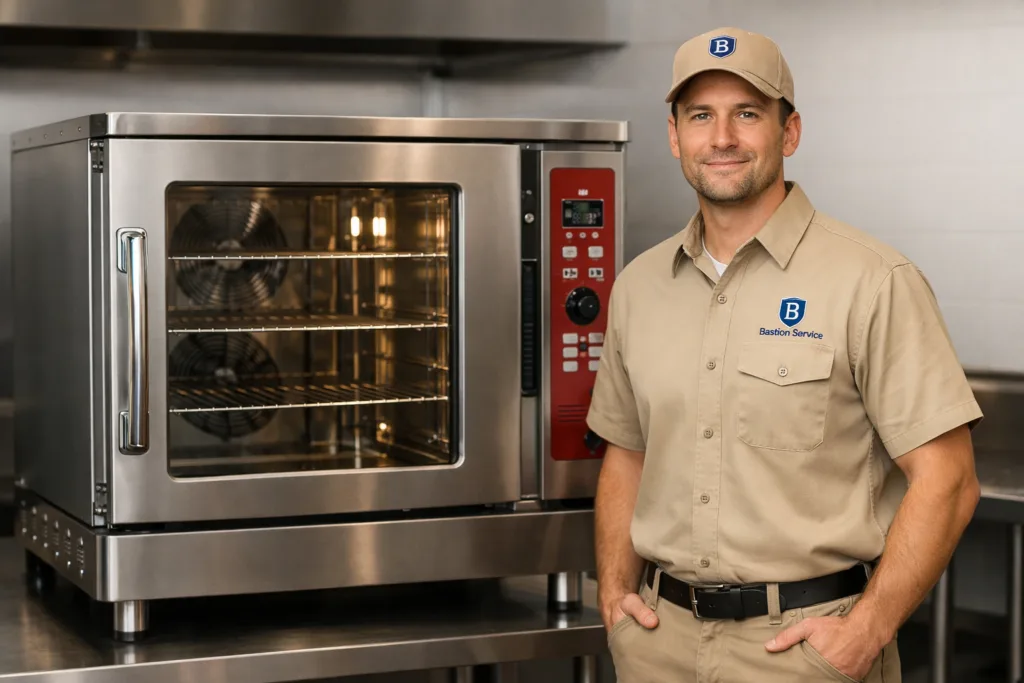




Equipment problems in a busy kitchen rarely stay minor for long. When a Blodgett unit begins missing temperature targets, delaying startup, or dropping out during production, the priority is to identify the actual fault and decide how quickly repair needs to happen. Bastion Service works with businesses in Sawtelle to troubleshoot symptom patterns, isolate failed components, and schedule repair work around uptime needs when ovens start affecting service flow.
For specific equipment paths in Sawtelle, review Blodgett Oven Repair in Sawtelle and Commercial Appliance Repair in Sawtelle.
What Blodgett cooking equipment problems usually need repair attention
Blodgett cooking equipment is often judged by one simple question: can the kitchen trust it through the full shift? When the answer becomes uncertain, repair planning becomes important. Operators commonly call for service when they notice:
- Slow preheat or failure to reach the selected temperature
- Uneven cooking, hot spots, or inconsistent bake results
- Ignition delays, misfires, or unreliable startup
- Burners that do not stay lit or do not heat evenly
- Temperature drift during production
- Weak heat recovery between loads
- Control errors, bad readouts, or unresponsive settings
- Unexpected shutdowns, resets, or intermittent operation
These issues may appear similar from the outside, but they often come from different causes. A temperature complaint could be tied to sensors, controls, burner performance, airflow, door sealing, power supply, or gas-related components. That is why repair decisions should be based on testing rather than assumptions.
Heating problems that slow production
Slow preheat and low-temperature performance
If equipment takes too long to heat or never fully reaches set temperature, the kitchen usually feels it quickly through longer ticket times and reduced batch confidence. On Blodgett cooking equipment, this can point to ignition weakness, heating element or burner issues, sensor problems, control faults, airflow restrictions, or supply-related electrical problems.
In some cases the unit still runs, but only with staff compensation such as extended cook times or reduced loads. That workaround often hides a growing failure. If output is slipping, the safer business decision is to schedule service before the problem turns into a no-heat call.
Temperature swings and uneven results
When one section cooks faster than another, or results vary from batch to batch, the problem is usually more than a simple calibration complaint. Temperature instability can come from sensing errors, cycling problems, burner inconsistency, convection airflow faults, or sealing issues that prevent the chamber from holding heat correctly.
For kitchens relying on repeatable results, uneven heating affects more than food quality. It creates labor slowdowns, rework, waste, and uncertainty during peak periods. A repair visit helps determine whether the problem is adjustment-related or whether a worn or failing part is pushing the unit outside normal operating limits.
Ignition and startup faults
Delayed ignition or hard starts
Equipment that hesitates to light, starts only after repeated attempts, or fails intermittently at opening can become a daily disruption. These symptoms may involve igniters, flame sensing components, gas valve problems, wiring faults, or control issues.
Intermittent startup problems are especially important because they often worsen without much warning. A unit that starts on the second try this week may become a complete startup failure during a busy service. Early repair usually gives operators more flexibility than waiting for a full shutdown.
Burner irregularities and weak flame performance
Weak flame behavior, unstable burner operation, or uneven heat distribution can reduce recovery speed and make the equipment harder to trust under load. This may come from clogged or worn burner components, ignition-related faults, control failures, or fuel-delivery problems.
Because burner symptoms can overlap with control and sensing issues, proper troubleshooting matters. The goal is to determine whether the problem is isolated and repairable quickly or whether the equipment is showing a broader reliability concern that should change how it is used until service is completed.
Recovery loss and mid-shift shutdowns
A unit that heats initially but cannot recover between loads often causes subtle but costly disruption. Staff may reduce volume, stagger cooking, or delay orders to compensate. Recovery complaints often trace back to weak heating output, faulty controls, sensor problems, airflow issues, or burner performance that falls off under demand.
Unexpected shutdowns are more urgent. If the equipment powers down, locks out, or requires resetting, the fault may involve safety circuits, overheating conditions, ignition verification, board problems, or unstable incoming power. Repeated resets should not be treated as normal operation. They are a sign the equipment needs inspection before it causes a complete interruption.
Control, sensor, and electrical issues
Modern cooking equipment depends on accurate feedback and stable control response. When displays show incorrect temperatures, settings do not respond properly, or operation becomes intermittent, the issue may be tied to sensors, relays, interfaces, boards, switches, or wiring.
These faults matter because they can mimic other problems. A unit that appears to have a heating issue may actually be acting on bad temperature information. A shutdown that looks random may follow a repeatable electrical or control failure. Repair testing helps separate symptom from cause so businesses in Sawtelle can make informed decisions about timing, parts, and continued use.
When the equipment can stay in service and when it should come out of rotation
Not every problem requires immediate removal from use, but some symptoms should move repair to the top of the schedule. Continued operation becomes harder to justify when the equipment:
- Produces inconsistent results that affect product quality
- Needs frequent resets to keep running
- Fails to ignite reliably
- Runs well below or above the intended temperature
- Creates noticeable delays in kitchen timing
- Shows signs of worsening from shift to shift
If the unit still functions but performance is slipping, early service can prevent a more disruptive failure. That also gives the business time to plan access, protect production, and decide whether limited use is reasonable until repairs are finished.
Repair-versus-replacement decisions
For older or repeatedly failing equipment, the question is not just whether it can be fixed. The better question is whether repair is likely to restore stable performance for the way the kitchen actually uses it. If the issue is tied to a specific failed component and the rest of the equipment remains solid, repair is often the right move.
If the unit has multiple recurring faults, chronic temperature instability, repeated shutdowns, or growing downtime costs, replacement may deserve consideration. A proper diagnosis helps frame that choice with real information instead of guesswork. That is especially useful when businesses in Sawtelle need to balance immediate repair cost against the operational risk of keeping unreliable equipment in daily rotation.
Scheduling Blodgett cooking equipment repair in Sawtelle
Repair service is most valuable when it leads to a clear next step: keep the unit running with limits, schedule prompt repair, or remove it from production until the fault is corrected. If your Blodgett cooking equipment is heating unevenly, starting inconsistently, losing recovery, showing control problems, or shutting down during use, scheduling service in Sawtelle is the practical way to reduce uncertainty and protect kitchen operations.


