
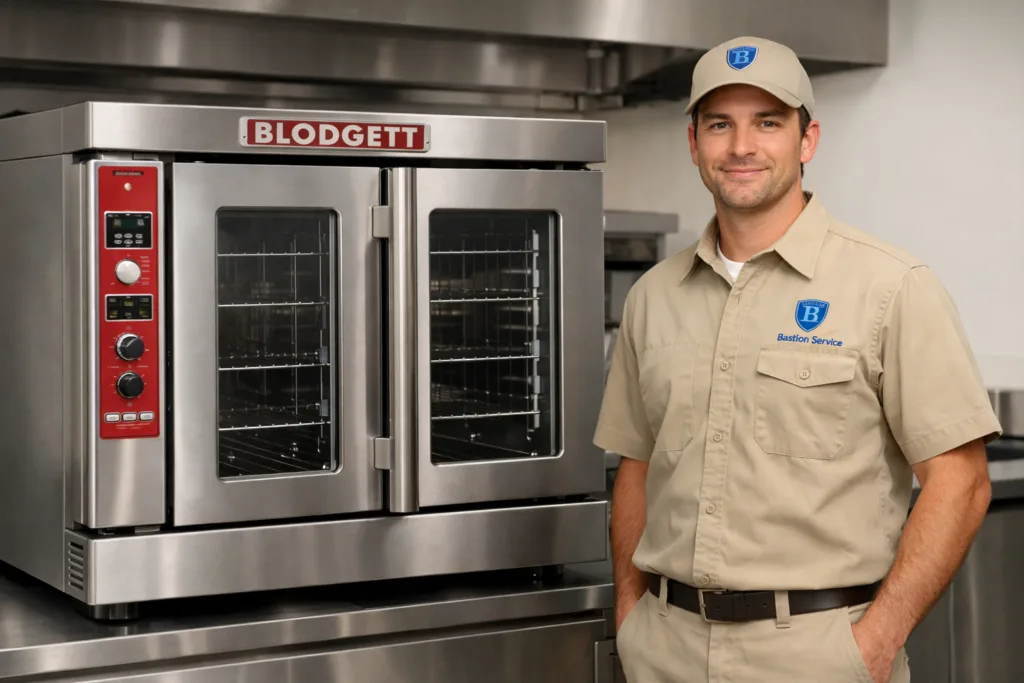




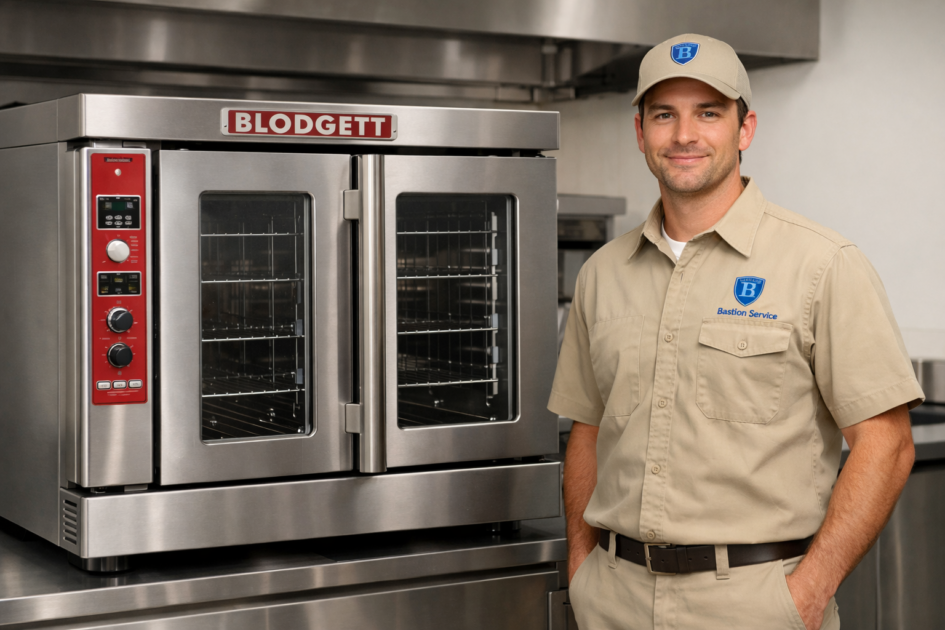
When Blodgett cooking equipment starts missing heat targets, cycling erratically, or dropping out during production, the repair decision should be based on how the symptom affects service, not on trial-and-error part changes. Businesses in Rancho Palos Verdes often need to know whether the unit can stay in limited use, whether the fault is likely to spread, and how quickly repair should be scheduled to avoid larger disruptions. Bastion Service helps identify the actual cause so the next step is tied to uptime, staffing flow, and production needs.
For specific equipment paths in Rancho Palos Verdes, review Blodgett Oven Repair in Rancho Palos Verdes and Commercial Appliance Repair in Rancho Palos Verdes.
What Blodgett cooking equipment problems do you troubleshoot?
Blodgett cooking equipment can show problems in several ways, even when the issue first appears to be “just running a little off.” On ovens and similar kitchen equipment, common repair calls involve:
- Slow preheat or failure to reach set temperature
- Uneven heating, hot spots, or cold zones
- Temperature drift during longer cook cycles
- Ignition problems or delayed startup
- Burners not lighting properly or cutting out
- Poor heat recovery between batches
- Control panel faults, display issues, or error conditions
- Fans not operating correctly on convection units
- Unexpected shutdowns during active use
- Performance changes that create production delays
These symptoms do not all point to the same repair path. The source may involve controls, sensors, heating components, airflow, ignition parts, wiring, safety circuits, or wear that only shows up under load.
How symptom patterns help narrow the repair path
The most useful service call is one that connects the complaint to a repeatable pattern. A unit that heats normally when cold but fails after extended use is different from one that never reaches temperature at all. Equipment that works on some cycles but shuts down on others may be dealing with an intermittent control or safety issue rather than a simple heating failure.
For Rancho Palos Verdes businesses, these details matter because they affect scheduling, kitchen workflow, and whether temporary production adjustments are realistic. Noting when the problem happens, how often it happens, and what changed before the fault appeared can make diagnosis more direct and reduce repeat downtime.
Temperature problems and uneven results
When heat is present but performance is still off
Cooking equipment does not need to be fully down to create costly problems. If the cavity heats but runs too hot, too cool, or inconsistently from one rack position to another, the issue may involve calibration, sensors, relays, airflow, or control response. Staff often compensate by changing cook times or adjusting setpoints, but that workaround can hide a worsening fault.
Uneven results are especially disruptive because the equipment may appear usable while quality and timing continue to slip. If batches need rotation, recipes are becoming unpredictable, or product consistency is no longer dependable, repair is usually more urgent than the equipment’s basic on/off status suggests.
Why slow recovery affects production
Slow recovery after the door opens or between batches can back up output even when the equipment eventually reheats. This may point to weak burner performance, failing heating components, reduced airflow, door seal wear, or control issues that are slowing response. In busy kitchens, recovery problems often show up first as longer ticket times and reduced confidence in production timing.
Ignition, startup, and burner-related failures
If a Blodgett unit has delayed ignition, repeated clicking, burner dropout, or inconsistent startup, it should be evaluated before the problem becomes a complete no-heat condition. Ignition-related faults can involve flame sensing, gas-side components within the equipment, electrical controls, safety devices, or wiring problems affecting the startup sequence.
Repeated resets may get the unit running for the moment, but they rarely solve the underlying cause. If the equipment is taking multiple attempts to light or is shutting down once heated, that usually points to a fault that should be addressed before the next rush.
Control faults, displays, and intermittent shutdowns
Modern cooking equipment relies on coordinated control functions for temperature regulation, timing, and safe operation. When displays act erratically, settings do not respond correctly, or the unit stops mid-cycle, the issue may be in the control itself or in a related component feeding bad information back to it.
Intermittent shutdowns are often the hardest problems for operators to judge because the equipment may run normally during part of the day. What matters is whether the failure appears during preheat, under sustained load, after opening and closing the door repeatedly, or at random. That symptom pattern can help distinguish a control problem from a heating or airflow issue.
When the equipment should not stay in use
Some performance issues can be managed briefly while service is being arranged, but others should move the unit out of active use. If the equipment is overheating, failing to maintain cooking temperature, shutting down unpredictably, showing ignition trouble, or tripping protection repeatedly, continued operation can increase downtime and lead to added component damage.
Stop using the equipment immediately if there is a strong or persistent gas odor. Address the immediate safety concern first, then arrange repair once the area is safe.
Repair or replacement?
Many Blodgett cooking equipment issues are repairable, including problems involving sensors, controls, ignition components, switches, fans, heating parts, and calibration-related faults. Replacement becomes a more serious consideration when breakdowns are stacking up, multiple systems show wear at the same time, or the equipment can no longer support day-to-day production without repeated interruptions.
A service assessment helps frame that choice around business impact. The useful questions are not just what failed, but whether the repair is likely to restore stable operation, whether other high-wear parts are close behind, and how much additional downtime the business can realistically absorb.
Scheduling service in Rancho Palos Verdes
For businesses in Rancho Palos Verdes, it is usually better to schedule service when Blodgett cooking equipment first shows repeatable heating, ignition, control, or shutdown symptoms rather than waiting for a full outage. Early repair planning can protect output, reduce disruption during service hours, and clarify whether the unit can stay in operation while parts or follow-up work are arranged. If your equipment is affecting consistency, recovery, startup, or line timing, the next practical step is to book diagnosis and turn the symptom pattern into a repair plan.


