
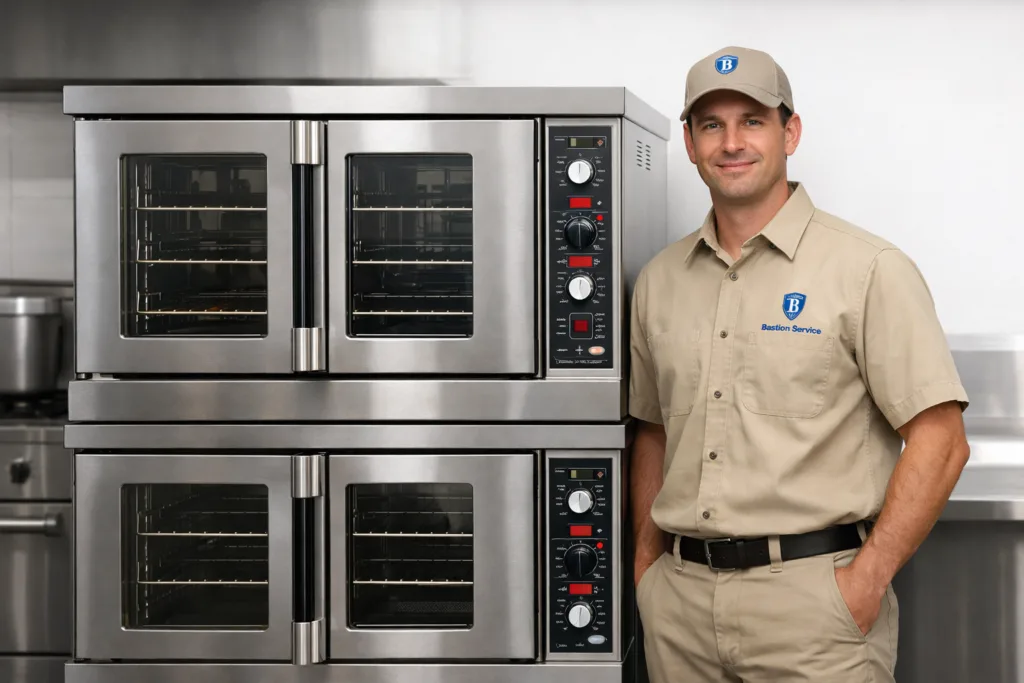




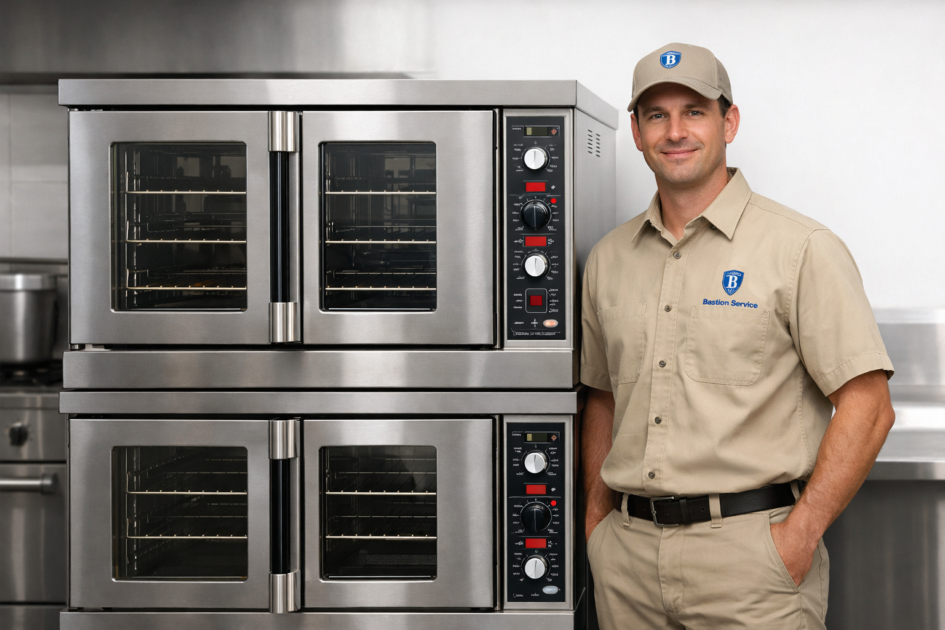
When Blodgett cooking equipment starts missing temperature targets, heating unevenly, or dropping out during production in Pico-Robertson, the next step is service that confirms the actual failure before more time is lost. Problems that look similar from the kitchen floor can come from very different causes, including ignition faults, weak heating performance, control issues, airflow problems, sensor drift, or power and gas supply interruptions. Bastion Service helps businesses in Pico-Robertson evaluate those symptoms, schedule repair appropriately, and decide whether a unit should stay in use, be limited, or be taken offline until repairs are completed.
For specific equipment paths in Pico-Robertson, review Blodgett Oven Repair in Pico-Robertson and Commercial Appliance Repair in Pico-Robertson.
Blodgett Cooking Equipment Problems That Commonly Affect Daily Output
Blodgett equipment is often central to prep timing, batch consistency, and service flow. When performance starts to slip, delays can spread quickly through the kitchen. While ovens are the most common concern, many symptom patterns overlap across cooking equipment categories and should be assessed based on how the unit is actually behaving under load.
Not heating or not reaching the set temperature
If the equipment powers on but fails to heat correctly, the issue may involve igniters, burners, heating elements, thermostats, temperature probes, relays, control boards, limit devices, or supply-related conditions. In daily operations, this often shows up as longer cook times, missed hold temperatures, incomplete batches, or repeated attempts to restart the unit. A repair visit can determine whether the problem is isolated to one component or part of a broader heating failure.
Uneven cooking, hot spots, or drifting temperatures
When product quality changes from one rack, pan, or batch to the next, temperature control should be checked promptly. These symptoms can point to calibration problems, sensor inaccuracies, airflow restrictions, fan issues, burner irregularities, or wear that affects heat distribution. Teams often compensate by rotating product or extending cook times, but those workarounds usually mean the equipment is no longer performing predictably enough for normal service.
Ignition delays, burner trouble, or intermittent flame
Delayed ignition, inconsistent burner operation, and intermittent heating can create both downtime and safety concerns. Potential causes include igniter wear, flame sensing issues, gas valve response problems, contamination in burner assemblies, wiring faults, and interruptions from safety controls. If the unit is failing to light cleanly or maintain steady operation, it should be evaluated before that condition leads to a complete shutdown during production.
Slow recovery between loads
Slow recovery is easy to overlook at first because the equipment may still appear functional. In practice, it often creates bottlenecks during busy periods, especially when the kitchen depends on repeat cycles or steady batch output. Recovery issues may be tied to heating weakness, control problems, airflow limitations, door seal wear, or components that are no longer responding efficiently under demand.
Control errors, random resets, or shutdowns
Electronic issues can be especially disruptive because they may appear without warning. Error messages, nonresponsive controls, unexpected resets, and mid-cycle shutdowns can result from failing boards, loose electrical connections, switch problems, communication faults, or unstable incoming power. Because these symptoms can resemble other failures, testing on site is usually the fastest way to avoid replacing the wrong part and extending downtime.
Why Symptom-Based Diagnosis Matters
Repair planning works better when it starts with the exact symptom pattern rather than assumptions about one failed part. For example, an oven that will not hold temperature might have a sensor problem, a control issue, weak burner performance, or a heat distribution fault. An intermittent shutdown could be tied to safety controls, power supply instability, or overheating conditions. Identifying the root cause helps businesses decide how urgent the repair is, whether the unit can stay in limited use, and what kind of downtime to plan for.
This is also where a service call becomes more than a simple part-swap visit. Businesses in Pico-Robertson often need to know whether the issue is likely to worsen quickly, whether a second component may also be involved, and whether it makes sense to keep the equipment in rotation until the repair is completed.
Signs the Equipment Should Be Scheduled for Service Soon
Some issues justify prompt attention because they rarely improve on their own and often become more disruptive with continued use. It makes sense to schedule repair when Blodgett cooking equipment is showing symptoms such as:
- Failure to heat, or repeated failure to reach the set temperature
- Noticeable temperature swings that affect batch consistency
- Intermittent ignition or unreliable burner operation
- Slow recovery that creates production delays
- Unexpected shutdowns, tripped safeties, or repeated resets
- Control display errors or buttons that stop responding normally
- Uneven results that force staff to rotate product or adjust timing manually
Even when the equipment is still operating, unstable performance usually means output, quality, or labor efficiency is already being affected.
When Continued Use Can Create Bigger Repair Problems
It is common for kitchens to keep a struggling unit in service to get through immediate demand, but that decision has limits. Repeated ignition failures, overheating, unstable cycling, and recurring shutdowns can place additional stress on surrounding components. What starts as a sensor, igniter, switch, or control problem can expand into a larger repair if the equipment continues running in a fault condition.
If staff are relying on workarounds, extending cook times, restarting the equipment multiple times, or avoiding certain settings because performance is unpredictable, those are usually signs that service should not be pushed off much longer.
Repair or Replace? What Businesses Usually Need to Consider
Many Blodgett cooking equipment issues are repairable, especially when the core unit is in otherwise solid condition and the failure is limited to controls, ignition components, heating parts, sensors, wiring, switches, or related assemblies. Replacement becomes a more serious discussion when breakdowns are repeating, multiple major systems are failing together, or the equipment has become too unreliable for consistent kitchen use.
A useful assessment looks beyond the immediate symptom. It should help the business weigh current repair needs against the unit’s overall condition, expected downtime, and the likelihood of stable performance after service is completed.
What to Expect From a Service Visit in Pico-Robertson
The most helpful repair visit is one that leads to a clear next action. That usually means identifying the fault, checking the affected heating or control system, confirming whether the unit can remain in use, and outlining the repair plan in a way that fits kitchen operations. For businesses in Pico-Robertson, that kind of service clarity matters because equipment problems affect prep schedules, staffing flow, and customer service almost immediately.
If your Blodgett cooking equipment is heating poorly, recovering slowly, shutting down, or causing production delays in Pico-Robertson, scheduling service is the practical next step. Verifying the problem early makes it easier to plan the repair, reduce unnecessary downtime, and get the equipment back to steady operation.


