





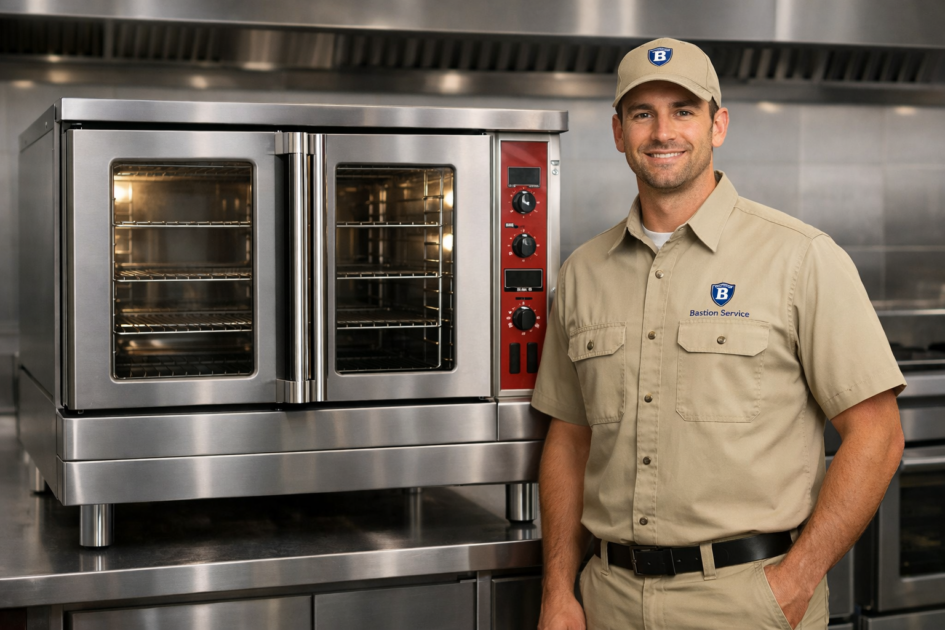
When Blodgett cooking equipment starts missing heat targets, recovering slowly, or dropping out during service, the next step is not guesswork. Businesses in Palms usually need a repair visit that confirms the actual fault, identifies whether the equipment can stay in use, and sets a schedule that limits disruption to production. Bastion Service works with local operators to diagnose these problems, test likely failure points, and move from symptom to repair plan without wasting time on trial-and-error parts replacement.
For specific equipment paths in Palms, review Blodgett Oven Repair in Palms and Commercial Appliance Repair in Palms.
What Blodgett Cooking Equipment Problems Usually Need Repair
Blodgett equipment issues often begin with performance changes rather than a complete stop. Staff may notice longer preheat times, temperature drift, uneven results, ignition trouble, slow heat recovery, burner problems, or a shutdown that happens once and then starts happening more often. In a busy kitchen, those symptoms affect food quality, ticket timing, staffing, and confidence in the equipment.
Scheduling service is usually the right move when a problem is recurring, forcing workarounds, or creating uncertainty during a shift. A unit that still runs but no longer performs consistently can cause waste and delays just as quickly as a full failure.
Heating and Temperature Control Issues
Slow Heat-Up or Failure to Reach Set Temperature
If equipment is taking too long to preheat or never reaches the selected temperature, output becomes harder to manage. This symptom can point to weak heating performance, sensor problems, ignition faults, control issues, gas-related component trouble, or electrical failures depending on the configuration of the unit. The important question is not only why heat is low, but whether the equipment can still produce stable results during service.
Operators often try to compensate by extending cook times or adjusting loading patterns. That may keep production moving briefly, but it also masks the fault and can lead to inconsistent product.
Temperature Swings During Use
When temperature climbs too high, drops unexpectedly, or varies from cycle to cycle, the problem often involves controls, sensing, airflow, or heat regulation. Kitchens usually feel this first through uneven browning, longer finishing times, or batches that come out differently even when procedures have not changed.
Repeated temperature swings are a strong sign that the equipment needs evaluation before the issue turns into a mid-shift failure.
Uneven Cooking Across the Cavity
Hot spots, cold spots, and inconsistent results from one rack or section to another can indicate circulation issues, burner imbalance, door sealing problems, or a control system that is no longer responding accurately. When staff have to rotate product more aggressively or check doneness constantly, the equipment is no longer supporting efficient kitchen flow.
Ignition and Burner Symptoms
Intermittent Ignition
If the unit does not light reliably, clicks repeatedly, starts after several attempts, or enters a lockout condition, service should be scheduled before peak demand exposes the problem. Intermittent ignition may involve igniters, flame sensing, controls, gas valve operation, or safety circuits. Several different faults can create the same symptom pattern, which is why testing matters.
Weak Burner Performance
Burners that are not producing stable heat can lead to slow recovery, poor cooking consistency, and extended ticket times. Even when the equipment appears to be operating, weak burner performance often shows up as reduced throughput and uneven results under load.
- Longer recovery after doors are opened
- Noticeably slower production during busy periods
- Inconsistent color or finish on repeated batches
- Heat output that seems lower than normal without a clear reason
Flame or Combustion Irregularities
Abnormal burner behavior should be checked promptly, especially when it is tied to poor heating, random shutdowns, or repeated ignition attempts. In a business setting, this is not just a performance issue. It also affects whether the equipment should remain in service while waiting for repair.
Shutdowns, Control Faults, and Service Interruptions
A Blodgett unit that shuts down during operation creates immediate production risk. Product may be lost, timing across the line gets disrupted, and staff are forced to shift work to other equipment. Shutdowns can be tied to control failure, overheating protection, power interruption, sensor faults, or ignition verification problems.
When the equipment restarts but fails again later, it is easy to underestimate the severity of the issue. In practice, repeat shutdowns usually mean the fault is progressing and should be addressed before the next busy service window.
How These Problems Affect Daily Kitchen Operations
Cooking equipment problems rarely stay isolated to one machine. One underperforming oven can slow prep, change holding patterns, increase labor demands, and create pressure on the rest of the kitchen. Businesses in Palms often call for service when they begin seeing effects like:
- Delayed production because preheat or recovery takes too long
- More frequent checking, rotating, or re-firing of product
- Inconsistent food quality from one batch to the next
- Unexpected downtime during lunch, dinner, or catering prep
- Staff uncertainty about whether the unit can be trusted for the next shift
Those are repair decision points, not just minor inconveniences. Once equipment reliability starts affecting output, the cost of waiting often rises.
When Continued Use Can Make the Problem Worse
Some equipment faults allow partial operation for a while, but continued use is not always the safer or cheaper choice. If a unit repeatedly shuts off, struggles to ignite, cannot maintain temperature, or shows obvious production loss, keeping it in rotation can increase wear on related components and make the final repair more involved.
A service assessment helps determine whether limited use is reasonable until repairs are completed or whether the equipment should be taken out of service immediately.
Repair Planning for Blodgett Equipment
Repair decisions are usually about more than replacing one failed part. Businesses need to know whether the issue is isolated, whether additional testing is needed, how much downtime to expect, and whether the repair makes sense for the age and condition of the equipment. For operators managing a busy kitchen, those answers matter as much as the diagnosis itself.
During a visit, the goal is typically to identify the failure pattern, confirm the affected components, and recommend the next step based on uptime, safety, and production impact. In some cases the repair is straightforward. In others, repeated faults or broader wear may make it necessary to weigh repair against replacement planning.
What to Note Before Scheduling Service
A few details can make a repair appointment more efficient and help narrow down the cause faster:
- Whether the problem happens during preheat, active cooking, or both
- If the symptom is constant or intermittent
- Any recent ignition, control, or shutdown behavior
- How the issue is affecting output, timing, or product consistency
- Model information and any recent service history
That information helps connect the visible symptom to the likely fault pattern and supports better scheduling decisions for the kitchen.
Service Decisions for Businesses in Palms
Blodgett cooking equipment repair in Palms should leave you with a usable next step: proceed with repair, schedule follow-up work, limit use until parts are installed, or remove the unit from production until the fault is corrected. If your kitchen is dealing with temperature inconsistency, ignition trouble, burner weakness, slow recovery, control issues, or repeated shutdowns, the most useful move is to book service and get the equipment evaluated before downtime spreads further into daily operations.


