
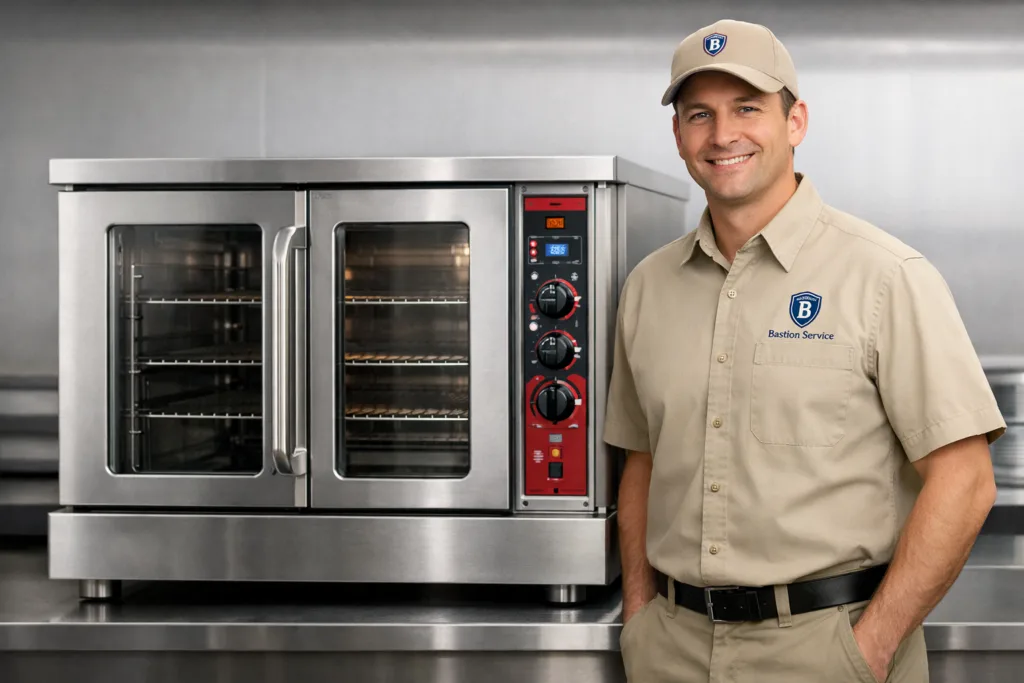




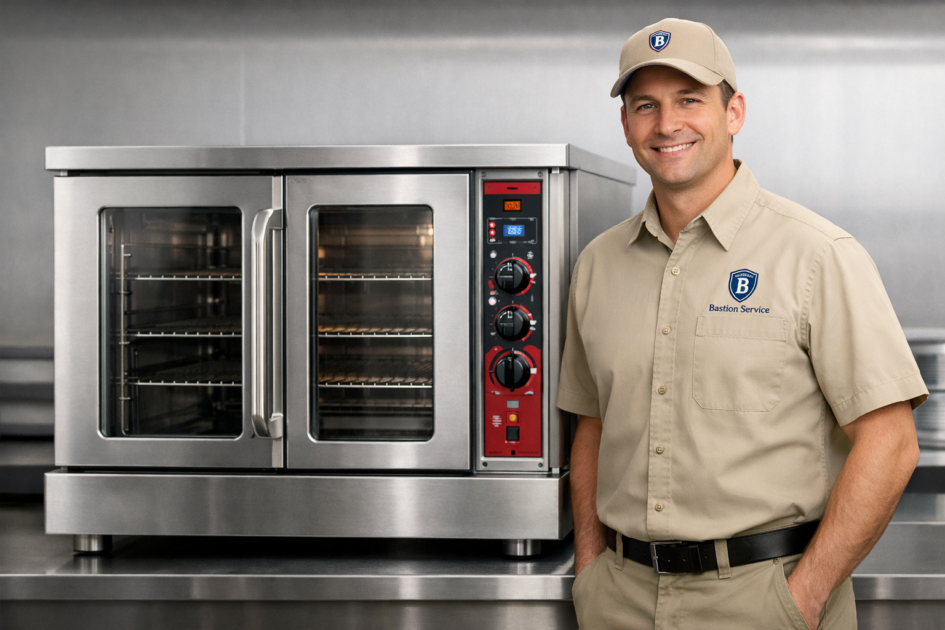
When Blodgett cooking equipment starts affecting output, timing, or product consistency, the next step is to get the problem evaluated before the issue turns into a longer outage. For kitchens, bakeries, cafeterias, and other food-service businesses in Mid-City, repair decisions often need to balance safety, production demands, and whether the equipment can stay in use while service is being arranged. Bastion Service provides repair support built around symptom diagnosis, repair scheduling, and the real impact equipment trouble has on daily operations.
For specific equipment paths in Mid-City, review Blodgett Oven Repair in Mid-City and Commercial Appliance Repair in Mid-City.
What Blodgett Cooking Equipment Problems Usually Need Service?
Many equipment failures do not begin with a total breakdown. They start as slower ticket times, uneven results, repeated resets, poor heat recovery, or staff having to compensate for inconsistent performance. On Blodgett cooking equipment, those symptoms can point to several different causes, so the most efficient approach is to diagnose the failure pattern first rather than assume a single part is to blame.
Businesses in Mid-City commonly schedule service when they notice:
- Temperature that runs too high, too low, or drifts during use
- Uneven cooking from front to back or rack to rack
- Ignition delay, failure to light, or inconsistent burner operation
- Slow recovery after doors are opened or batches are rotated
- Controls that do not respond normally or displays that behave erratically
- Unexpected shutdowns in the middle of production
- Performance changes that force longer cook times or repeated remakes
These symptoms matter because they affect more than the equipment itself. They can disrupt prep flow, increase waste, create labor bottlenecks, and make it harder for staff to maintain consistent food quality.
Heating and Temperature Problems
Temperature complaints are one of the most common reasons businesses call for Blodgett cooking equipment repair in Mid-City. Sometimes the unit still heats, but not accurately enough to support normal production. In other cases, it cannot reach set temperature at all, or it overshoots and creates inconsistent results from one cycle to the next.
Possible causes can include sensor problems, thermostat or control faults, heating component wear, airflow issues, or calibration-related errors. In practical terms, teams usually notice the problem through undercooked product, overbrowning, longer bake times, or the need to keep adjusting settings during the day.
If staff are relying on guesswork to hit usable results, service should not be delayed. Continued operation with unstable temperature control can lead to product loss and may place additional strain on related components.
Signs the issue is more than minor variation
- Cook times keep changing without a menu or load change
- One side of the cavity performs differently than the other
- The set temperature does not match actual results
- The unit cycles in a way that seems too frequent or too slow
- Product consistency depends on staff compensating manually
Ignition, Burner, and Heat Output Faults
Ignition-related problems often show up as delayed starts, failure to light, weak flame performance, intermittent burner operation, or a unit that starts but does not maintain stable heat. These faults can interrupt an entire production schedule because the equipment may appear usable one moment and then stop heating properly during service.
Depending on the design and symptom pattern, the issue may involve ignition components, burner condition, gas-flow-related appliance faults, safety circuits, or control problems. What matters from an operations standpoint is that repeated start attempts and unstable burner behavior usually do not improve on their own. If the equipment is struggling to light or maintain heat, it should be checked before a busy shift turns a manageable repair into a full shutdown.
Why burner performance affects output quickly
Even when a unit still runs, weak or unstable heat can cause slow throughput, poor browning, incomplete recovery, and inconsistent batch results. For a business in Mid-City, that often means the equipment is technically on but no longer supporting normal production speed.
Slow Recovery and Uneven Cooking Results
Blodgett equipment that takes too long to recover after door openings or load changes can quietly reduce productivity all day long. Recovery issues are especially disruptive when output depends on repeated cycles, fast turns, or predictable timing between batches.
Slow recovery and uneven cooking can be tied to heating output loss, circulation problems, door-seal wear, control response issues, or internal component decline. In real use, staff may notice that the first batch looks acceptable but later batches lag behind, or that results vary depending on rack position, pan placement, or how often the door is opened.
When these patterns become routine, a repair visit helps determine whether the problem can be corrected with targeted service or whether there is broader performance decline affecting the equipment under load.
Control Problems and Unexpected Shutdowns
Some service calls are less about visible heating trouble and more about unpredictable operation. A unit may power on inconsistently, reset during a cycle, stop responding to inputs, display control errors, or shut down without warning. These symptoms are especially disruptive because they make it difficult for staff to trust the equipment during active production.
Shutdown and control faults may stem from electrical issues within the equipment, failing control components, sensor-related problems, overheating conditions, or protective circuits reacting to another underlying failure. Because intermittent faults often become hard failures with little warning, these are not issues to ignore once the pattern starts.
If the equipment is dropping out during use, the main question is not only what failed, but also whether it should remain in service until repairs are completed.
When to Schedule Repair Instead of Waiting
Businesses often wait for a complete failure before calling, but the more costly phase usually begins earlier. If a Blodgett unit is still operating while creating delays, remakes, or manual workarounds, the business is already absorbing the impact through labor inefficiency and inconsistent output.
It is usually time to schedule service when:
- The same heating or ignition problem keeps returning
- Staff have to monitor the unit more closely than normal
- Production timing depends on compensating for equipment behavior
- The equipment is shutting down or losing performance during peak use
- The quality of finished product is becoming harder to control
Early service also makes scheduling easier. It gives the business a better chance to plan around prep windows, lighter demand periods, or temporary production adjustments instead of reacting after the equipment is fully out of service.
When Continued Use May Risk a Bigger Problem
Some equipment can remain in limited use while repairs are being scheduled, but not every symptom supports that decision. If the unit is overheating, failing to ignite reliably, shutting down unpredictably, or producing results that cannot be controlled, continued use may increase product loss, stress related components, or create avoidable risk.
Teams should also treat any persistent or strong gas odor as a safety issue first. Stop using the equipment and address the gas concern immediately before arranging appliance repair. Where there is no gas odor but burner or ignition behavior is abnormal, diagnosis should happen before the equipment returns to normal production demand.
Repair Decisions for Ovens and Related Cooking Equipment
Although many calls involve Blodgett oven repair, the underlying service decision is usually broader than one isolated symptom. Businesses want to know what failed, whether the repair is straightforward, whether other components should be inspected, and how urgently the work needs to happen based on current production demands.
A productive service visit helps answer questions such as:
- Is the issue limited to one failed component or part of a larger performance decline?
- Can the equipment remain in operation in the short term?
- Will delaying repair likely worsen downtime or parts needs?
- Does the age and condition of the unit support repair as the best next step?
That kind of assessment matters for Mid-City businesses because repair choices affect staffing, prep sequencing, menu execution, and customer service far beyond the equipment line itself.
What to Expect From a Service-Oriented Repair Visit
Good repair support should move quickly from symptom review to actionable next steps. That means identifying the probable fault path, checking whether the equipment is suitable for continued use, and helping the business plan service timing around operations as much as possible. In some cases, the solution is a targeted repair for ignition, temperature control, burner performance, or shutdown issues. In others, repeated failures or broad wear may change the conversation toward larger reliability concerns.
If your Blodgett cooking equipment is showing inconsistent heat, ignition trouble, slow recovery, control faults, or unexpected shutdowns, the practical next step is to schedule diagnosis and repair planning before the disruption spreads to the rest of the kitchen. For businesses in Mid-City, timely service helps protect uptime, reduce avoidable production loss, and make the repair decision with a clear understanding of what the equipment is actually doing.


