
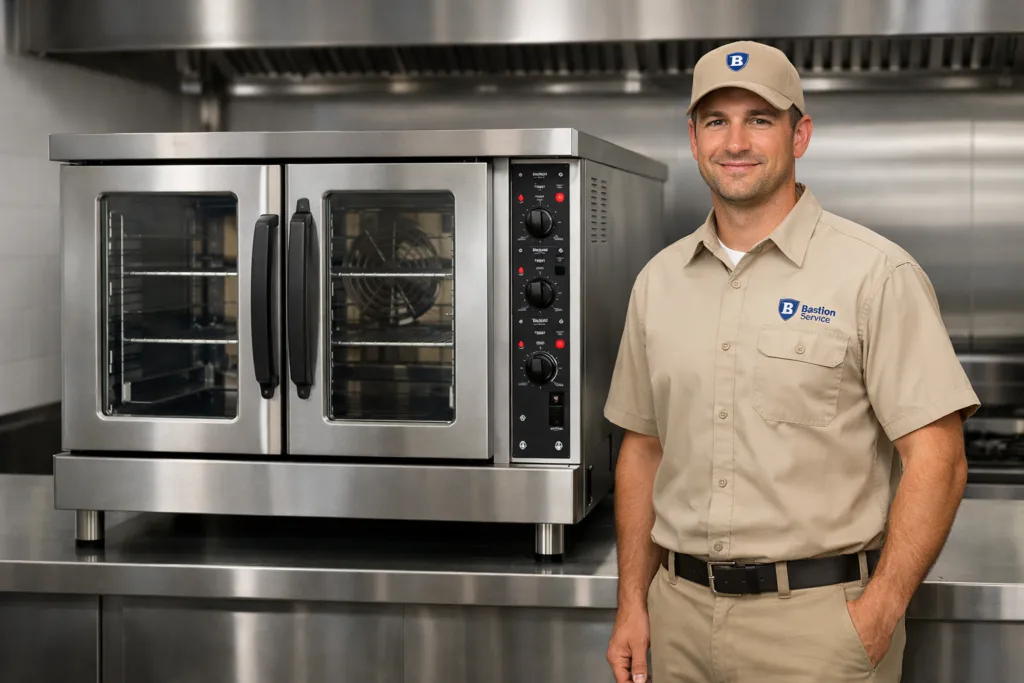




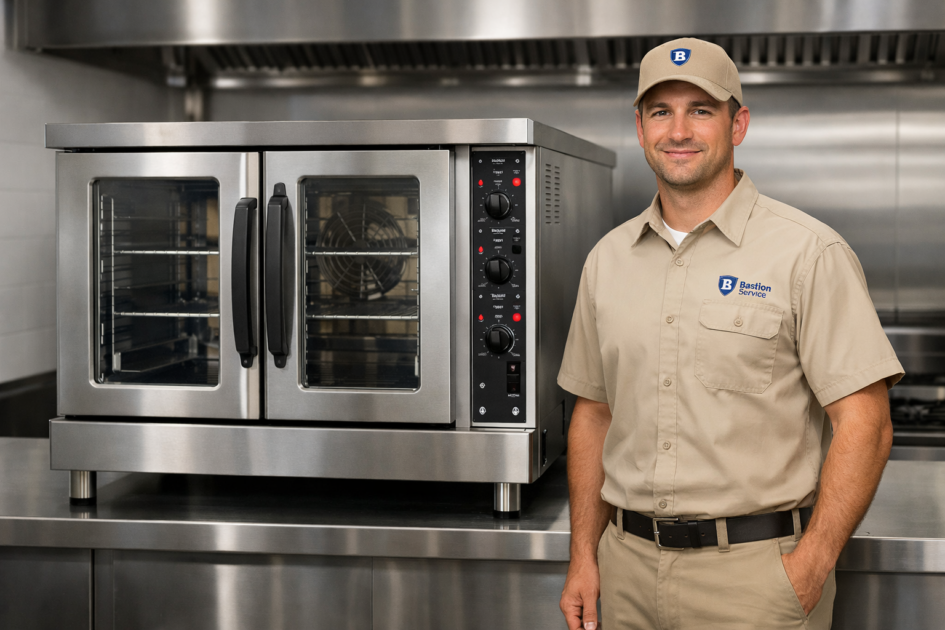
When Blodgett cooking equipment starts falling behind during prep or service, the priority is usually straightforward: identify the fault, understand the downtime risk, and get repair scheduled before one problem turns into a broader production issue. For businesses in Mar Vista, service decisions often depend on whether the equipment is still heating consistently, starting reliably, and holding up under normal daily use. Bastion Service helps evaluate those symptoms, explain likely failure points, and move the repair process forward based on urgency.
For specific equipment paths in Mar Vista, review Blodgett Oven Repair in Mar Vista and Commercial Appliance Repair in Mar Vista.
What Blodgett cooking equipment problems usually lead to repair calls
Most service requests begin with a symptom that affects output rather than a confirmed failed part. With Blodgett cooking equipment, that often means ovens that stop heating properly, units that recover too slowly between loads, ignition systems that become unreliable, or controls that no longer hold a steady temperature. Even when the equipment still runs, these symptoms can create inconsistent product, slower ticket flow, and added strain on staff trying to work around the issue.
In business kitchens, a repair call is often warranted when operators notice any of the following:
- Heat that feels weaker than normal or takes too long to build
- Temperature swings that affect consistency from one batch to the next
- Ignition delays, failed starts, or repeated resets
- Unexpected shutdowns during active use
- Burner performance that seems unstable or uneven
- Control panels that stop responding or display incorrect readings
- Slow recovery after doors are opened or loads are rotated
Oven heating problems that affect production
One of the most common reasons businesses schedule Blodgett repair is a unit that does not reach the selected temperature or takes far too long to get there. This can show up as longer cook times, underfinished product, or staff constantly adjusting settings in an attempt to compensate. In many cases, the root issue may involve igniters, heating elements, sensors, thermostatic controls, relays, gas delivery components, or airflow-related problems.
Heating complaints are worth addressing quickly because they rarely stay minor for long. A kitchen may initially manage the issue by extending cycles or reducing output, but that workaround can become a serious service bottleneck once demand picks up. If the equipment is central to daily production, early diagnosis helps determine whether the problem is isolated and repairable or whether continued use is likely to cause more downtime.
Not heating at all
If the oven powers on but produces no usable heat, the failure may be tied to ignition, electrical supply, control response, safety circuits, or a failed heating component. From an operations standpoint, a no-heat condition usually moves the issue from inconvenience to immediate service need.
Heating slowly
Slow preheat or sluggish recovery can be easy to dismiss at first, but it often points to a system that is no longer operating efficiently. When staff start building extra time into every cycle, the equipment is already affecting labor flow and output planning.
Not holding temperature
If the displayed setting and actual performance do not match, the issue may involve calibration drift, sensors, controls, or burner regulation. This is especially disruptive when menus depend on repeatable results across multiple batches.
Ignition, burner, and startup faults
Ignition problems tend to create uneven workflow because the equipment may appear usable one moment and fail on the next startup. A Blodgett unit that clicks repeatedly, delays ignition, starts intermittently, or locks out can interrupt prep schedules and increase uncertainty around every load. Burner-related issues can also reduce heating performance even before the unit stops working altogether.
These symptoms usually call for prompt inspection because they affect both reliability and normal operation. Businesses in Mar Vista often request service when they notice:
- Intermittent startup failures at opening
- Burners that do not establish flame consistently
- Units that cycle unpredictably
- Heat that drops off during use
- Repeated attempts needed before the equipment will run
When that pattern appears, the key question is not just whether the equipment can still produce heat, but whether it can do so consistently enough to support service without surprise interruption.
Temperature control and consistency issues
Some Blodgett cooking equipment problems are less dramatic than a complete shutdown but just as damaging to day-to-day operations. Uneven baking, hot spots, drifting temperatures, and poor recovery between loads all point to a unit that is no longer performing predictably. In a busy kitchen, that can mean wasted product, repeated remakes, and staff adjusting process steps around equipment behavior instead of relying on the equipment to do its job.
Possible causes may include sensor faults, control problems, airflow restrictions, failing convection-related components, worn door seals, or issues within the heating system itself. What matters most from a repair standpoint is confirming whether the inconsistency is correctable through adjustment or component replacement, and whether the unit should stay in service until that work is done.
Uneven results from rack to rack
If one area of the cavity runs hotter or cooler than another, the problem may involve air movement, internal heat distribution, or temperature sensing. Kitchens usually notice this first through inconsistent finish rather than an obvious error code.
Slow recovery between batches
Recovery problems often show up when the equipment struggles after doors are opened or when back-to-back loads begin to pile up. If performance drops as volume increases, the unit may no longer be supporting the production pace it was expected to handle.
Control failures and unexpected shutdowns
Modern cooking equipment depends on controls to regulate temperature, manage timing, and maintain stable operation. When the panel becomes unresponsive, settings reset unexpectedly, temperatures drift without explanation, or the unit shuts down in the middle of a cycle, the repair path may involve boards, wiring, sensors, switches, or power-related faults.
For business operators, this type of issue creates two immediate concerns: whether the equipment can still be trusted during active service, and whether the repair is likely to require parts coordination. That is why symptom reporting matters. A unit that fails only during preheat may point in a different direction than one that runs for an hour and then powers down unexpectedly.
When to stop using the equipment until it is checked
Some performance issues allow temporary limited use, while others should be evaluated before normal operation continues. If staff are constantly restarting the unit, avoiding certain settings, extending cook times, rotating product abnormally to compensate for hot spots, or dealing with repeated ignition failures, the equipment is already creating avoidable operational risk.
Use should be reconsidered when the unit:
- Shuts down without warning during production
- Fails to regulate temperature in a stable way
- Shows unstable burner behavior
- Will not start consistently
- Displays recurring control or error problems
- Creates obvious delays that spread across the kitchen workflow
In these situations, continued use can turn a manageable repair into a larger outage by stressing related components or forcing the kitchen to rely on equipment that no longer performs predictably.
How repair decisions are usually made
For many Mar Vista businesses, the repair decision comes down to three factors: how urgently the equipment is needed, whether the failure appears isolated, and whether the unit still fits current production needs once repaired. A useful service visit should help answer practical questions, including whether the equipment can remain in rotation, whether temporary workarounds are realistic, and whether repair still makes sense compared with replacement.
Repair is often the sensible route when the problem is tied to a specific serviceable system such as ignition, controls, sensors, burners, heating components, switches, or door-related parts. Replacement becomes a more serious consideration when breakdowns are recurring across multiple systems, reliability has been poor for an extended period, or the equipment no longer supports the pace of the kitchen even when functioning.
What to have ready when scheduling service
Before arranging a repair visit, it helps to gather a few details that make diagnosis and scheduling more efficient. The most useful information usually includes the model details, the main symptom, when the issue occurs, whether the failure is constant or intermittent, and whether the equipment can still be used in a limited way.
Examples of helpful notes include:
- Whether the unit is not heating, heating unevenly, or overheating
- Whether the problem occurs at startup, during preheat, or mid-cycle
- Whether the shutdown happens once or repeatedly
- Any visible control or display issue
- Whether production delays have already started affecting service
If your Blodgett cooking equipment is slowing output, affecting consistency, or becoming unreliable during daily operation, the next practical step is to schedule service in Mar Vista so the fault can be identified, the repair scope can be explained, and downtime can be managed before the disruption gets larger.


