





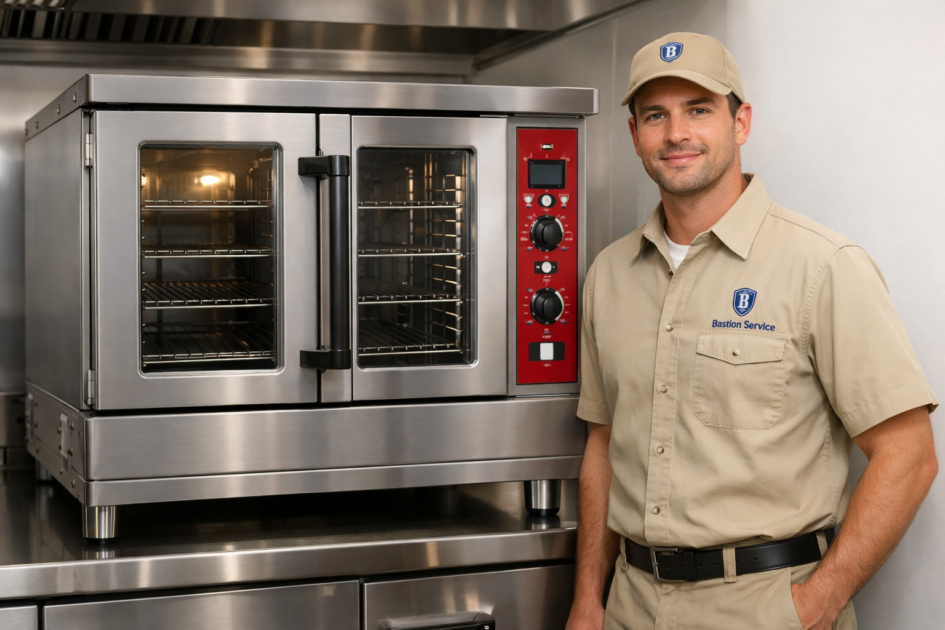
Downtime from Blodgett cooking equipment can disrupt prep timing, ticket flow, food consistency, and staffing decisions faster than many kitchens expect. When a unit starts missing temperatures, taking too long to recover, failing to ignite, or shutting down without warning, the most useful next step is service that identifies the actual fault and helps you decide how urgently repair should be scheduled. Bastion Service assists businesses in Manhattan Beach with symptom-based diagnosis and repair planning for Blodgett cooking equipment used in daily kitchen operations.
For specific equipment paths in Manhattan Beach, review Blodgett Oven Repair in Manhattan Beach and Commercial Appliance Repair in Manhattan Beach.
Blodgett Cooking Equipment Problems That Commonly Need Repair
Many equipment problems start as performance complaints rather than a total breakdown. A unit may still run, but with slower heat-up, inconsistent results, intermittent ignition, or controls that no longer respond normally. Those symptoms matter because they can lead to product waste, longer cook times, uneven output, and unplanned interruptions during service.
Unit Not Heating Properly
If the equipment is not reaching set temperature, heating too slowly, or struggling to recover between batches, the issue may involve burners, igniters, gas-related components, sensors, or control parts. Staff often try to work around this by adding time or reducing load size, but that usually masks the real problem while production quality continues to slip.
Temperature Drift or Inconsistent Results
When food comes out unevenly cooked, one section runs hotter than another, or the displayed temperature does not match actual cooking conditions, service is usually needed to verify whether the fault is tied to sensing, airflow, burner performance, or control accuracy. Temperature inconsistency is more than an inconvenience; it affects repeatability, waste, and confidence in every batch.
Ignition Failure or Delayed Start
Ignition issues may show up as repeated attempts to light, delayed flame, failure to start, or lockout conditions. In busy kitchens, this can quickly turn into lost time at opening, slower line recovery, and uncertainty about whether the equipment will stay available through the shift. Proper troubleshooting helps separate ignition component failure from a broader control or fuel-delivery problem.
Unexpected Shutdowns During Use
If the equipment powers off mid-cycle, drops flame unexpectedly, or stops operating after it appears to start normally, that points to a problem that should be evaluated before the unit is trusted for continued production. Intermittent shutdowns are especially disruptive because they are difficult to predict and often become more frequent over time.
Control or Display Problems
Buttons that do not respond, settings that reset, error indications, or erratic behavior from the control panel can all affect how reliably the equipment operates. A control issue may look minor at first, but if it changes temperature regulation, timing, or startup behavior, it can create wider production problems and make daily use less dependable.
How These Symptoms Affect Kitchen Operations
Blodgett cooking equipment problems do not only impact the unit itself. They affect how the whole kitchen functions. Slow recovery can back up orders. Inconsistent heat can force staff to monitor items more closely or remake product. Startup issues can delay opening tasks. Repeated shutdowns can shift workload to other equipment and create strain across the line.
For businesses in Manhattan Beach, repair decisions are often tied to whether the equipment supports a primary production role or whether the kitchen has enough backup capacity to manage temporarily. That is why symptom severity matters. An issue that seems manageable for a short period may still justify prompt service if it is already affecting output, timing, or product quality.
Supported Blodgett Cooking Equipment Coverage
Blodgett is widely associated with oven equipment, and oven-related issues are a common reason businesses request service. Symptoms may include poor preheat, uneven cavity temperature, slow bake times, ignition trouble, unstable flame behavior, faulty controls, or shutdowns during use.
Cooking equipment problems can also be discussed more broadly when operators are trying to determine whether the issue is related to heat generation, temperature control, ignition, safety shutoff behavior, or recovery performance. That symptom-first approach is often the most practical way to decide whether repair is straightforward, urgent, or likely to require deeper testing.
When Waiting Becomes Expensive
It is common to delay service when equipment still appears to be usable. The problem is that continued operation under faulty conditions can increase wear, create more downtime later, and make the final repair more involved than it would have been earlier. A kitchen may keep moving by rotating product, extending cook times, restarting equipment, or reducing output, but those workarounds usually carry hidden costs.
- Longer ticket times and slower batch turnover
- Inconsistent food results and product loss
- Added stress on adjacent equipment and staff
- More difficult scheduling if the unit fails completely
- Greater uncertainty around whether the equipment can be trusted during peak hours
If a Blodgett unit is showing repeated symptoms instead of a one-time interruption, it is usually better to schedule repair before the issue grows into a full stoppage.
What a Service Visit Should Help You Decide
A useful repair visit should do more than confirm that something is wrong. It should help clarify what component or system is likely at fault, whether the equipment can remain in limited use, how the symptom pattern affects urgency, and whether repair is the practical next step for the unit’s role in the kitchen.
For managers and operators, that information matters because repair decisions are rarely made in isolation. They affect labor planning, production scheduling, menu execution, and whether backup procedures need to be activated. The goal is not just to identify a symptom, but to understand what action makes the most sense for uptime and reliability.
Signs the Problem Is No Longer Minor
Some issues appear small until they begin repeating. Service should move higher on the priority list when you notice any of the following:
- The equipment misses temperature targets on more than one shift
- Preheat times are noticeably longer than normal
- Recovery between loads has become slow or inconsistent
- Ignition works intermittently instead of reliably
- The unit shuts down and requires restarting
- Controls behave unpredictably or display fault conditions
- Staff are routinely adjusting workflow around the same problem
At that point, the issue is no longer just a nuisance. It is affecting daily operations and deserves a repair decision based on actual diagnosis rather than guesswork.
Repair Planning for Budget and Uptime
Not every call leads to the same recommendation. Some problems are tied to a specific failed part and are well suited to direct repair. Others raise larger reliability concerns because the equipment has a history of recurring faults, inconsistent performance, or multiple related symptoms. A professional assessment helps separate those situations so the business can make an informed decision instead of reacting only after a complete outage.
For Manhattan Beach businesses, that planning often comes down to a few practical questions: Is the equipment safe and stable enough to keep using until scheduled service? Is the current problem likely to spread to additional components if ignored? Is the unit critical enough that even intermittent faults justify faster action? Those are the kinds of questions a symptom-based repair visit is meant to answer.
Scheduling Blodgett Cooking Equipment Repair in Manhattan Beach
If your Blodgett cooking equipment is causing slow heat-up, ignition trouble, temperature inconsistency, control faults, or shutdowns, scheduling service early can reduce disruption and help you avoid a more serious production problem. A repair appointment in Manhattan Beach gives your team a clearer understanding of the fault, the urgency, and the next step needed to restore more reliable kitchen performance.


