
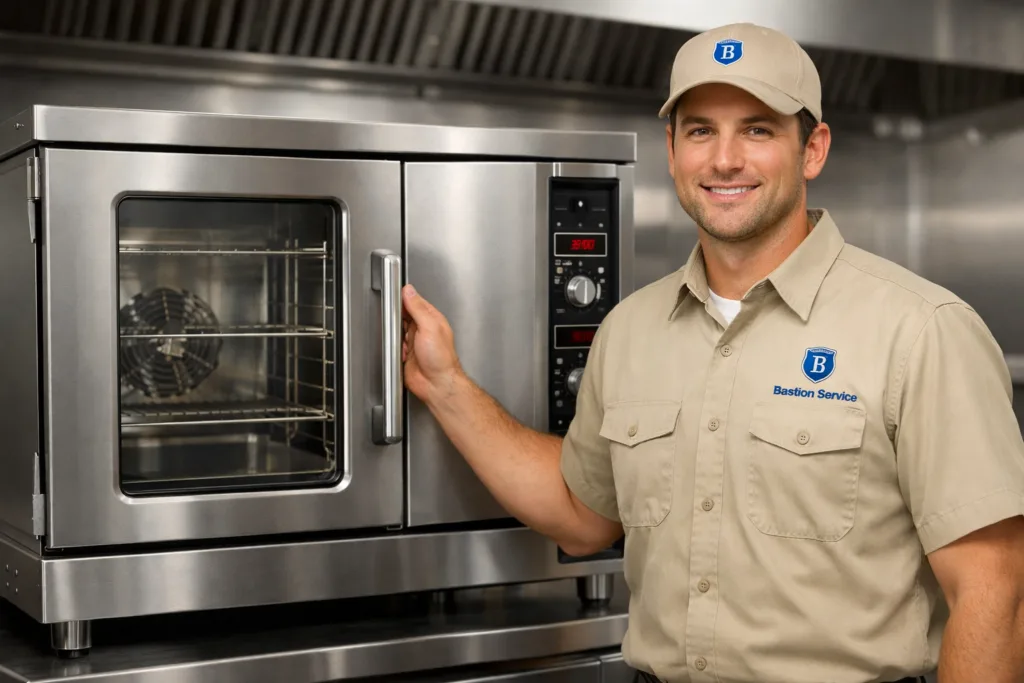




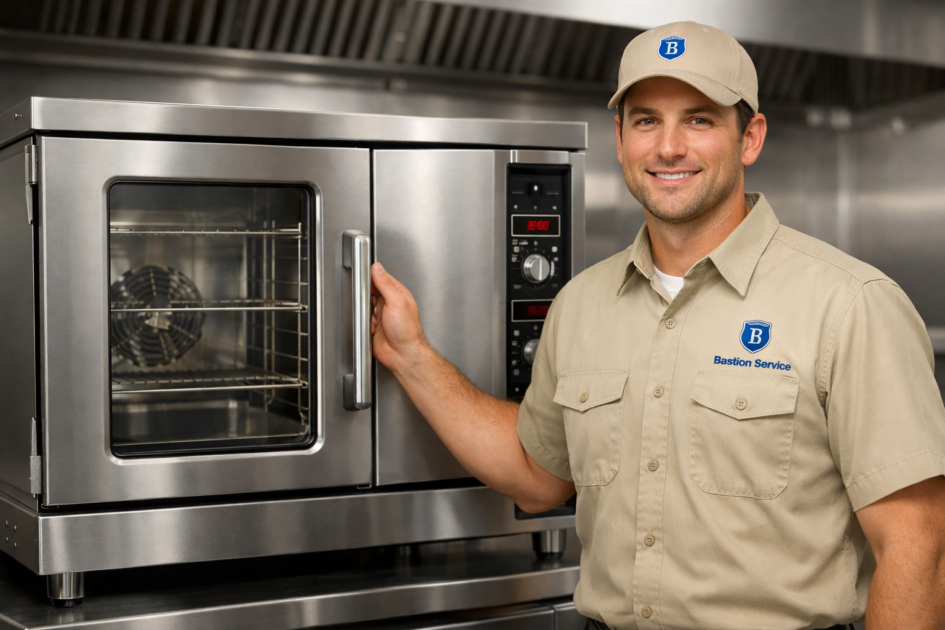
When Blodgett cooking equipment starts missing heat, drifting off temperature, delaying startup, or shutting down mid-use, the smartest next step is to get the symptom pattern checked before the problem spreads into longer downtime. For businesses in Inglewood, repair decisions usually come down to how the equipment is failing in real use, how that affects production, and whether continued operation is likely to cause a larger interruption. Bastion Service works with operators who need timely diagnosis, repair scheduling, and a realistic plan for getting equipment back into service.
For specific equipment paths in Inglewood, review Blodgett Oven Repair in Inglewood and Commercial Appliance Repair in Inglewood.
Blodgett Cooking Equipment Problems That Commonly Need Repair
Blodgett equipment often gives warning signs before a full breakdown. In ovens and other heat-producing kitchen equipment, those warnings can show up as slower recovery, uneven results, ignition trouble, unstable burner operation, or controls that no longer respond the way staff expect. Even when the equipment still runs, these issues can reduce output, affect food consistency, and force workarounds that slow the whole kitchen.
Repair becomes especially important when the same fault repeats across shifts, when staff are changing cook times to compensate, or when the unit becomes unpredictable. Those conditions usually point to a component problem rather than a one-time operating issue.
Not heating, low heat, or slow heat-up
If the equipment does not heat at all, takes too long to reach temperature, or stalls below the set point, the cause may involve ignition components, burners, gas flow, sensors, thermostatic controls, safety circuits, or electrical faults. A unit that eventually heats but recovers too slowly can be just as disruptive as a complete no-heat condition because it reduces usable capacity during busy periods.
From a service standpoint, the key question is whether the heat problem is isolated to one failing part or part of a broader performance issue. That distinction affects repair timing, parts planning, and whether the equipment should stay in use until service is completed.
Temperature drift and uneven cooking results
When batches come out inconsistent, hot spots develop, or cooking times keep changing, temperature control is often no longer stable. This can relate to calibration drift, sensor failure, airflow problems, door-seal wear, burner inconsistency, or control-board faults. In daily operations, uneven performance creates waste long before the equipment fully stops working.
These symptoms are often treated as minor until product quality drops or prep timing starts slipping. In reality, inconsistent heat is one of the clearest signs that service should be scheduled before the problem affects more of the workday.
Ignition delays and startup failures
Delayed ignition, repeated failed starts, clicking without lighting, or burners that do not stay lit usually indicate problems within the ignition sequence. Depending on the model and configuration, that can involve igniters, flame sensing, gas-valve response, wiring, or related controls. Startup issues are worth addressing quickly because intermittent faults tend to worsen and can turn into complete no-start conditions with little warning.
If staff notice repeated relighting attempts, unusual startup behavior, or gas odor, the equipment should not simply be cycled again and again in hopes that it clears on its own. That is usually a sign that diagnosis should happen promptly.
Burner performance and heat recovery problems
Weak burner output, poor recovery between loads, or heat that drops too far during normal use can slow service and create bottlenecks. In cooking equipment, recovery matters because the unit may appear functional while still failing under actual production demand. This is especially disruptive when one piece of equipment becomes the reason orders back up or cook times stretch beyond normal.
Burner-related symptoms may come from clogged or worn components, pressure-related issues, ignition weakness, or controls that are not regulating heat correctly. A repair visit helps determine whether the issue is isolated or part of a larger system condition.
Control faults, error conditions, and random shutdowns
Displays that flash errors, controls that stop responding, units that reset unexpectedly, or equipment that shuts down during operation often point to electrical or control-system problems. These faults can involve wiring, relays, boards, limit switches, overheating components, or power-supply irregularities. Intermittent shutdowns are especially hard on kitchen flow because staff cannot trust the equipment to finish a cycle or hold a stable operating state.
When shutdowns become repeatable, the issue moves beyond inconvenience. It becomes a production and scheduling problem that usually needs direct troubleshooting rather than trial-and-error use.
How These Symptoms Affect Kitchen Operations
Cooking equipment problems are rarely limited to the unit itself. A single Blodgett issue can change prep timing, reduce batch consistency, delay ticket flow, and put added pressure on other stations. Managers may notice that staff begin rotating pans more often, extending cook times, avoiding one cavity or mode, or building extra time into every batch just to get usable results.
Those workarounds are important signs. They show that the equipment is already affecting labor efficiency and output, even if it has not completely failed. In many cases, scheduling repair at that stage is less disruptive than waiting for a full shutdown in the middle of service.
When To Schedule Repair Instead Of Waiting
Repair should be scheduled when the problem is repeatable, getting worse, or affecting normal kitchen decisions. If the equipment cannot reliably hold temperature, needs repeated resets, starts inconsistently, or is producing uneven results, waiting usually increases the chance of a harder outage later.
- Heat-up times are noticeably slower than normal.
- Temperature swings are affecting food consistency.
- Ignition is delayed or inconsistent.
- Burners cycle abnormally or do not stay steady.
- The unit shuts down during normal operation.
- Staff are changing workflow to work around the equipment.
These are all practical service indicators, especially in kitchens where timing and consistency matter every shift.
When Continued Use Can Create Bigger Problems
Some equipment faults stay limited for a short time, but others put stress on surrounding components. Running a unit with unstable ignition, poor airflow, failing controls, worn seals, or overheating conditions can lead to additional failures and more expensive downtime. What starts as a temperature issue may expand into a control or burner problem if the equipment keeps operating under strain.
For businesses in Inglewood, the main decision is whether temporary use is truly helping operations or just increasing the risk of a longer stoppage. A proper diagnosis helps answer that by identifying the affected system, the likely repair scope, and whether use should be limited until the repair is completed.
Repair Planning For Blodgett Equipment In Daily Use
Good service planning is about more than swapping one failed part. It should account for how the equipment is used, how urgent the downtime is, and whether the current problem appears isolated or tied to broader wear. In some cases, the repair path is straightforward. In others, repeated heat issues, recurring shutdowns, or multiple worn components may point to a larger conversation about reliability and scheduling.
That matters for kitchens trying to avoid repeated disruptions. If the same unit has become unpredictable, a service visit should help clarify whether the immediate fault is the full issue or whether other parts of the system are also nearing failure.
What A Service Visit Usually Helps Clarify
A repair visit is most useful when it answers the questions operators actually need answered: what is causing the symptom, whether the equipment can stay in use, what repair steps are needed, and how quickly the issue should be addressed. That kind of diagnosis is valuable when production cannot depend on guesswork.
If your Blodgett cooking equipment in Inglewood is showing heating problems, ignition trouble, temperature inconsistency, control faults, or shutdown behavior, the practical next step is to schedule service so the failure can be identified and repair can be planned around your operation before the downtime gets worse.


