
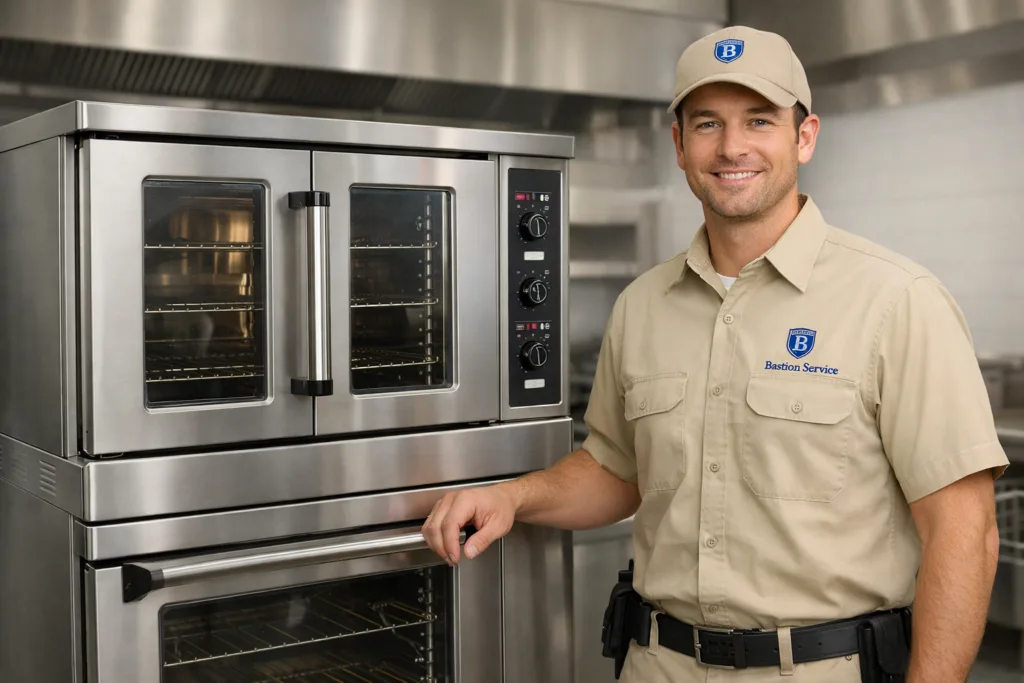




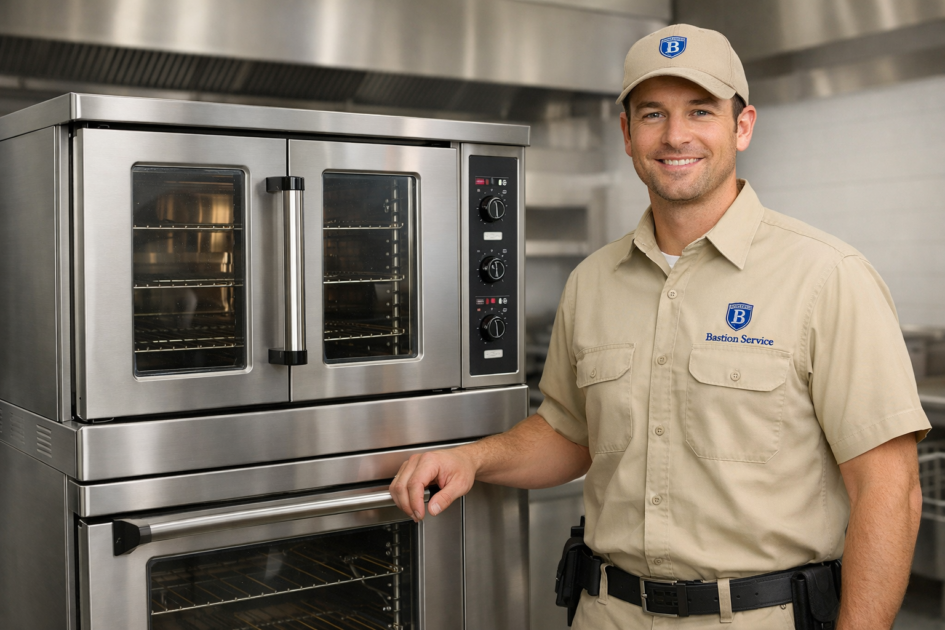
When Blodgett cooking equipment begins slowing service or disrupting output, the main priority is identifying the fault quickly enough to limit downtime. In Cheviot Hills, restaurants and other food-service businesses often notice the problem first through slower preheat, inconsistent results, burner trouble, or unexpected shutdowns during busy periods. Bastion Service provides repair support built around symptom-based diagnosis, repair scheduling, and next-step recommendations that match how the equipment is actually being used in daily operations.
For specific equipment paths in Cheviot Hills, review Blodgett Oven Repair in Cheviot Hills and Commercial Appliance Repair in Cheviot Hills.
What Blodgett cooking equipment problems usually need service?
Blodgett cooking equipment issues do not always appear as a full breakdown at the start. Many failures begin as performance changes that staff work around for a while, such as longer cook times, hot and cold spots, repeated resets, or trouble getting the unit to start reliably. Those symptoms often point to problems involving ignition components, burners, heating elements, sensors, thermostats, control boards, relays, wiring, gas flow parts, door seals, or airflow-related issues.
For business operators, the important question is not just what part may have failed, but how the symptom affects output, food consistency, and service timing. A unit that still runs but no longer holds temperature can create just as much disruption as one that will not start at all.
Common Blodgett oven and cooking equipment symptoms
Not heating or heating too slowly
If the equipment powers on but does not build heat normally, struggles to reach the set temperature, or takes much longer than usual to recover between loads, the cause may involve ignition failure, weak burner performance, a failing heating circuit, sensor error, thermostat drift, or control problems. In a working kitchen, this usually shows up as delayed ticket times, uneven batch completion, and staff adjusting workflow around the equipment instead of relying on it.
Temperature swings and uneven cooking
Inconsistent heating is one of the most common reasons to schedule repair. Food may brown unevenly, different racks may cook at different rates, or the displayed temperature may not match actual cooking performance. These issues can come from sensor inaccuracy, calibration drift, circulation problems, worn seals, burner irregularity, or failing controls. Once staff start rotating pans, extending cook times, or avoiding parts of the cavity, service is usually warranted.
Ignition problems and delayed startup
Repeated attempts to ignite, delayed flame establishment, clicking without proper startup, or intermittent burner operation can all interrupt production and increase the risk of a complete shutdown during service. These problems may be tied to igniters, flame sensing, gas valve function, electrical connections, or control response. Intermittent ignition is especially important to address early because it rarely corrects itself and often worsens under heavier use.
Unexpected shutdowns during operation
If the equipment starts normally and then turns off, stops heating mid-cycle, or needs to be reset to continue running, the issue may involve overheating protection, electrical faults, relay failure, unstable controls, or component breakdown under load. Shutdown complaints are easier to diagnose when the business can describe exactly when they occur, such as during preheat, after the cavity reaches temperature, or during long production runs.
Controls not responding correctly
Buttons that do not register, displays that act erratically, settings that will not hold, or cycles that start and stop unpredictably often point to control board, keypad, relay, or wiring issues. Even when heat is still present, poor control behavior can make the equipment unreliable enough to affect food quality and staff efficiency.
How these issues affect kitchen operations
Cooking equipment problems are rarely isolated to the machine itself. A Blodgett unit that recovers slowly or cannot maintain stable temperature can delay prep, back up orders, create inconsistent finished product, and force teams to shift work to other stations. In a business environment, that can mean labor inefficiency, avoidable product loss, and service slowdowns that spread beyond one appliance.
This is why symptom timing matters. A problem that appears only during busy hours may suggest stress-related component failure or performance loss under heavier demand. A problem that is present at startup every morning may point to a different repair path entirely. The more clearly those patterns are identified, the faster service decisions can be made.
When continued use can lead to bigger repair problems
Some faults allow partial operation for a short time, but continued use can make the final repair larger or more expensive. Repeated ignition failure, unstable burner operation, overheating, inaccurate temperature control, and recurring shutdowns can place extra strain on related components. What starts as a single-part issue can become a broader reliability problem if the equipment stays in use too long without inspection.
It is usually time to stop relying on the unit when:
- staff cannot trust the displayed temperature
- cook times are changing from batch to batch
- the equipment must be reset repeatedly to keep working
- burners cut in and out during production
- startup becomes inconsistent from one shift to the next
- the kitchen is losing output because one unit is no longer dependable
Repair or replace?
For many Blodgett cooking equipment issues, repair is the right choice when the failure is isolated and the rest of the unit remains structurally sound. That is often the case with ignition components, sensors, controls, relays, heating elements, or other defined failures. Replacement becomes more likely when the equipment has a long pattern of repeat breakdowns, multiple systems are deteriorating at the same time, or the cost of downtime is outpacing the value of another repair.
The best decision usually depends on four factors:
- the specific failed system
- overall condition and age of the equipment
- availability of needed parts
- the operational impact of waiting on repair
For operators in Cheviot Hills, the real concern is whether the equipment can return to stable performance quickly enough to support production without creating another near-term interruption.
What to note before scheduling service
A repair visit is more productive when the business can describe the operating complaint clearly. Helpful details include the model information, whether the issue is constant or intermittent, when it started, and whether it appears during startup, preheat, full-load cooking, or long holding periods. Good notes often include symptoms such as slow recovery, temperature overshoot, ignition delay, burner dropout, control errors, or sudden shutdown timing.
If the equipment still runs part of the time, it also helps to note whether the failure happens on every shift or mainly during peak volume. That kind of pattern can make diagnosis more accurate and help determine whether immediate repair scheduling is necessary.
Service support for Blodgett equipment in Cheviot Hills
Blodgett cooking equipment repair in Cheviot Hills is most effective when the issue is addressed before performance loss turns into a full production problem. If your oven or other cooking equipment is heating unevenly, struggling to ignite, recovering too slowly, or shutting down during use, the next step is to schedule service, identify the actual failure, and plan repair timing around business impact, equipment condition, and day-to-day kitchen demands.


