
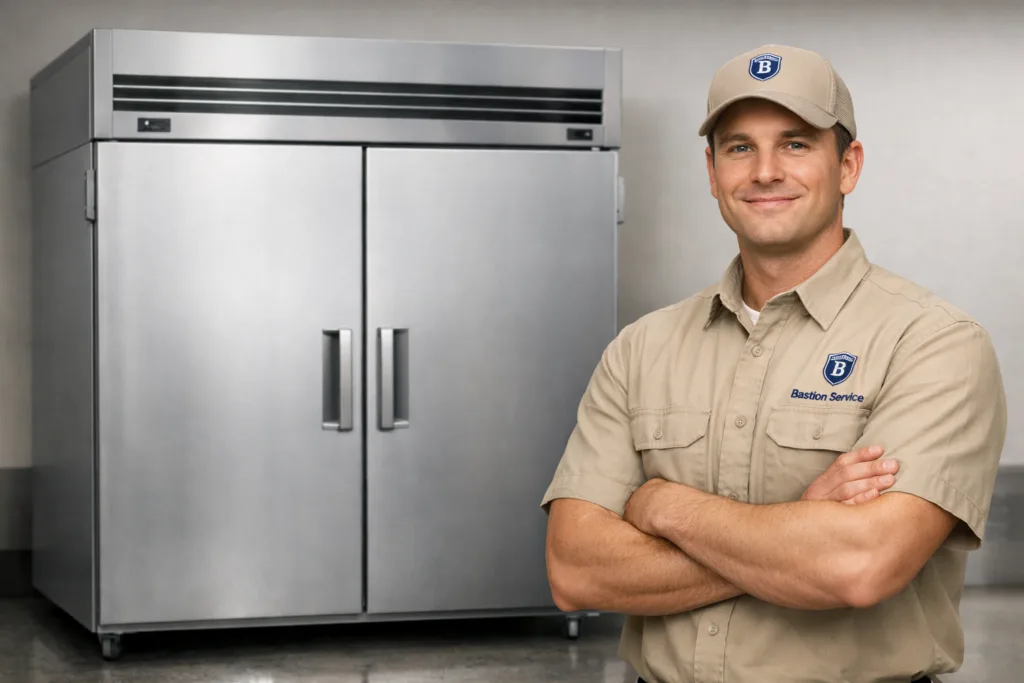




Freezer problems rarely stay minor for long when inventory, prep schedules, and daily workflow depend on stable low temperatures. A Beverage-Air unit that starts running warm, icing over, leaking, or making new noise needs service that identifies the actual fault instead of chasing symptoms. In Manhattan Beach, businesses often need fast answers on whether the issue is tied to airflow, defrost, door sealing, controls, fan operation, or a more serious cooling-system failure, and whether the unit should remain in use while repair is scheduled.
Related commercial service paths in Manhattan Beach include Beverage-Air Repair in Manhattan Beach, Commercial Freezer Repair in Manhattan Beach, and Beverage-Air Fridge Repair in Manhattan Beach.
Bastion Service handles Beverage-Air freezer repair for businesses in Manhattan Beach with attention to downtime impact, product risk, and the condition of the equipment as a whole. The goal of a service visit is not just to confirm that the freezer has a problem, but to determine what is failing, what secondary damage may be developing, and what repair step makes the most sense for the operation.
Common Beverage-Air Freezer Symptoms That Need Repair
Freezer not staying cold enough
If the cabinet temperature is rising, recovering slowly, or drifting above the set point, several different faults may be involved. Dirty condenser coils, evaporator icing, weak fan motors, inaccurate sensors, control problems, refrigerant loss, or compressor wear can all produce similar temperature complaints. A freezer that still cools somewhat can be misleading because partial operation often masks a system that is already under heavy strain.
This symptom should be addressed early, especially when product consistency matters or the unit seems to run longer than normal just to hold temperature.
Frost buildup on walls, shelves, or around the evaporator area
Heavy frost usually points to unwanted moisture entering the cabinet or a defrost problem that is no longer clearing ice as it should. Common causes include torn gaskets, doors not closing fully, warped door alignment, failed defrost components, or restricted airflow. Once ice builds up, circulation drops, temperatures become less stable, and fan blades may begin striking frost.
What starts as “a little ice” can quickly become a cooling issue, a noise issue, and eventually a no-freeze condition.
Fan noise, rattling, buzzing, or vibration
New sounds often give an early warning before a full breakdown. Evaporator fans can wear out, condenser fans can slow down, mounting hardware can loosen, and ice can interfere with moving parts. Buzzing or clicking may also suggest electrical or compressor-start issues. When unusual sound appears at the same time as warming temperatures or frost, the freezer should be checked promptly.
Water leaking onto the floor
Leaks around a freezer may come from a blocked drain, defrost water not moving correctly, door seal problems creating excess condensation, or ice melting in areas where it should not be accumulating. In a business setting, water on the floor affects more than the equipment. It can interrupt cleanup routines, create slip concerns, and signal a larger temperature-control problem inside the cabinet.
Constant running or short cycling
A Beverage-Air freezer that runs almost nonstop may be compensating for heat gain, poor airflow, dirty coils, a sealing problem, or declining cooling performance. Short cycling, where the unit starts and stops too often, can point to controls, electrical faults, start components, or compressor stress. Both patterns increase wear and often lead to a larger failure if left unresolved.
Why the Same Symptom Can Have Different Causes
Freezer complaints often overlap. A warm cabinet does not always mean the compressor is failing. Frost does not always mean the defrost heater is bad. Slow recovery after the door opens might come from fan weakness, coil blockage, sensor issues, or refrigerant-side trouble. That is why accurate testing matters before parts are replaced.
On Beverage-Air equipment, useful diagnosis usually includes checking actual cabinet temperature, coil condition, fan operation, door seal integrity, control response, and how the system is cycling. For businesses in Manhattan Beach, that matters because replacing the wrong part adds cost, extends downtime, and can delay the real repair while product remains at risk.
Service Situations That Should Not Be Delayed
Some freezer issues can wait a short time for scheduling. Others should be treated as urgent because the equipment is already moving toward product loss or a full shutdown. It is wise to arrange repair quickly when you notice:
- Temperature swings that are becoming more frequent
- Soft product or inconsistent freezing results
- Frost that keeps returning after manual clearing
- Doors that no longer seal tightly
- Fans that stop, scrape, or pulse on and off
- Water collecting around the unit
- The freezer tripping power or failing to restart normally
- Long run times with little improvement in temperature
If the cabinet has stopped freezing properly altogether, continued operation may increase strain on major components and make the final repair more expensive.
What Often Gets Checked During Beverage-Air Freezer Diagnosis
A proper repair visit is centered on narrowing the problem to the failed part, failed condition, or combination of issues causing the symptom pattern. Depending on the complaint, inspection may focus on:
- Door gaskets, hinges, and closing alignment
- Condenser cleanliness and ventilation around the unit
- Evaporator coil frost pattern and airflow
- Evaporator and condenser fan operation
- Defrost components and timing behavior
- Temperature controls, sensors, and response accuracy
- Drain line condition and moisture movement
- Compressor performance and starting behavior
This kind of evaluation helps separate a correctable component issue from a larger system problem and gives the business a better basis for deciding how to proceed.
Repair or Replace?
Many Beverage-Air freezer problems are repairable without replacing the unit. Fan motors, gaskets, sensors, controls, defrost parts, drainage issues, and coil-related airflow problems are all common examples of faults that can often be corrected when the cabinet itself is still in good condition.
Replacement becomes a more serious consideration when the freezer has repeated major failures, poor overall structural condition, ongoing cooling-system problems, or repair costs that no longer support reliable operation. For most businesses, the real question is not simply whether the freezer can be fixed, but whether the repair is likely to restore stable performance that fits day-to-day demands.
How Businesses Can Prepare Before the Service Visit
A few details can make diagnosis faster and more productive. If possible, note when the problem started, whether it is constant or intermittent, and what changed first: temperature, frost, noise, leaking, alarms, or run time. It also helps to know whether the issue appears after heavy door use, after cleaning, or after the unit has been moved or restocked heavily.
Before the appointment, businesses can also:
- Protect or relocate temperature-sensitive inventory if holding temperature is questionable
- Keep the area around the freezer accessible
- Avoid repeated manual resets that can hide the failure pattern
- Leave visible frost or leak conditions as they are if safe to do so
- Be ready to describe any recent noise, breaker trips, or recovery delays
These details often help connect the symptom to the most likely repair path.
Focused Freezer Repair for Manhattan Beach Businesses
When a Beverage-Air freezer starts affecting storage, prep, or service flow, the most useful next step is prompt repair based on the actual operating condition of the unit. Businesses in Manhattan Beach typically need more than a general explanation that the freezer is “running warm.” They need to know what is failing, how urgent the issue is, whether inventory is at risk, and what repair decision best limits downtime. A symptom-focused service approach makes it easier to move from uncertainty to a workable plan and restore reliable freezer performance as quickly as possible.


