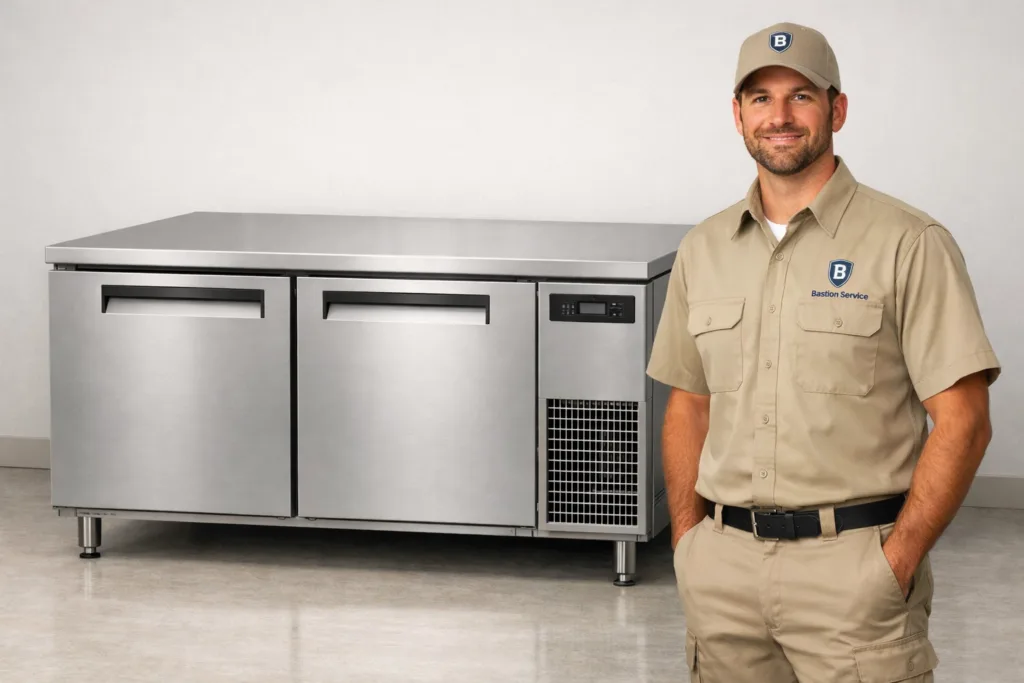




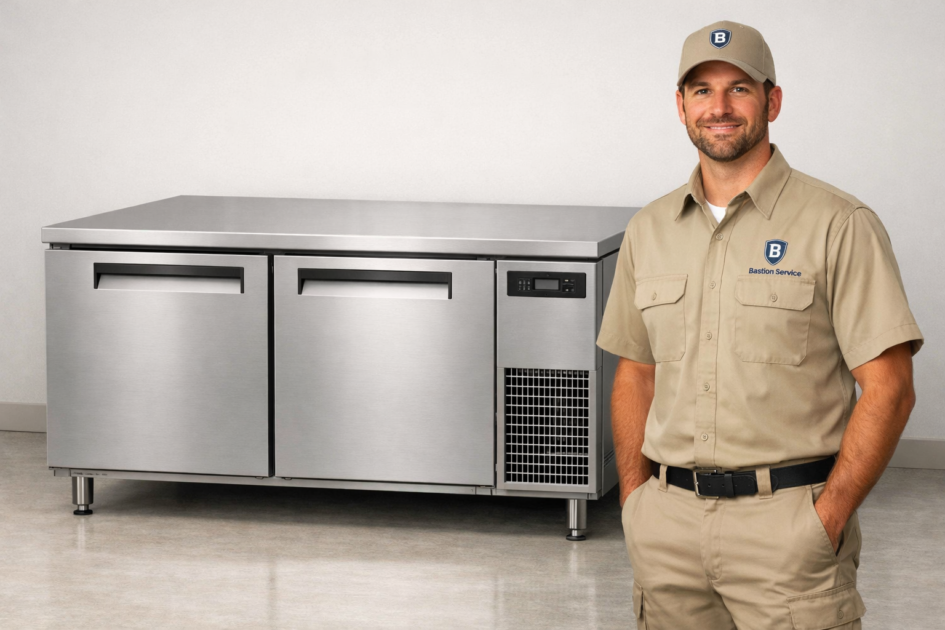
When Beverage-Air refrigeration equipment starts losing temperature control, building ice, or showing signs of weak recovery, the next step should support operations rather than add uncertainty. For businesses in Mid-City, that usually means scheduling service based on the actual symptom pattern, the condition of the cabinet, and how the problem is affecting product protection, prep flow, or staff workarounds. Bastion Service evaluates refrigerator and freezer performance with repair scheduling and downtime impact in mind, so the visit leads to an informed decision instead of trial-and-error part swapping.
For specific equipment paths in Mid-City, review Beverage-Air Refrigerator Repair in Mid-City, Beverage-Air Freezer Repair in Mid-City, and Commercial Appliance Repair in Mid-City.
Equipment that still runs can still be at risk. A refrigerator that cools unevenly or a freezer that takes too long to pull back down after door openings may be warning of airflow restrictions, fan trouble, control issues, icing at the evaporator, or a larger cooling-system fault. Early service often helps businesses avoid the bigger disruption that comes with spoiled inventory, emergency product transfers, or a full cabinet outage during operating hours.
What Beverage-Air refrigeration equipment problems do you troubleshoot?
Service calls often begin with a few repeat complaints: warm cabinets, freezer softening, frost buildup, water on the floor, noisy operation, long run times, or temperatures that look normal in one section and wrong in another. On Beverage-Air refrigerator and freezer equipment, those symptoms can point to several different failure paths, so the useful approach is to diagnose the behavior of the unit as it is operating rather than assume one common cause.
- Refrigerators not holding safe storage temperature
- Freezers struggling to recover or maintain a hard freeze
- Heavy frost, ice accumulation, or blocked airflow
- Water leaks, condensation, or recurring moisture inside the cabinet
- Fans not moving air properly
- Controls, sensors, or cycling problems
- Unusual noise, vibration, or constant running
- Cooling failures that affect day-to-day use
Because the same visible symptom can come from different underlying faults, repair decisions are best made after checking airflow, temperature consistency, door sealing, fan operation, defrost performance, and how the equipment behaves under load.
Warm refrigerator sections and unstable cabinet temperatures
When product areas are warmer than expected
A Beverage-Air refrigerator that runs warm may not have a single obvious failure. Weak airflow, dirty heat exchange surfaces, evaporator icing, a failing fan motor, sensor problems, or a control issue can all produce similar results. In daily operations, the problem often shows up as staff lowering the setting repeatedly, moving product to a colder shelf, or noticing that the cabinet looks active but never really settles into consistent holding temperature.
This is the point where repair service becomes more important than adjustment. If the refrigerator is still operating but temperatures drift during the day, that usually means the unit is working harder than it should. Continued use under that condition can increase wear and make the eventual outage more disruptive.
When temperatures swing during busy periods
Some refrigerators appear normal early in the day and then lose control once doors are opened more often. That pattern can indicate weak airflow, poor recovery, partial icing, or a component that is failing under heavier demand. For businesses in Mid-City, noting when the cabinet warms up, how long recovery takes, and whether one section is affected more than another can make the service visit more efficient and help determine whether limited operation is still realistic before repair is completed.
Freezer problems that affect recovery and storage reliability
Freezer complaints often start with soft product, longer pull-down times, or a cabinet that looks cold but does not maintain a stable freeze throughout the interior. Beverage-Air freezer equipment may continue running while losing performance, which can create a false sense that the issue is minor. In practice, slow recovery is often one of the more important warning signs because it suggests the system is struggling to keep up with normal use.
Possible causes include airflow blockage, evaporator frost, fan issues, door sealing problems, control faults, or a cooling problem that is reducing the unit’s ability to remove heat efficiently. A service assessment helps determine whether the freezer is dealing with an isolated repair need or a broader performance decline that affects reliability across the cabinet.
Frost buildup, ice accumulation, and airflow loss
Frost should never be ignored just because the equipment is still cold. On both refrigerators and freezers, excessive ice can block airflow, reduce usable storage area, and create uneven temperatures from shelf to shelf. A cabinet may seem cold near one section while another section starts drifting out of range because air is no longer circulating the way it should.
Common repair findings behind these symptoms include:
- Door gaskets that no longer seal tightly
- Doors not closing fully during repeated use
- Defrost system failures
- Evaporator fan problems
- Control issues affecting normal cycle timing
When airflow is clearly restricted, the equipment usually runs longer and harder to maintain target conditions. That added strain can turn a manageable repair into a wider problem if the cabinet is left in normal service too long.
Leaks, condensation, and moisture around the cabinet
Water under a refrigerator or freezer is not always just housekeeping. Recurring leaks can come from blocked drain paths, ice affecting drainage, heavy condensation caused by sealing problems, or cooling performance issues that are changing how moisture behaves inside the cabinet. In some cases, what appears to be a simple puddle is actually one of the first visible signs that the unit is no longer operating normally.
Moisture issues also matter because they create floor hazards and cleaning interruptions. If the leak returns after cleanup, if condensation is forming where it did not before, or if moisture appears alongside temperature drift, scheduling repair is usually the better move than continuing to monitor it casually.
Noise changes, constant running, and signs of equipment strain
Different sounds often tell a useful story. Louder fan noise, rattling panels, buzzing, vibration, or a cabinet that seems to run without resting can all point to a problem worth diagnosing. Sometimes the issue is relatively contained, such as a fan motor or loose component. Sometimes the noise change reflects a unit that is under cooling strain and compensating with longer run times.
Businesses should pay closer attention when noise changes happen together with any of the following:
- Warm product zones
- Repeated frost buildup
- Visible leaking or condensation
- Slower freezer recovery
- Frequent setting adjustments by staff
That combination usually means the symptom is not isolated. Repair timing matters more when multiple warning signs appear together.
How symptom-based diagnosis helps with repair decisions
Not every Beverage-Air issue calls for the same response. One business may have a refrigerator with a localized airflow or fan problem that is repaired efficiently. Another may have a freezer showing repeated icing, unstable temperatures, and signs of broader wear that make the repair decision more involved. The value of diagnosis is that it separates isolated failures from patterns that suggest mounting reliability concerns.
A good repair recommendation should account for current symptoms, repeat service history, age-related wear, and how costly downtime would be if the unit fails during normal use. That is especially important for businesses that depend on refrigeration equipment continuously and cannot afford uncertainty around inventory storage or prep timing.
When scheduling service makes the most sense
It is time to schedule service when a Beverage-Air refrigerator or freezer is no longer maintaining stable temperature, develops recurring frost or moisture, loses airflow, or begins behaving differently enough that staff are compensating for it. Repeated thermostat changes, shifting product to other units, propping doors, or checking temperatures more often than usual are all signs that the equipment has already moved from normal operation into a repair situation.
For businesses in Mid-City, the most practical next step is to book service before the symptom becomes a complete shutdown. A repair visit can determine what is failing, whether the unit can remain in limited use, and how to plan the next step with the least disruption to daily operations.