
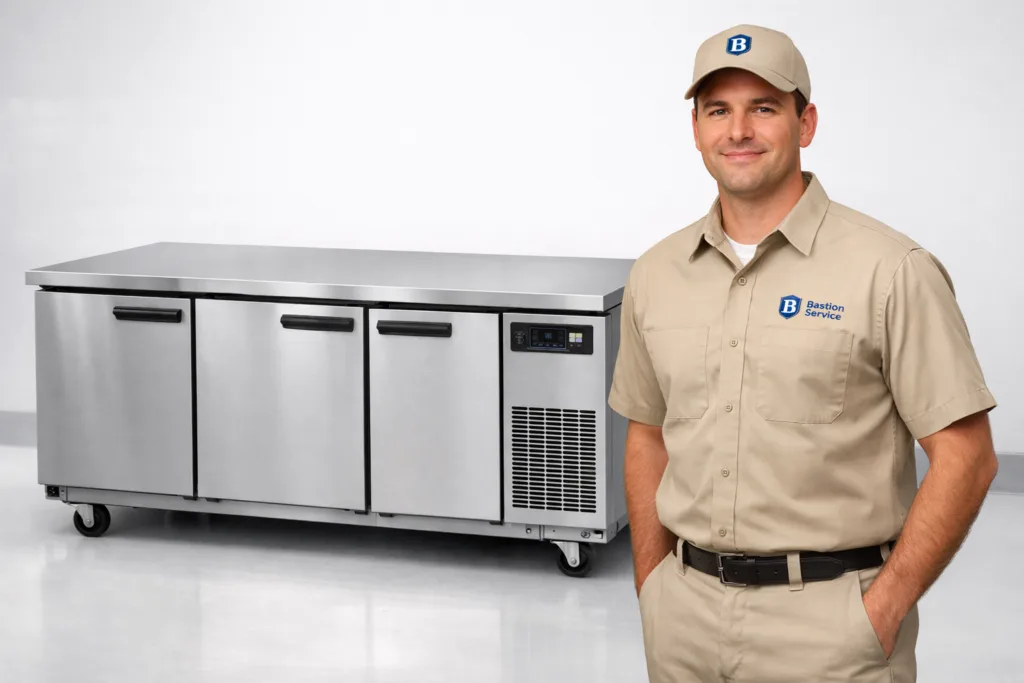




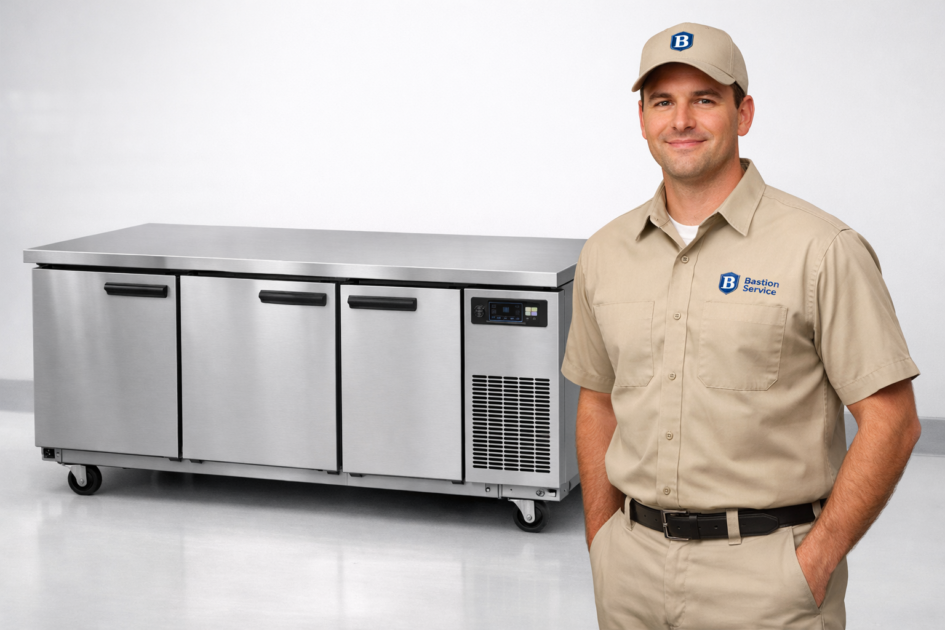
When Beverage-Air refrigeration equipment starts affecting holding temperature, recovery time, or day-to-day workflow, service is most useful when it answers the immediate business questions: what is failing, how urgent is it, and whether the unit should stay in use until repair. For businesses in Mar Vista, that often means evaluating refrigerator and freezer symptoms in terms of product protection, staffing disruption, and the risk of a larger breakdown if operation continues.
For specific equipment paths in Mar Vista, review Beverage-Air Refrigerator Repair in Mar Vista, Beverage-Air Freezer Repair in Mar Vista, and Commercial Appliance Repair in Mar Vista.
Bastion Service works with Mar Vista businesses that need symptom-based troubleshooting for Beverage-Air equipment used in daily operations. A repair visit is not only about confirming that a cabinet is warm or frosted over. It is about identifying whether the problem points to airflow restriction, fan failure, controls, defrost components, door sealing, drainage issues, or a deeper cooling-system fault that changes repair timing.
What Beverage-Air refrigeration equipment problems do you troubleshoot?
Service calls often begin with one visible symptom, but the underlying cause may be somewhere else in the system. Beverage-Air refrigerator and freezer issues commonly include:
- Cabinets running warm or drifting above normal temperature
- Freezers struggling to pull down or recover after door openings
- Uneven cooling from top to bottom or side to side
- Interior frost buildup or ice forming where it should not
- Water leaking inside the cabinet or onto the floor
- Fans not moving air correctly
- Units running constantly or cycling at unusual intervals
- Door gaskets not sealing well
- Noisy operation that appears with cooling loss or heavy run time
These symptoms matter because they help determine whether the equipment needs prompt shutdown, limited short-term use, or scheduled repair before a full failure interrupts service.
Temperature problems in refrigerators and freezers
Warm cabinets are one of the most urgent complaints because they can affect stored product quickly and force staff to spend time checking temperatures instead of focusing on operations. In a Beverage-Air refrigerator, temperature instability may appear as soft product, inconsistent readings, or sections that stay warmer than expected. In a freezer, it may show up as slow pull-down, partial thawing, or poor recovery after normal access.
Possible causes can include dirty or restricted condenser airflow, failed evaporator or condenser fans, sensor or control issues, door leakage, defrost-related faults, or sealed-system problems. A unit that still runs but does not maintain target conditions often needs service sooner rather than later, since extended run time can increase wear and narrow the repair options if the problem spreads.
Signs the issue is getting more serious
- The cabinet never seems to reach set temperature
- The compressor runs for long periods without normal recovery
- Temperature improves briefly, then drifts again
- Product temperatures vary depending on shelf position
- Staff are adjusting controls repeatedly with no lasting improvement
Airflow issues and uneven cabinet performance
Not every cooling complaint starts with a total loss of refrigeration. Many Beverage-Air units first show airflow-related symptoms such as warm spots, weak circulation, or sections of the cabinet that cool differently from others. That can happen when fans are failing, evaporator areas are icing over, air channels are blocked, or door sealing problems allow excess moisture and warm air into the cabinet.
Airflow problems are important because they can mimic other failures. A cabinet may appear to have a major cooling issue when the primary fault is air movement. On the other hand, poor airflow can also be the symptom that reveals a larger defect. That is why service typically looks at temperature pattern, fan operation, frost distribution, and cabinet condition together instead of treating the complaint as a single isolated symptom.
Frost buildup, ice accumulation, and defrost-related faults
Frost on interior panels, around the evaporator area, or across stored product usually signals that the equipment is no longer managing moisture and temperature correctly. In Beverage-Air refrigerators and freezers, this may point to defrost component failure, control problems, airflow restriction, damaged door gaskets, or frequent warm-air intrusion.
Heavy frost should not be dismissed as a cosmetic issue. It reduces usable space, restricts circulation, lengthens run time, and can eventually contribute to warmer cabinet temperatures even while the unit appears to be operating continuously. In freezers especially, fast-moving ice buildup often means the problem is already affecting system performance.
When frost is a repair issue rather than normal operation
- Ice returns quickly after being cleared
- Frost is concentrated in one area instead of lightly distributed
- Doors are harder to close or seal properly
- Airflow becomes weaker as frost increases
- The cabinet becomes warm even though the unit still sounds active
Leaks, standing water, and moisture around the unit
Water around a refrigerator or freezer can come from more than one source. A blocked drain, condensation issue, defrost problem, damaged gasket, or ice melting in the wrong area can all create leaking or pooled moisture. In some cases, a leak is one of the first visible signs that the cooling system is not operating normally.
For businesses in Mar Vista, the concern is usually bigger than cleanup. Moisture can create slip hazards, affect nearby equipment, and signal that stored product conditions are changing inside the cabinet. Service helps determine whether the problem is limited to drainage and moisture management or whether it is part of a broader failure involving airflow or temperature control.
Running constantly, short cycling, or struggling to recover
A Beverage-Air unit that seems to run all day without settling into normal operation is usually telling you something important. Continuous run time can mean the cabinet is working harder than it should because of dirty coils, airflow restriction, weak cooling performance, door leakage, or control problems. Short cycling, where the unit starts and stops too often, can also point to system stress or electrical and control issues.
Both patterns deserve attention because they affect energy use, cooling consistency, and long-term component life. If the cabinet is noisy, warm, or slow to recover at the same time, the equipment should be evaluated before the issue turns into a shutdown during business hours.
How to judge whether the equipment can stay in use
One of the most practical parts of a service call is deciding whether normal operation should continue. That decision usually depends on actual cabinet temperature, how fast conditions are changing, whether frost or leaks are worsening, and whether the equipment is still recovering after typical door openings.
Continued use is harder to justify when:
- The refrigerator cannot hold a stable safe range
- The freezer is softening product or failing to pull back down
- Leaks are recurring and spreading outside the unit
- Frost buildup is interfering with airflow or door closure
- The unit is making new abnormal sounds while cooling performance declines
In earlier-stage cases, a scheduled repair may still be possible without a full interruption. The value of diagnosis is that it replaces guesswork with a service-based decision tied to actual operating condition.
Repair planning for Beverage-Air equipment in Mar Vista
Businesses usually need more than a simple yes-or-no answer on repair. They need to know whether the fault appears isolated, whether repeated symptoms suggest broader wear, and how downtime compares with the likely repair path. For Beverage-Air refrigerators and freezers, that means looking at symptom history, age of the unit, recent performance changes, affected components, and how much disruption the equipment problem is causing in the kitchen or storage area.
If the issue is confined to a fan motor, gasket, control, defrost component, or drainage-related problem, repair may be relatively direct. If the cabinet has recurring warm-temperature complaints, persistent frost, repeated recovery problems, or signs of larger cooling-system stress, the service recommendation may need to account for bigger repair decisions and operating risk.
Scheduling service before downtime expands
If a Beverage-Air refrigerator or freezer in Mar Vista is warming up, icing over, leaking, or becoming unreliable, the most useful next step is to schedule service before the symptom grows into lost product or a complete stop in operations. A focused repair visit can identify the fault, explain the urgency, and help your business decide whether to keep the unit in limited use, take it offline, or move ahead with repair scheduling to restore normal operation.


