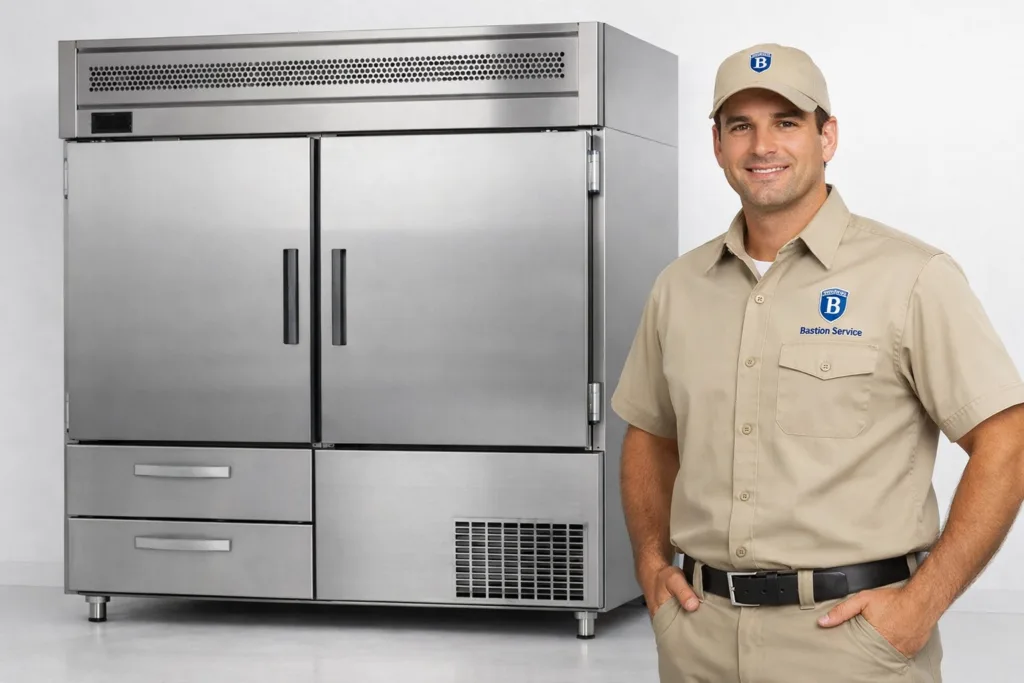




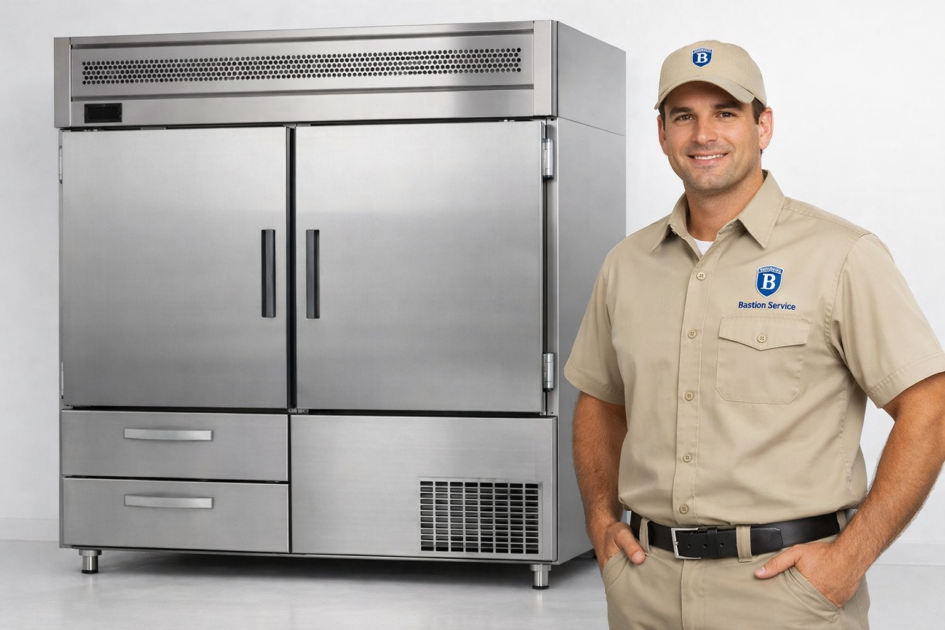
Refrigeration problems usually show up in stages. A Beverage-Air refrigerator may start with mild temperature drift or uneven cooling before it becomes a true product-risk issue. A freezer may still run, but take longer to pull down temperature, develop heavy frost, or struggle after normal door openings. For Beverly Hills businesses, those early signs matter because the cost of waiting is often spoiled inventory, longer recovery times, and avoidable strain on other components.
For specific equipment paths in Beverly Hills, review Beverage-Air Fridge Repair in Beverly Hills, Beverage-Air Freezer Repair in Beverly Hills, and Commercial Appliance Repair in Beverly Hills.
Beverage-Air refrigeration equipment symptoms worth addressing early
Bastion Service works on Beverage-Air refrigeration equipment used in day-to-day business operations, including refrigerators and freezers. The goal is to determine whether the problem is coming from airflow restriction, controls, defrost failure, door sealing, drainage, fan operation, compressor stress, or a broader cooling-system issue. Similar symptoms can come from very different faults, so symptom-based troubleshooting is the fastest way to decide whether the right next step is adjustment, part replacement, repair, or a replacement discussion.
In busy kitchens, service areas, and storage spaces, refrigeration equipment often stays in use while performance is declining. That can make a fault seem minor when it is actually building into a larger reliability problem. A unit that is “still cooling a little” may already be running too long, moving air poorly, or losing efficiency because of ice, dirt, or worn components.
Refrigerator and freezer problems often start with temperature complaints
Warm cabinet conditions
If a Beverage-Air refrigerator feels warmer than normal, holds inconsistent temperatures, or leaves certain sections less cold than others, the cause may involve condenser issues, fan failure, blocked airflow, sensor or control faults, door gasket leakage, or compressor-related stress. In some cases, the cabinet is not truly underpowered; it is simply unable to move cold air correctly or respond to demand the way it should.
For a Beverage-Air freezer, warm cabinet complaints often appear as soft product, slow freeze times, or poor recovery after loading. That pattern can point to defrost trouble, evaporator ice buildup, fan issues, control errors, or door sealing problems that allow repeated warm-air intrusion.
Slow recovery after door openings
Refrigeration equipment in active business settings has to recover quickly after normal use. If recovery becomes noticeably slower, that may indicate restricted airflow, weak fan performance, coil contamination, excessive frost, or a cooling-system problem that is reducing overall capacity. Slow recovery is especially important when staff begin adjusting settings to compensate, because that often masks the real fault instead of solving it.
Airflow issues can look like cooling failure
Weak airflow is one of the most common reasons a refrigerator or freezer appears unreliable. When air is not circulating correctly, cold sections and warm sections develop inside the same cabinet. Products near the air path may seem fine while items in other areas drift out of range. Staff may describe this as “sometimes cold” equipment, when the real issue is uneven distribution.
Typical causes include:
- Evaporator fan motor problems
- Condenser fan problems
- Blocked or dirty coils
- Ice buildup around the evaporator area
- Damaged fan blades or loose fan hardware
- Interior loading patterns that block circulation
Because airflow problems can imitate bigger cooling failures, they should be checked before assuming the equipment has reached end of life.
Frost buildup usually points to an operating problem, not just a nuisance
Excess frost in a Beverage-Air freezer or around refrigerator evaporator sections usually means moisture is getting where it should not, or the unit is not defrosting correctly. In business use, frost is more than a cosmetic issue. It reduces usable storage space, blocks airflow, lengthens run time, and can trigger a chain reaction that affects temperature control across the cabinet.
Common reasons frost returns
- Worn or damaged door gaskets
- Doors not closing or sealing fully
- Defrost heater, sensor, or control problems
- Drain restrictions that allow moisture to refreeze
- Repeated warm-air intrusion during operation
If frost comes back soon after manual clearing, the underlying cause still needs attention. Simply removing ice without correcting the source usually leads to the same problem again.
Leaks and water under the unit should be taken seriously
Water inside or under Beverage-Air refrigeration equipment may come from blocked drains, cracked drain components, excess condensation, defrost overflow, or melting ice caused by a temperature or airflow problem. In Beverly Hills business environments, leaks can also create slip hazards, affect nearby storage, and raise sanitation concerns around prep or service areas.
A leak is often a symptom rather than the primary failure. For example, a blocked drain may be straightforward, but water on the floor may also be tied to heavy frost, poor door sealing, or an evaporator section that is no longer operating normally.
Noise, long run cycles, and erratic cycling are early warning signs
New buzzing, rattling, clicking, fan noise, or extended run time can indicate a developing fault even before temperatures become obviously unstable. Refrigeration equipment often compensates for a problem before it stops cooling altogether. That is why long runtime should not be dismissed as normal aging.
These complaints may point to:
- Loose panels or hardware
- Fan motor wear
- Compressor stress
- Dirty condenser conditions
- Control or sensor issues affecting cycle timing
When equipment starts sounding different and running longer at the same time, it is usually worth scheduling service before the unit moves from reduced performance to full downtime.
When freezer performance problems affect daily operations
Freezer issues tend to become urgent quickly because product protection depends on stable low temperatures and predictable recovery. A Beverage-Air freezer that runs but cannot hold target conditions may still appear usable during lighter periods, then fall behind during normal demand. That pattern can create uncertainty for inventory handling and force staff to shift product or overload other equipment.
Businesses should pay close attention when a freezer shows repeated frost return, soft product, slow pull-down, constant running, or interior ice that interferes with shelving or door closure. Those symptoms usually indicate more than routine wear.
Repair versus replacement depends on the fault and the unit’s overall condition
Many Beverage-Air refrigerator and freezer problems involve serviceable parts such as fan motors, controls, sensors, gaskets, drains, and defrost components. Repair is often the sensible option when the cabinet is structurally sound, the issue is isolated, and the unit still matches the business’s storage needs.
Replacement becomes more likely when problems are repeated, cooling reliability has become inconsistent over time, cabinet condition is poor, corrosion is significant, or the expected repair cost no longer makes sense relative to remaining service life. For business operators, the decision is rarely about a single part alone. It is about uptime risk, product exposure, and whether the equipment can return to stable daily use after service.
What a service visit should help clarify
A useful evaluation should identify the source of the symptom pattern, not just confirm that the cabinet is too warm or frosted over. That means checking whether the issue is isolated or compounded, whether continued use is likely to cause more damage, and whether the equipment is a strong candidate for repair.
For Beverly Hills businesses using Beverage-Air refrigeration equipment, the most helpful approach is to evaluate the unit by operating symptoms: temperature behavior, airflow, frost pattern, drainage, runtime, and recovery performance. That makes it easier to choose the next step with confidence and reduce unnecessary disruption to storage, prep, and service routines.